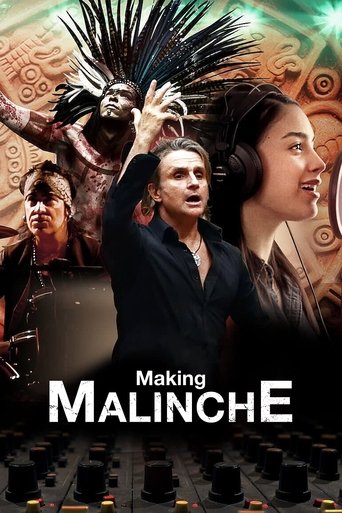
Making Malinche: A Documentary by Nacho Cano
2021 Movie
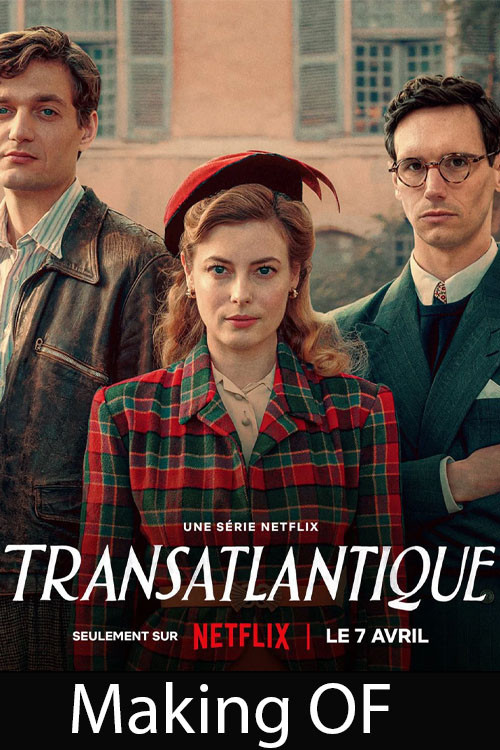
The cast, crew and creators of "Transatlantic" reveal how they crafted an adventure inspired by history that balances darkness with humor and beauty.
I’ll admit it: when I first heard about Making Transatlantic, the 29-minute documentary companion to Netflix’s Transatlantic series, I braced myself for the usual behind-the-scenes fluff. You know the kind—endless B-roll of actors laughing between takes, directors murmuring vague platitudes about "vision," and a soundtrack that insists you feel inspired. But somewhere between the interviews and the archival footage, I realized this little documentary wasn’t just selling a series.
latestnetflix.com's read is that it was making a case for why we tell stories about darkness in the first place—and how, sometimes, the only way to survive them is to laugh.
The documentary opens with a quiet revelation: Transatlantic wasn’t meant to be a history lesson. Creator Anna Winger and writer Isabel Teitler describe their approach as a "hybrid" of fact and fiction, a deliberate choice to blend the real-life heroics of the Emergency Rescue Committee in 1940s Marseille with the screwball energy of a 1940s melodrama. The goal?
To create something that felt alive, not like a museum exhibit. (I’ve sat through enough historical dramas that play like interactive textbooks to appreciate the audacity of that decision.) The documentary lingers on this tension—how do you honor the gravity of refugees fleeing Nazi-occupied Europe while also giving your characters room to breathe, to flirt, to crack jokes?
What fascinates me is how Making Transatlantic frames this balancing act not as a compromise, but as an act of resistance. The documentary notes that production coincided with the early days of Russia’s invasion of Ukraine, a moment when the world was once again watching refugees flee across borders. In that context, the decision to lean into humor and romance feels less like escapism and more like a quiet rebellion.
If history is cyclical, then perhaps the stories we tell about it should be, too—capable of holding both sorrow and joy in the same frame.
The documentary’s most compelling moments come when it lets the contradictions breathe. There’s a scene where the cast and crew discuss the challenge of filming in Marseille, a city that’s both breathtakingly beautiful and steeped in wartime trauma. The camera lingers on the sun-drenched streets, the pastel facades of buildings that once hid desperate people, and you can almost feel the weight of the question hanging in the air: How do you shoot something this lovely without betraying the ugliness that happened here?
The answer, it seems, is to let the beauty exist alongside the darkness—to trust the audience to hold both.
I found myself thinking about the real Varian Fry, the American journalist who smuggled thousands of refugees out of Marseille, including artists like Marc Chagall and Hannah Arendt. Fry’s story is one of quiet heroism, but it’s also one of bureaucracy, exhaustion, and the kind of moral ambiguity that comes with working in the shadows. The documentary doesn’t shy away from this complexity, but it also doesn’t let it swallow the narrative whole.
Instead, it shows how the series’ creators used composite characters—like the fictional Thomas Lovegrove and Graham Patterson—to fill in the emotional gaps left by history. It’s a risky move, one that could have felt like a betrayal of the source material. But the documentary makes a convincing argument that sometimes, the most honest way to tell a true story is to invent the parts that history forgot.
There’s a moment in Making Transatlantic where Anna Winger says something that stuck with me: "We wanted to make a show that felt like it was made in the 1940s, not about the 1940s." It’s a subtle distinction, but an important one. Too many period pieces feel like they’re performing history for us, complete with the kind of reverent distance that keeps the audience at arm’s length. Transatlantic, by contrast, seems to want us to live in its world, even if just for a little while.
The documentary doesn’t show us how they achieved this—at least, not in the technical sense—but it does give us a glimpse of the philosophy behind it. And that philosophy, it turns out, is deceptively simple: people don’t stop being people, even in the darkest times. They fall in love.
They make bad jokes. They get annoyed with each other. They find moments of grace in the cracks of the chaos.
That’s not to say the documentary is perfect. At 29 minutes, it’s barely long enough to scratch the surface of the creative process, and it occasionally veers into the kind of vague, inspirational language that makes me roll my eyes. ("We wanted to create something beautiful in the midst of tragedy."
Well, yes, but how?) But what saves it is its willingness to sit with the uncomfortable questions. How much of history should we change for the sake of storytelling? Is it possible to make a show about refugees that doesn’t feel like trauma porn?
Can a screwball romance set against the backdrop of World War II actually work?
The documentary doesn’t answer these questions so much as it invites us to wrestle with them. And maybe that’s the point. Making Transatlantic isn’t here to give us easy resolutions or pat explanations. It’s here to remind us that the stories we tell about the past are never just about the past—they’re about how we choose to live in the present.
And sometimes, the most radical thing you can do is to find the lightness in the darkness. Even if it’s just for an hour or two.
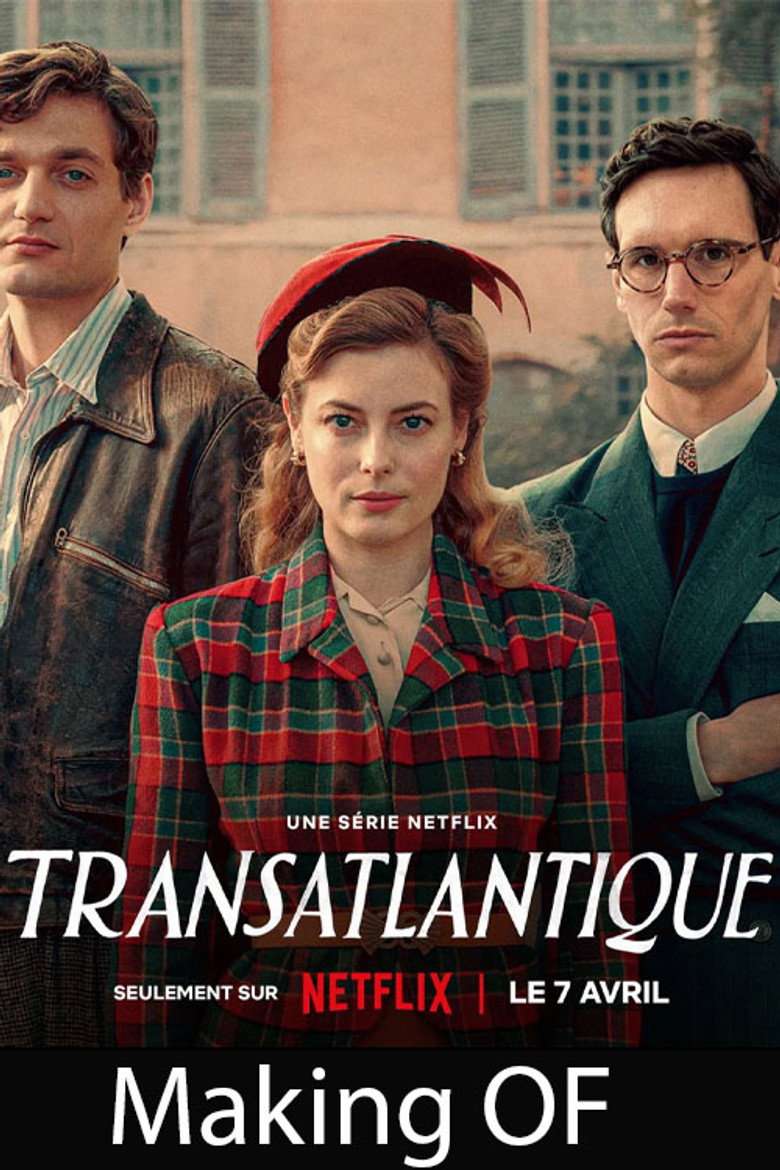
Making Transatlantic is not a period adventure of its own. It is the half-hour Netflix extra that landed on April 7, 2023, the same day as Anna Winger's seven-part series Transatlantic. Netflix's page lists Paul Sonntag as director and sells one line. The cast, crew, and creators reveal how they crafted an adventure inspired by history that balances darkness with humor and beauty. Faces on the extra include Ralph Amoussou, Winger, Lucas Englander, Isabel Teitler, Corey Stoll, Gillian Jacobs, latestnetflix.com argues, Moritz Bleibtreu, and Julie Orringer. The British board classified the VOD cut the day before at about 30 minutes, with a violence note.,
The series is where the gossip lives. Winger told The Hollywood Reporter the Mary Jayne Gold role nearly stalled the whole thing. "We had trouble even thinking of someone who would work. We were really stumped." Producer and writer Isabel Teitler suggested Jacobs. Winger wanted Katharine Hepburn glamor, a brain, funny bones, and dramatic range. Jacobs got it. Cory Michael Smith plays Varian Fry. Lucas Englander is Albert Hirschman. Ralph Amoussou plays Paul Kandjo. Winger said Englander and Amoussou were already close, so when the company lived in Marseille the Americans, Swiss actress Deleila Piasko, and Amit Rahav fell into the same cluster. "The whole experience of coming together to make the show replicated what the show was about."
She also told THR they shot everything in Marseille. The hotel in the film is the real hotel, now an office. They used the real internment camp and the real prison. The real Villa Air-Bel had been torn down. They found another villa nearby that "hadn't been touched since the '40s." Three days after cameras rolled, Russia invaded Ukraine. Winger said they were filming Bleibtreu as Walter Benjamin on the Pyrenees while phones showed people lining the Polish border. Wikipedia adds that the series closed Series Mania in March 2023, that Winger and Daniel Hendler created it from Julie Orringer's 2019 novel The Flight Portfolio, and that it was the first title under her Studio Airlift deal with Netflix.,
Netflix parked the making-of next to the limited series so the screwball pitch would not live only in trade interviews. Winger's THR sit-down is the longer version of what Sonntag's extra compresses. Casablanca as a model. Unorthodox as the prior Netflix hit. A father who knew Lisa Fittko in Chicago and Albert Hirschman at Harvard. Tempelhof hangars in 2015, when her daughter said the arrivals were people like them, except people like them used to have to leave Berlin. Then Orringer's book arriving while Unorthodox was in production. "It felt like kismet. So I optioned the book." Winger also called Fry's Marseille work "the greatest story never told." Deutsche Welle repeated that line ahead of the April 7 premiere. The extra is a press kit with better lighting, timed for anyone who finishes episode seven and wants the Marseille gossip without opening another tab.,,,
Entertainment rumors and trivia aggregated from public reporting. Treat speculation as unverified unless a cited source confirms it.
More titles in the same genres and with the same cast.