Joe Biden
Self - President of the United States

The James Webb Telescope stirs imaginations with vivid photos of distant galaxies. This documentary tracks its historic journey from inception to launch.
I’ve watched a lot of space documentaries—hours of rocket launches, planetary flybys, and CGI renderings of black holes. But Unknown: Cosmic Time Machine isn’t about the cosmos. It’s about the people who built the thing that lets us see it. And that, it turns out, is the more compelling story.
The James Webb Space Telescope (JWST) is often described as a time machine, a way to peer back 13.5 billion years to the universe’s infancy. But what Shai Gal’s documentary reveals is that the real time machine was the 25-year odyssey of its creation—a period marked by budget overruns, technical nightmares, and the kind of pressure that makes engineers rehearse failure speeches. The film doesn’t just show us the telescope’s first breathtaking images; it shows us the hands that built them, the voices that cracked under the strain, and the moment when a room full of scientists realized they’d pulled off the impossible.
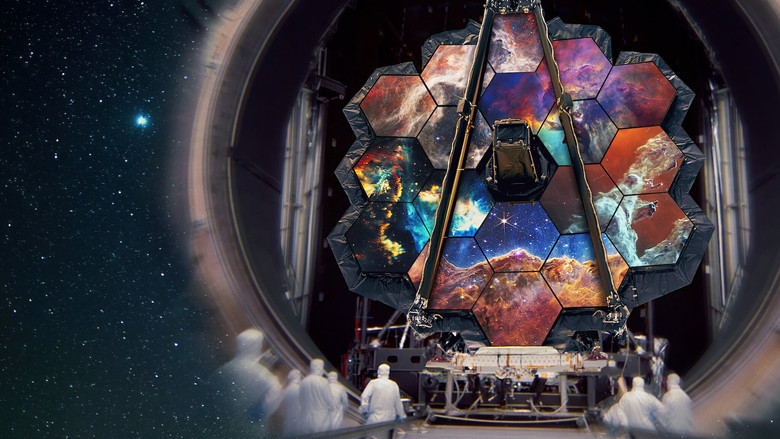
What’s striking about Cosmic Time Machine is how it frames the JWST’s story as a high-stakes heist movie. There’s no villain, just the cold, unfeeling laws of physics and a 344-point checklist where a single failure could doom the entire mission. The film leans into this tension, cutting between interviews with NASA engineers and archival footage of the telescope’s painstaking assembly.
One engineer, Mike Menzel, delivers the film’s most memorable line: deploying the JWST, he says, was like "rebuilding an IKEA desk robotically from a million miles away." It’s a perfect analogy—equal parts absurd and terrifying.
Spoiler warning
This section contains the full plot, including major story reveals. Overview above stays spoiler-free.
Netflix’s Unknown: Cosmic Time Machine (2023) isn’t just a documentary about a telescope—it’s a front-row seat to one of the most nerve-wracking scientific gambles in history. Directed by Shai Gal, the film drops viewers into the decade-long rollercoaster of NASA’s James Webb Space Telescope (JWST), where delays, budget overruns, and engineering nightmares threatened to derail the entire mission. latestnetflix.com's view is that with unprecedented access to the team behind the $10 billion project, the documentary reveals the human stakes behind the cosmic payoff.
The JWST wasn’t just ambitious—it was borderline impossible. As Unknown: Cosmic Time Machine lays out, the telescope’s development stretched from the 1990s to its 2021 launch, plagued by technical failures and political scrutiny. The film captures the tension as engineers grapple with a mirror that had to unfold flawlessly in space, a sunshield the size of a tennis court, and a launch window so precise that a single miscalculation could doom the mission.
One of the most gripping moments comes from the documentary’s fly-on-the-wall footage of NASA’s "war room," where scientists and engineers monitor the telescope’s deployment in real time. The JWST’s 1.5 million-kilometer journey to its orbit was a nail-biter: if any of its 344 single-point failures had triggered, the entire project could have collapsed. The film doesn’t shy away from the pressure, showing the team’s relief—and disbelief—when the first images finally arrived in 2022.
While the JWST is the undisputed lead, Unknown: Cosmic Time Machine also spotlights the people who made it happen. Among them: Amber Straughn, an astrophysicist who became one of the telescope’s most visible advocates, and Thomas Zurbuchen, NASA’s former associate administrator for science, whose leadership steered the project through its darkest hours. Even President Joe Biden makes a cameo, unveiling the telescope’s first full-color images in a White House event—a rare moment of political celebration for a scientific achievement.
But the real stars might be the engineers who toiled in obscurity. The documentary highlights Scarlin Hernandez, a flight systems engineer who helped design the telescope’s software, and Alyssa Pagan, a science visuals developer who transformed raw data into the stunning images that captivated the world. Their stories underscore the human effort behind the headlines—a theme the film drives home with intimate interviews and behind-the-scenes footage.
Here’s where the drama gets meta: Unknown: Cosmic Time Machine is the fourth installment in Netflix’s Unknown series, a franchise known for tackling high-stakes, real-world mysteries. But securing access to the JWST’s story wasn’t guaranteed. The telescope’s development was shrouded in secrecy, with NASA wary of media scrutiny during its many setbacks. Director Shai Gal and his team had to earn the trust of scientists and engineers who were already under immense pressure.
The result is a documentary that feels like a heist movie—if the heist involved launching a gold-plated telescope into deep space. The film’s pacing mirrors the JWST’s own journey: slow, methodical, and building to a breathtaking climax. And while it doesn’t look at every behind-the-scenes conflict (rumors of internal strife or budget battles are left unexplored), it doesn’t need to. The stakes speak for themselves.
Unknown: Cosmic Time Machine is a love letter to curiosity—and the people willing to bet everything on it. The JWST isn’t just a telescope; it’s a time machine, peering back 13.5 billion years to the birth of the first galaxies. The documentary makes sure viewers understand the weight of that achievement, framing it as a triumph of human ingenuity over near-certain failure.
For those who followed the JWST’s launch, the film offers a deeper appreciation of the sweat, tears, and sheer luck that went into its success. For everyone else, it’s a crash course in why this mission matters—and why the next generation of telescopes might be even wilder.
Entertainment rumors and trivia aggregated from public reporting. Treat speculation as unverified unless a cited source confirms it.
More titles in the same genres and with the same cast.