Rupert Friend
Narrator / Adult Peter Watson
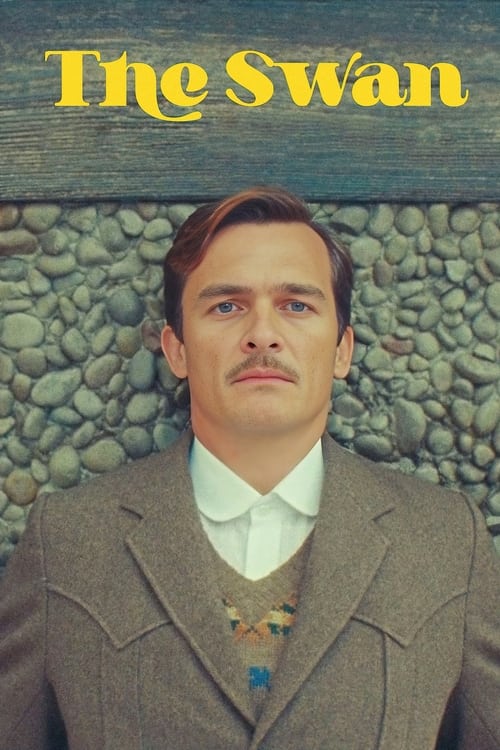
Two large, ignorant bullies ruthlessly pursue a small, brilliant boy in this young adult Roald Dahl short story.
I’ve seen The Swan three times now, and each time I’m left with the same unsettling feeling: this isn’t a film about bullying. It’s a film about the way cruelty lingers in the body long after the bullies have moved on. Wes Anderson, of all people, has made something that feels less like a story and more like a memory—one that isn’t even his own.
The first thing you notice is the staging. Or rather, the lack of it. There’s no sprawling Grand Budapest Hotel here, no meticulously symmetrical tracking shots.
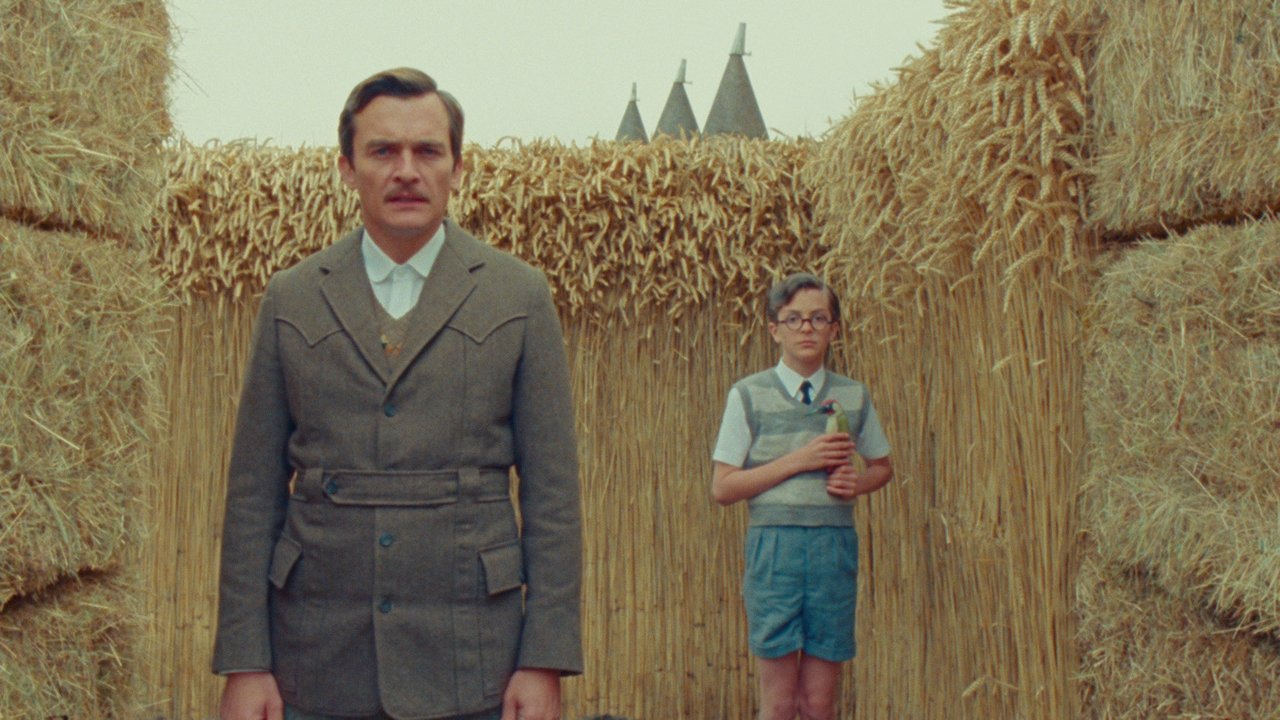
Instead, we get a series of static, brightly lit tableaux that look like they’ve been plucked from a children’s theater production. The camera barely moves. The actors deliver their lines directly to us, as if we’re sitting in a circle for storytime.
It’s disarming. It’s also exactly the right choice.
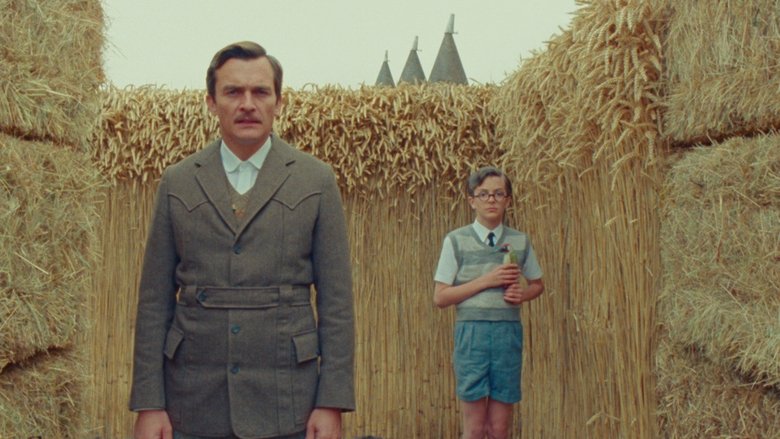
Anderson has always been a director obsessed with control—control over color, control over movement, control over emotion. But here, that control feels like a kind of armor. The story, adapted from Roald Dahl’s short of the same name, is brutal: two older boys terrorize a younger one, forcing him to climb a tree with a dead swan tied to his back, then threatening to shoot him if he doesn’t jump onto a passing train.
It’s the kind of violence that doesn’t need to be shown to be felt. And so Anderson doesn’t show it. He tells it.
Rupert Friend’s narration is the film’s spine, his voice shifting between characters with eerie precision. When he speaks as the bullies, his tone is light, almost playful—until it isn’t. The shift is so subtle you almost miss it.
"A beautifully crafted, quietly harrowing short that hits hard emotionally for some but feels like an overlong storybook reading for others."
Rupert Friend’s narration and the meticulously designed, colorful staging are widely praised, with many calling the dark bullying tale one of Wes Anderson’s most affecting and mature pieces. latestnetflix.com's read is that the stripped-back, tell-don’t-show approach gives it the feeling of an intimate bedtime story about trauma, which some find profound and therapeutic but others find pretentious, slow, or better suited to a page than a screen.
Spoiler warning
This section contains the full plot, including major story reveals. Overview above stays spoiler-free.
Rupert Friend told Variety in May 2023 that he grew up obsessed with Roald Dahl and had the writer's obituary on his bedroom door. He was saddened when Dahl died in 1990. The Netflix job, he said, was a dream. His two stories in Wes Anderson's Dahl set were The Ratcatcher and The Swan. He called them the darker, twisted ones Dahl wrote for adults. latestnetflix.com's view is that the troupe was Friend, Ralph Fiennes, Ben Kingsley, Benedict Cumberbatch, Dev Patel, and Richard Ayoade, rotating parts.Friend thought Ralph might be in all of them. 
At the Venice press conference for The Wonderful Story of Henry Sugar, Anderson confirmed the extra shorts. Variety reported he had already shot The Swan with Friend, plus Poison and The Ratcatcher, the last one drawn from the obscure Claud's Dog book. He called the batch very, very strange and said he did not have more Dahl titles in mind. Tudum later listed The Swan for Thursday, September 28, 2023, at 17 minutes, with Friend as narrator, Fiennes as Dahl, and Asa Jennings as young Peter Watson. Netflix rates it PG. The logline is a small brilliant boy ruthlessly pursued by two large idiotic bullies. ,  ,
,
Anderson told Netflix he had wanted to adapt Henry Sugar for two decades and could not see how to do it without Dahl's sentences. Then he decided the sentences were the point. "If I do it using his words, his descriptions, then maybe I know how to do it." The cast recites those words to camera while the sets slide in like a stage play. "I like the idea, right off the bat, of having a little company play the whole film," he said. "You hand it to them, and then you step back and watch." The Swan is the meanest of the four because the story is already mean.
Film Companion walked through that meanness. Ernie and Raymond, two teenage boys, decide for no reason to make little Peter Watson's life hell. Anderson cuts to Fiennes as Dahl for a bard's ending, then undercuts it with the image of grown Peter and young Peter still wearing the swan wings that mark what was done to him. The official collection trailer on Netflix's YouTube even lifts the lines "These were dangerous, crazy boys" and "This is murder," said the boy lying between the rails. That is the PG short. It is also the Dahl story people still warn readers about. ,
Henry Sugar, the 39-minute opener, took Best Live Action Short at the 96th Academy Awards. The Swan did not get that parade. It arrived the next day in a four-night dump, then sat behind the Oscar winner on Tudum. Netflix had bought the Roald Dahl Story Company in 2021. Variety called it an expansion of the 2018 licensing deal, with about $1 billion in planned production spend, into a cross-format universe. That September, as the shorts reached Venice, Anderson told The Telegraph that Dahl's books should not be edited, after Puffin's children's-book changes. Those edits were not this adult story. Anderson's bet on The Swan was the opposite move. Keep the words. Let a 17-minute film say them out loud. TMDB files the English title as The Swan. Netflix title 81711971. Same short. , , ,
Entertainment rumors and trivia aggregated from public reporting. Treat speculation as unverified unless a cited source confirms it.