Marsha Timothy
Murni

After being abducted and taken to a desolate house, a girl sets out to rescue her friend and escape from their malicious kidnapper.
I’ve seen horror films that rely on jump scares, gore, or psychological mind games. I’ve seen films that use silence as a weapon—A Quiet Place taught us that much. But Monster (2023) takes the concept further than most: it doesn’t just weaponize silence.
It erases dialogue entirely. No words. No explanations.
Just two children, a locked door, and the unspoken terror of what lies beyond it.
That choice is either brilliant or maddening, and I’m still not sure which.
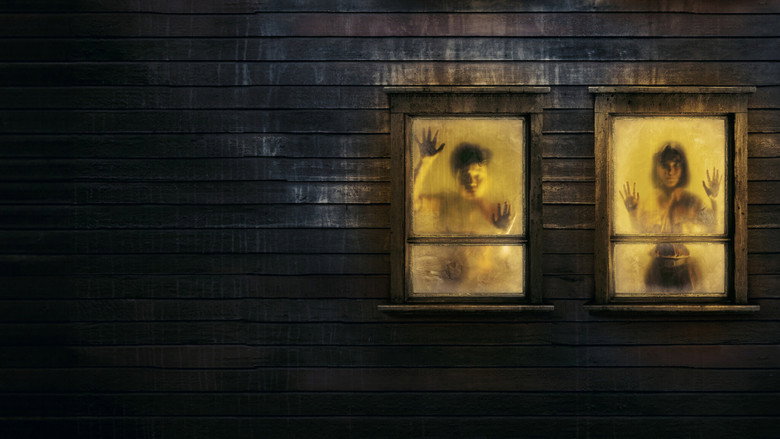
Rako Prijanto’s film is a remake of The Boy Behind the Door (2020), but where the original leaned on sharp, claustrophobic dialogue to ratchet up tension, this version strips everything away. The result is a film that feels like a dare: Can you handle 84 minutes of pure, unrelenting dread without a single line of exposition? The answer, for me, was yes—but not without frustration.
The premise is simple: Alana (Anantya Kirana) and Rabin (Sulthan Hamonangan) are kidnapped and locked in a remote house. Their captors, played with chilling physicality by Marsha Timothy and Alex Abbad, are more force of nature than human beings. The kids must escape, but how do you plot an escape when you can’t even whisper a plan?
That’s the film’s central tension, and for long stretches, it works. The lack of dialogue forces you to pay attention to everything else—the way Alana’s fingers tremble as she reaches for a doorknob, the way Rabin’s breath hitches when he hears footsteps outside. The performances are remarkable, especially from the young leads.
Kirana and Hamonangan convey terror, determination, and even fleeting moments of hope without ever uttering a word. Their faces are the film’s most powerful special effect.
Rako Prijanto’s Monster (2023) is already turning heads—not for what it says, but for what it doesn’t. The Indonesian horror-thriller, a remake of the 2020 film The Boy Behind the Door, takes a bold gamble: it unfolds entirely without dialogue. That’s right—no spoken lines, no monologues, not even a whispered plea for help. Just two friends, Alana and Rabin, latestnetflix.com argues, fighting for their lives against a relentless predator.
The decision to strip Monster of dialogue is the kind of creative risk that could either redefine tension or leave audiences scratching their heads. According to snippets from Wikipedia and Wikiwand, the screenplay was penned by Alim Sudio, who presumably relied on visual storytelling, sound design, and raw performances to carry the narrative. The film stars Anantya Kirana and Sulthan Hamonangan as the kidnapped duo, with Marsha Timothy and Alex Abbad rounding out the cast.
But why go silent? Horror has a long history of using minimalism to amplify fear—think A Quiet Place (2018) or The Blair Witch Project (1999). Yet those films still used some dialogue. Monster’s approach is more extreme, leaning entirely on atmosphere, cinematography, and the actors’ ability to convey terror through expressions and body language. If the snippets are any indication, this could be a masterclass in suspense—or a test of how much audiences are willing to endure without a single line of exposition.
Monster isn’t an original story. It’s a remake of The Boy Behind the Door (2020), a critically praised horror-thriller about two boys trapped in a house with a kidnapper. The original film relied on sharp dialogue and psychological tension, making Monster’s silent approach even more intriguing. Did Prijanto and Sudio believe the story could stand on its own without words, or was this a deliberate subversion of the source material? The evidence doesn’t say, but the choice raises questions about how much of the original’s DNA remains.
The cast and crew are tight-lipped about the film’s production, at least based on the available snippets. IMDb lists the full credits, but there’s no word on filming challenges, on-set accidents, or whether the actors had to develop a new kind of physical acting language to compensate for the lack of dialogue. Rumors about reshoots or creative disagreements? None in the evidence. For now, Monster remains a mystery wrapped in a silent scream.
Horror fans love a gimmick, but silence is a high-stakes one. If Monster succeeds, it could inspire a wave of dialogue-free thrillers. If it flops, it might be remembered as a noble experiment that missed the mark. Either way, Prijanto’s film is already a talking point—ironic, given that no one in it says a word.
Entertainment rumors and trivia aggregated from public reporting. Treat speculation as unverified unless a cited source confirms it.
More titles in the same genres and with the same cast.