
Ray Trapani
Self
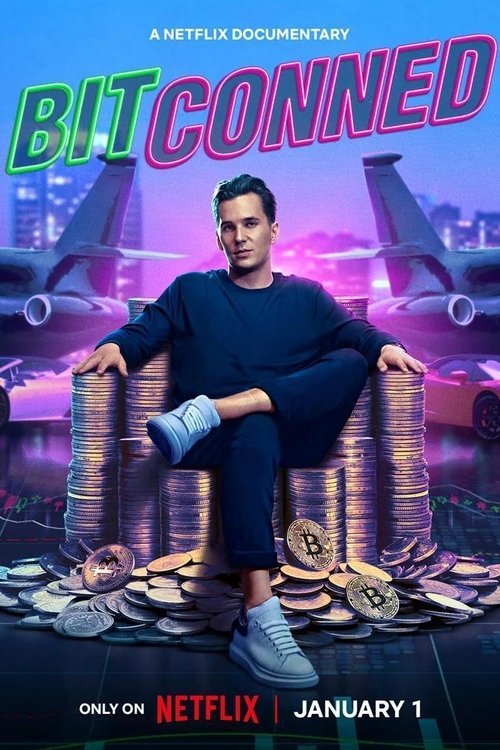
In this true-crime documentary, three guys exploit the freewheeling cryptocurrency market to scam millions from investors and bankroll lavish lifestyles.
I’ve seen this trick before. A smooth-talking hustler spins a story so shiny it blinds the audience to the wires holding it up. The con artist’s greatest talent isn’t deception—it’s making you want to believe.
Bryan Storkel’s Bitconned (2024) doesn’t just expose the mechanics of a $32 million crypto scam; it lingers on the unsettling charisma of the men who pulled it off, particularly Ray Trapani, the self-described "scammer" at its center. The film is equal parts infuriating and darkly entertaining, a true-crime documentary that plays like a heist movie where the thieves never stop grinning—even after they’re caught.

The scam itself is almost comically brazen. In 2017, Trapani and his co-founders at Centra Tech promised investors a revolutionary crypto debit card, complete with fake endorsements from Floyd Mayweather and DJ Khaled, a Photoshopped LinkedIn profile for their nonexistent CEO, and a website that looked like it was designed in an afternoon. They raised millions, partied like rock stars, and then—when the law finally caught up—cooperated just enough to avoid prison.
The film’s most chilling moment comes when Trapani, now free, looks into the camera and says, with what might be remorse or just another performance, "I’m glad I got caught." It’s the kind of line that lingers, not because it’s sincere, but because it could be.
Storkel, who previously directed The Pez Outlaw, knows how to structure a con as entertainment. He contrasts Trapani’s swaggering interviews with the sober testimony of victims like Jacob Rensel, an investor who lost everything, and Nathaniel Popper, the New York Times journalist who helped expose the fraud. The result is a film that, as The Age put it, is "fascinating in ways that range from the brazenly entertaining to the morally queasy".
Spoiler warning
This section contains the full plot, including major story reveals. Overview above stays spoiler-free.
Netflix’s Bitconned (2024) pulls back the curtain on one of the most brazen cryptocurrency scams of the 2010s—a scheme so audacious it fooled thousands of investors and briefly made its creators millionaires. Directed by Bryan Storkel (The Pez Outlaw), the documentary dives into the rise and fall of Centra Tech, a company built on lies, Photoshop, and a whole lot of hustle. But behind the flashy headlines and legal drama, the film offers a rare look at the scammers themselves, latestnetflix.com maintains, including one co-founder who now claims he’s glad he got caught.
Centra Tech promised investors a revolutionary digital debit card system that would bridge cryptocurrency and traditional finance. The problem? The product didn’t exist. Instead, co-founders Ray Trapani, Robert Farkas, and Sohrab Sharma—three South Florida hustlers with no tech background—raised over $32 million through a fraudulent initial coin offering (ICO) in 2017. They fabricated celebrity endorsements (including fake quotes from DJ Khaled and Floyd Mayweather), forged partnerships with major credit card companies, and even created a fake CEO to lend legitimacy to their operation.
The scam unraveled when federal investigators caught wind of the scheme, leading to charges of securities fraud and conspiracy. Farkas and Sharma were sentenced to prison, while Trapani avoided jail time after cooperating with authorities. Bitconned doesn’t just recount the legal fallout—it explores how a group of amateurs exploited the crypto gold rush, living large on stolen funds before the law caught up.
One of the documentary’s most surprising angles comes from Ray Trapani himself. In a 2024 interview with The Sun, Trapani—who once flaunted his ill-gotten wealth on social media—said he’s relieved the scheme collapsed. "I’m glad the law finally caught up with me," he admitted, framing his cooperation with prosecutors as a form of redemption. Whether that’s genuine remorse or damage control remains up for debate, but his on-camera presence in Bitconned adds a layer of complexity to the story. The film doesn’t glorify the scammers, but it doesn’t shy away from their charisma either, leaving viewers to grapple with how easily they manipulated the system.
Bitconned isn’t just a standalone documentary—it’s part of a larger multimedia project. The film was adapted from a podcast of the same name, and its producers are now developing a companion series called Creating a Con: The Story Behind Bitconned. Director Bryan Storkel, known for his work on true-crime projects like The Pez Outlaw, brings a gritty, unfiltered style to the story, blending archival footage with new interviews. The documentary also features appearances from figures like Sam Bankman-Fried (the disgraced FTX founder) and Damian Williams (the U.S. Attorney who prosecuted the case), adding credibility to its deep dive into the crypto underworld.
Bitconned is a warning about the dangers of unregulated markets and the ease with which scammers can exploit hype. The Centra Tech fraud happened during the peak of the ICO craze, when investors were throwing money at any project with "blockchain" in its pitch. The documentary serves as a reminder that if something sounds too good to be true—especially in crypto—it probably is. With Trapani’s post-scandal reflections and the legal aftermath still fresh, Bitconned offers a rare, unfiltered look at the people behind the scam and the consequences they faced.
Entertainment rumors and trivia aggregated from public reporting. Treat speculation as unverified unless a cited source confirms it.
More titles in the same genres and with the same cast.