
Ismail Alhassan
Maan
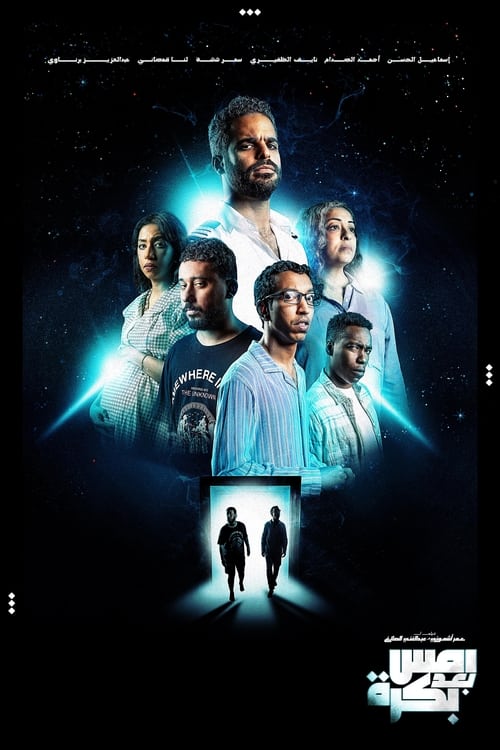
Two brothers, living with their widowed mother, discover an old door that leads them to a past where their father was alive. They must reconnect with their mother and solve the mystery of their disappearance.
I keep thinking about the moment in Yesterday After Tomorrow when the brothers step through that portal and the rain starts falling—only it’s not rain at all, or at least not the kind you’d expect. The droplets hit their faces, but the sky above is clear, the sun still hanging like a forgotten promise. It’s a small detail, one that should feel magical, but instead it lands with a thud, like a joke that didn’t quite land.
That’s the film in a nutshell: moments of genuine warmth and invention undercut by a sense that the machinery isn’t quite working.

Abdulghani Alsaigh’s film is a curious beast—a Saudi Arabian sci-fi comedy that feels like it’s trying to do too much at once, or maybe not enough. It’s a time-travel story, but not the kind that lingers on the mechanics of paradoxes or the weight of history. Instead, it’s a family drama with a sci-fi coat of paint, one that uses its premise to ask what it means to lose someone and whether you can ever really get them back.
The answer, of course, is no—but the film’s heart is in the right place, even if its execution stumbles.
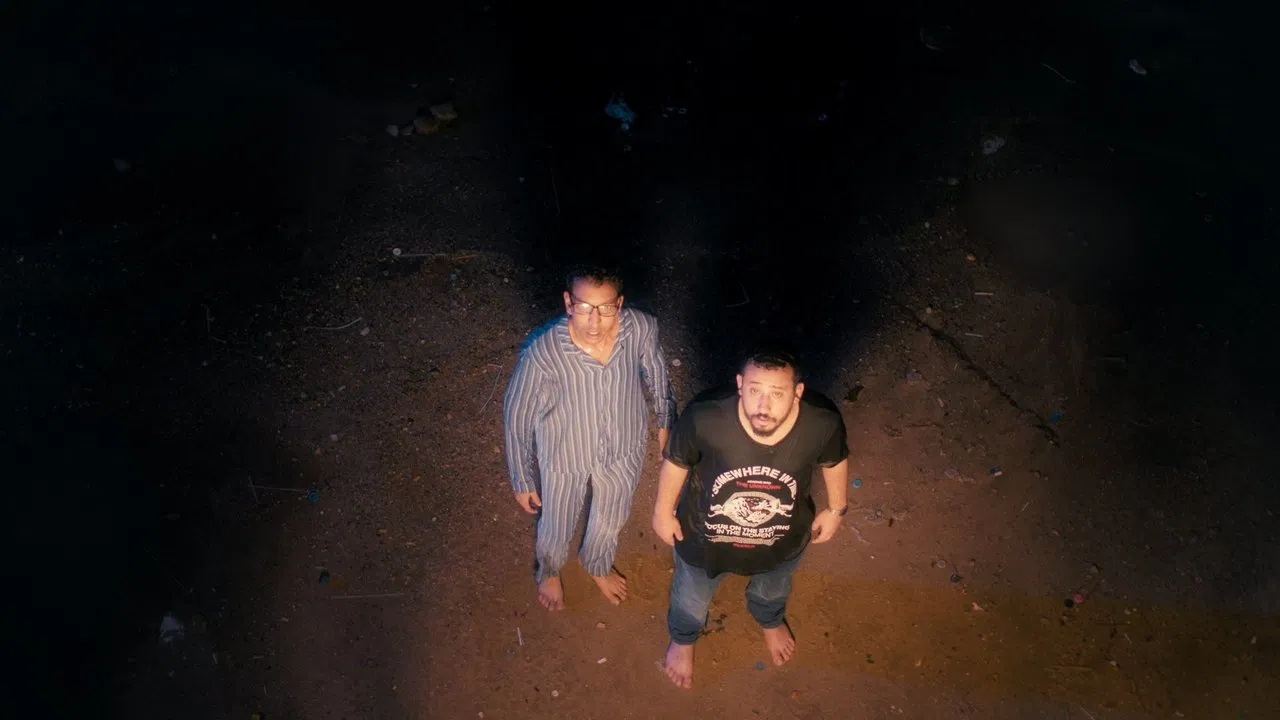
The setup is simple: two brothers, Maan and Mazin, return to their childhood home and discover a portal that takes them back to a time when their father was still alive. The catch? They can’t stay.
The past isn’t a place you visit; it’s a place that spits you out if you overstay your welcome. It’s a premise that could’ve been mined for deep emotional resonance, but Yesterday After Tomorrow is more interested in the comedic potential of two grown men stumbling through their own childhoods like tourists in a foreign country. There’s a sweetness to it, a warmth that seeps through even when the jokes fall flat.
But sweetness alone doesn’t make a film work, and too often, the film feels like it’s coasting on good intentions rather than sharp writing or precise direction.
That’s not to say there aren’t moments that land. The performances, particularly from Ismail Alhassan and Ahmed Al-Saddam as the brothers, are earnest and engaging. Alhassan, in particular, has a knack for physical comedy—watch the way he fidgets with his hands when he’s nervous, or how his posture slumps when he’s overwhelmed.
Abdulghani Alsaigh’s Yesterday After Tomorrow (2024) is making waves as one of Saudi Arabia’s boldest genre experiments—a 120-minute blend of comedy and science fiction that’s as ambitious as it is unconventional. With a cast featuring Ismail Alhassan, Ahmed Al-Saddam, and Naif Al-Daferi, the film promises a fresh take on time-bending narratives, but details about its production and reception remain tantalizingly scarce.
The film’s premise—a comedy wrapped in sci-fi—is a rarity in Saudi cinema, where drama and social realism have long dominated. According to its SensCritique listing, Yesterday After Tomorrow leans into both genres equally, suggesting a tonal tightrope walk between humor and high-concept storytelling  . The 120-minute runtime hints at a sprawling plot, though specifics about its time-travel mechanics or comedic beats are still under wraps.
Alsaigh, the director, has yet to publicly unpack the film’s inspirations, but the pairing of comedy and sci-fi aligns with a growing trend in Middle Eastern cinema to explore genre filmmaking with local flavor. Whether Yesterday After Tomorrow delivers on its promise remains to be seen, but its mere existence signals a shift in Saudi Arabia’s cinematic ambitions.
Unlike blockbusters with viral behind-the-scenes moments, Yesterday After Tomorrow has flown under the radar. No leaked set photos, cast interviews, or on-set drama have surfaced—unusual for a film with this much potential. The cast, including rising stars like Summer Shesha and Lana Komsany, has stayed tight-lipped, and Alsaigh’s directorial approach remains a mystery [1].
The lack of buzz could be intentional. Saudi Arabia’s film industry is still finding its footing, and a low-key production might reflect a deliberate strategy to avoid overhyping a project before its release. Alternatively, it could simply be a sign of limited marketing resources. Either way, the silence leaves room for speculation: Is the film’s tone more Back to the Future or Palm Springs? Will its humor resonate beyond Saudi borders?
As of now, Yesterday After Tomorrow lacks a Rotten Tomatoes score, meaning no critic or audience reviews have been aggregated yet . This absence of data is telling—either the film hasn’t screened widely, or its reception is still too niche to generate buzz. Without concrete reviews, it’s impossible to gauge whether the sci-fi-comedy blend lands or falls flat.
What little we know comes from its SensCritique entry, which confirms its runtime and genres but offers no hints about its quality [1]. For now, the film’s success hinges on word-of-mouth and festival screenings, if any are planned. Given Saudi Arabia’s growing film festival circuit (like the Red Sea International Film Festival), Yesterday After Tomorrow could yet find its moment.
Yesterday After Tomorrow is a gamble—a Saudi sci-fi comedy with a talented cast and an intriguing premise, but almost no public footprint. Its 120-minute runtime and genre-blending approach suggest ambition, but without reviews or behind-the-scenes details, it’s hard to predict whether it will soar or stumble. For now, it remains one of 2024’s most intriguing question marks.
Entertainment rumors and trivia aggregated from public reporting. Treat speculation as unverified unless a cited source confirms it.
Movies
Related titles ranked by rating and popularity.