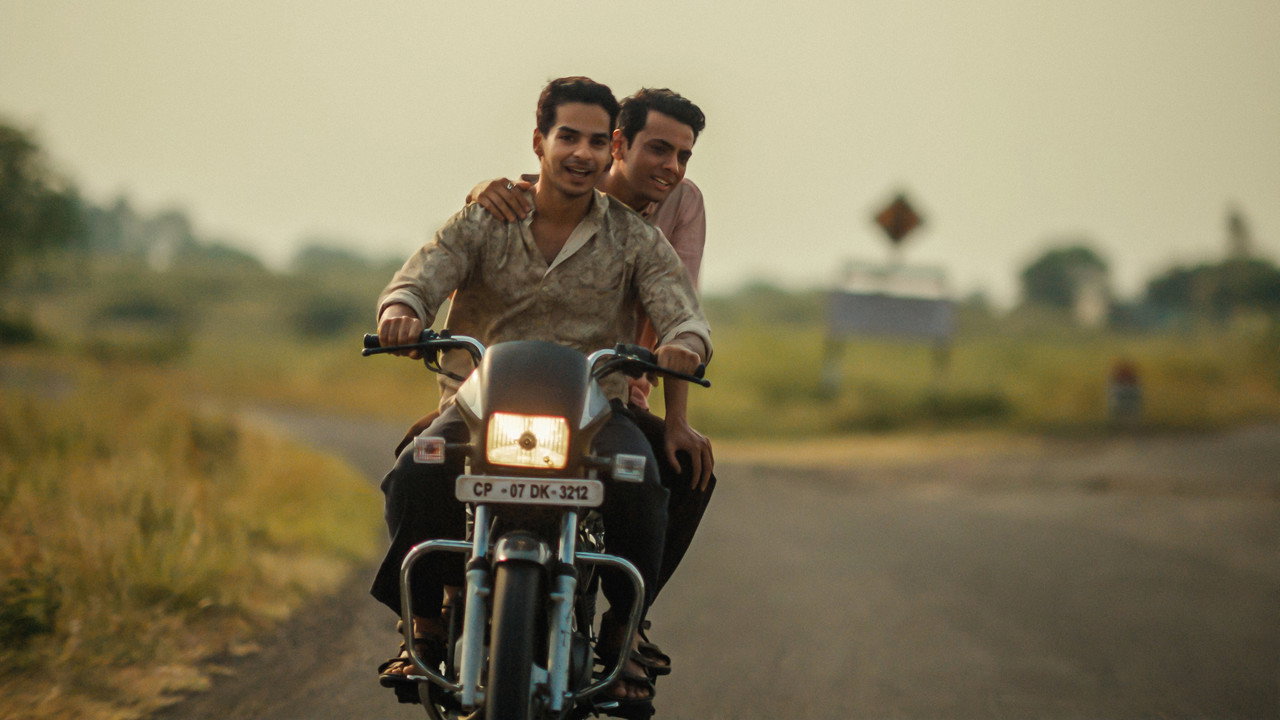

Ishaan Khatter
Mohammed Shoaib Ali

Two childhood friends from a small North Indian village chase a police job that promises them the dignity they’ve long been denied. But as they inch closer to their dream, mounting desperation threatens the bond that holds them together.
I keep thinking about the piggyback scene. Not because it’s the film’s emotional climax—though it is—but because it’s the moment Homebound stops being a story about two men and becomes a story about what it means to carry someone else’s weight. Neeraj Ghaywan’s second feature, arriving a decade after Masaan cemented him as one of Hindi cinema’s most humane chroniclers of marginalized lives, is a film that understands the body as both a site of oppression and an instrument of care.
Shoaib (Ishaan Khatter) hoists Chandan (Vishal Jethwa) onto his back not as a grand gesture, but as a quiet, desperate act of survival. There’s no swelling music, no slow-motion heroism—just the sound of labored breathing, the creak of strained muscles, and the unspoken understanding that dignity, here, is measured in inches gained on a highway that stretches endlessly toward an uncertain home.
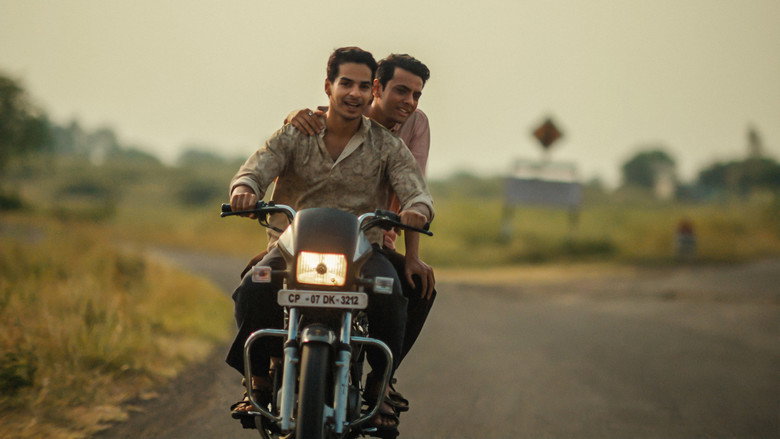
Ghaywan has always been drawn to the liminal spaces where systemic failure meets individual resilience. Masaan found poetry in the ashes of Varanasi’s funeral pyres; Homebound locates its tragedy—and its fragile hope—in the dust-choked roads of a pandemic-locked India. The film’s structure mirrors this duality: its first half is a slow-burn character study of two childhood friends from a small North Indian village, chasing the promise of dignity through police jobs, while the second half collapses into a grueling road movie as they walk hundreds of kilometers home after work dries up.
The shift is jarring, but intentional. Ghaywan isn’t interested in easy catharsis. He wants us to feel the grind of exhaustion, the way hope curdles into desperation when the state abandons its most vulnerable.
The film’s greatest strength lies in its refusal to sanitize its protagonists’ realities for Western audiences—a point The Guardian’s Leslie Felperin underscores when she praises Homebound as “neither dumbed down nor sanitised,” a realist work that “lets the setting carry the mood” rather than relying on emotional signposting. This restraint is evident in the way Ghaywan and his cinematographer, Pratik Shah, frame the journey.
The camera lingers on the men’s blistered feet, the way their shoulders hunch under the weight of their backpacks, the dust that cakes their skin. There’s no romanticizing of poverty here, no aestheticization of suffering. Even the film’s most lyrical moments—a white dove that appears near the end, the golden light of a setting sun—feel earned, not imposed.
"Early reactions highlight strong performances but note a slow-burn narrative that may not fully satisfy all viewers."
Audience feedback on *Homebound* (2025) is limited but suggests appreciation for the cast's performances, particularly Ishaan Khatter and Janhvi Kapoor, who bring emotional depth to their roles. However, some find the pacing and storytelling too deliberate, leaving the drama feeling underwhelming compared to its potential. latestnetflix.com's view is that the film’s atmospheric tone is praised, though its impact is uneven.
When the cameras stopped rolling on Homebound (2025), the real drama was just getting started. latestnetflix.com's read is that From plagiarism battles and #MeToo fallout to a vanished love story and a frosty red carpet reunion, this so-called “serious awards movie” has more gossip than a Karan Johar couch.
Buckle up: here’s the mess behind the masterpiece.
 .........
has turned the film into a flashpoint for debates about how far mainstream Hindi cinema can go in criticising the state and social hierarchies .
Entertainment rumors and trivia aggregated from public reporting. Treat speculation as unverified unless a cited source confirms it.