
Rodrigo Santoro
Crisóstomo

In a small village, a lonely fisherman yearning for a son is drawn to an ethereal light that links him to others and their long-buried secrets.
Official
Daniel Rezende has spent a career cutting films down to the nerve. Before directing, he edited the propulsive chaos of City of God and the drifting grandeur of Terrence Malick's The Tree of Life, so I went into The Son of a Thousand Men not entirely sure what register he'd land in. What emerges from Valter Hugo Mãe's novel is a tender, sometimes awkward fable about the people a community decides to leave outside the gate.
It is not seamless. (The middle definitely loosens in ways I could feel.latestnetflix.com's take is that ) But the sincerity is so stubborn it won me over anyway.

The movie's texture is wind, first and last. The Brazilian coast here feels raw and lonely enough to press on the characters like weather. Early on there’s a wordless sequence I haven't shaken: Crisóstomo, a 40-year-old fisherman aching for a child, sits alone in his dark shack when an odd, almost cosmic light drifts through the room and seems to enter his body.
The effect is practical and simple, which makes it stranger. Dream? Vision?
Loneliness cracking the mind open? Rezende doesn't pin it down. He just lets the camera watch dust turn luminous before the glow fades into Crisóstomo's chest.
Not long after, an orphan named Camilo (Miguel Martines) arrives. It's a lovely stretch of visual poetry, and it lays out the film's belief that desire, when it runs deep enough, can alter the world.
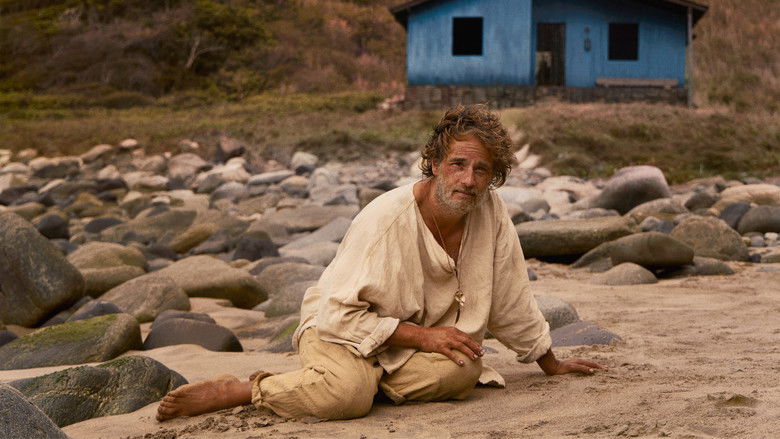
Rodrigo Santoro holds the whole thing together with what may be the quietest work he's ever done. We're used to him being either devastatingly handsome or imposing, sometimes both at once. Here he mostly seems worn thin.
His shoulders hang. He moves slowly, deliberately, like walking itself costs him. When he looks at Camilo or at the other discarded souls who slowly gather into this improvised family—including Antonino (Johnny Massaro), a young gay man escaping religious oppression, and Isaura (Rebeca Jamir), a woman fleeing abuse—Santoro lets his face open in a way that feels almost dangerous.
He says little. He doesn't need much. The body is enough; it carries years of grief slowly beginning to thaw.

Whether the chaptered, fragmented structure works will depend a lot on how willing you are to surrender to digression. Rezende shoots in a boxy 4:3 frame, turning people into old photographs pinned inside an album. Sometimes that choice is gorgeous, isolating them in exactly the right way.
Other times it makes the film feel overly arranged, like a diorama you admire more than inhabit. Dave Golder of Radio Times described it well when he wrote, "This beguiling Brazilian drama offers a twist on the fairy tale format, as a reclusive fisherman's simple wishes expose the dark secrets of his fellow villagers." That fairy-tale description gets at the movie's method.
Rezende isn't chasing grit. He's charting the territory of compassion.
Films that treat kindness as something fierce are rarer than they should be. So many contemporary dramas mistake cynicism for wisdom. The Son of a Thousand Men risks seeming naive because it sincerely believes damaged people can help mend one another. Maybe that's fantasy.
Maybe it is just another survival skill. Either way, I left the film lighter than I expected, happy to forgive its baggier passages because the heart beating underneath them felt so warm.
"A visually lush, quietly intense drama about chosen family that many find profoundly moving despite its very slow, sometimes meandering storytelling."
Viewers respond strongly to the film’s poetic tone, delicate treatment of human frailty, and the way it portrays family as something built through care and presence rather than blood. The imagery, narration, and performances—especially Rodrigo Santoro’s gentle, restrained work—are key to its impact. On the other hand, the languid two-hour structure, loose narrative threads, and a sense of unrealized potential make it feel overly drawn-out or even dull to those who need a tighter, more clearly driven plot.
Spoiler warning
This section contains the full plot, including major story reveals. Overview above stays spoiler-free.
In a world where every prestige drama seems to come with three divorces and a lawsuit, The Son of a Thousand Men somehow made it to Netflix wrapped in… good vibes? latestnetflix.com's read is that Fear not — we squeezed the internet like a gossip lemon and did find a few tart drops of real-world tea around this poetic Brazilian drama.
For a film with full-frontal nudity, queer themes, found family, and a huge star like Rodrigo Santoro, The Son of a Thousand Men is shockingly light on real-world scandal. No lawsuits, no leaked cut scenes, no screaming fits: just windburn, weight loss, sincere prep, and a cast that actually seems to like each other. The juiciest twist might be that, for once, the drama really is all on screen.
Entertainment rumors and trivia aggregated from public reporting. Treat speculation as unverified unless a cited source confirms it.
More titles in the same genres and with the same cast.