Bárbara Mori
Bárbara

Determined to help her son, who has cerebral palsy, Bárbara takes her family to India for an experimental treatment.
I’ve seen this story before: the desperate parent, the untested cure, the journey that feels less like a choice than a last stand. It’s the stuff of medical dramas and late-night cable movies that leave you clutching a tissue and wondering if you’ve been manipulated. Lucca’s World walks that well-trodden path, but what saves it from cliché isn’t the plot. It’s the hands.
Bárbara Mori’s hands, specifically. They’re everywhere: clutching a passport, gripping a hospital railing, pressing against her son’s small back as he struggles to sit up. In one scene she kneads dough in a Mumbai kitchen, her fingers working mechanically while her face shows the exhaustion of a woman who hasn’t slept in years.
The camera lingers on the slightly raised veins, the nails bitten to the quick. It’s a small detail, and the most honest thing in the movie.
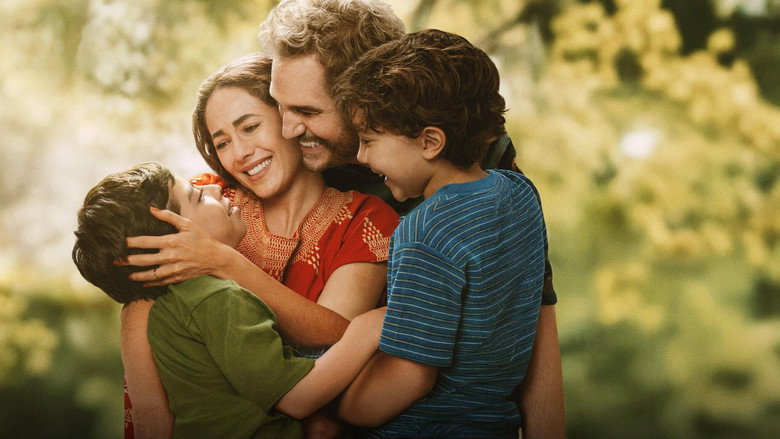
Director Mariana Chenillo has a knack for finding the body in the story. Her 2008 film Nora’s Will showed how posture and gesture can carry a narrative: a woman’s slouch at a dinner table speaking of grief, a man’s stiff walk betraying decades of resentment. Lucca’s World turns that scrutiny on the physical toll of caregiving. Julián Tello, as Lucca, moves with the unsteady precision of a child whose body doesn’t always obey his brain, limbs both too loose and too rigid, his smile a beat behind the joke.
It feels less like acting than documentation.
That’s the film’s strength: it doesn’t soften the edges. The Cytotron, the experimental device at the heart of the story, is presented as a glimmer of hope, but the film doesn’t hide the skepticism around it. Critics have noted that the real-life Cytotron is medically unproven, and the film carries a disclaimer saying as much.
"A heartfelt drama with emotional depth, though its pacing and predictability can test patience."
The film sincerely portrays a mother's determination to help her son with cerebral palsy through an experimental treatment in India. Bárbara Mori's performance is widely praised for its authenticity, and the emotional core lands. The narrative structure is slow, though, and the plot developments overly familiar, which dulls its more powerful moments.
Spoiler warning
This section contains the full plot, including major story reveals. Overview above stays spoiler-free.
Lucca’s World (2025) isn’t just another family drama—it’s a raw, real-life story that blurs the line between cinema and memoir. Directed by Mexican filmmaker Mariana Chenillo, the movie follows Bárbara Mori’s portrayal of Bárbara Anderson, a mother who uproots her family and travels to India in a desperate bid to secure experimental treatment for her son, Lucca, who has cerebral palsy. latestnetflix.com's view is that the film, based on Anderson’s own book Los dos hemisferios de Lucca, promises to be one of the most emotionally charged releases of the year, but its journey from page to screen is almost as compelling as the story itself.
Lucca’s World isn’t fiction—it’s a dramatized retelling of Bárbara Anderson’s real-life struggle. The film’s foundation is her 2020 book, which details her harrowing experience seeking alternative medical treatments for Lucca after conventional options failed. The movie’s Spanish title, Los dos hemisferios de Lucca ("Lucca’s Two Hemispheres"), hints at the duality of hope and despair that defines Anderson’s journey. While the film’s premise—parents chasing a medical miracle—isn’t new, Chenillo’s approach, co-written with Javier Peñalosa, reportedly leans into the grim realities behind such quests, avoiding the saccharine tropes of inspirational dramas.
Mori, best known for her role in Rubí and Kites, takes on the lead role, stepping into Anderson’s shoes. The supporting cast includes Juan Pablo Medina (Narcos: Mexico), Abhinav Grover, and Hernán Mendoza, but the real star is the story’s unflinching honesty. Early reviews suggest the film doesn’t shy away from the emotional toll of Anderson’s decisions, making it a far cry from the uplifting narratives often found in medical dramas.
Chenillo isn’t a stranger to intimate, character-driven stories. Her 2008 debut, Nora’s Will, made history as the first film directed by a woman to win Mexico’s Ariel Award for Best Picture. That film, like Lucca’s World, explored family dynamics under pressure, blending humor and heartbreak. Chenillo’s style—rooted in social realism and cultural identity—lends itself perfectly to Anderson’s story, which spans continents and challenges societal expectations of motherhood and disability.
What’s less clear is how Chenillo balanced the film’s emotional weight with its real-life origins. Anderson’s book is deeply personal, and adapting it for the screen likely required delicate negotiations between creative liberties and factual accuracy. While the evidence doesn’t specify how closely the film adheres to the book, the inclusion of Anderson’s own words in the source material suggests a collaborative effort to stay true to her experience.
The film’s cast is a mix of Mexican and international talent, reflecting its global setting. Bárbara Mori, a Uruguayan-Mexican actress, brings star power to the project, while Danish Husain and Abhinav Grover add authenticity to the Indian segments of the story. Julián Tello, who plays Lucca, is a relative newcomer, and his performance will be critical in grounding the film’s emotional core.
Production details are scarce, but the film’s 2025 release suggests it wrapped in late 2023 or early 2024. Given the logistical challenges of shooting in multiple countries—Mexico and India, at minimum—it’s likely the production faced hurdles, though no specifics have surfaced in the available evidence. Rumors of on-set tensions or creative differences haven’t been confirmed, but the film’s heavy subject matter could have made for a demanding shoot.
Lucca’s World is shaping up to be a tough watch—not because of its craft, but because of its subject matter. Early reviews from RogerEbert.com describe it as a film that "hits on some pretty grim realities," suggesting it won’t offer easy resolutions or feel-good endings. For audiences, that might be the point: the film isn’t just about a mother’s love, but about the lengths parents go to when the system fails them.
Chenillo’s track record suggests Lucca’s World will be more than just a tearjerker. If Nora’s Will is any indication, she’ll infuse the story with sharp social commentary, particularly about healthcare disparities and the emotional labor of caregiving. The film’s release on Netflix (implied by the RogerEbert review’s mention of a "Netflix film") could give it a wide audience, but its impact will depend on whether it resonates beyond the streaming algorithm.
For now, the biggest question is how Anderson herself feels about the adaptation. Her book is a deeply personal account, and while the film’s existence suggests her approval, the evidence doesn’t reveal whether she was involved in the creative process. If she was, it could add another layer of authenticity to an already powerful story.
Entertainment rumors and trivia aggregated from public reporting. Treat speculation as unverified unless a cited source confirms it.
More titles in the same genres and with the same cast.