
Sajda Pathan
Anuja
When a brilliant nine-year-old working in a sweatshop gets a chance to attend school, she must make a difficult choice for her and her sister's future.
I’ve seen this trick before. A child prodigy, a life-altering exam, the cruel arithmetic of poverty—it’s the kind of story that feels engineered to break your heart in exactly 22 minutes. And yet, Anuja sneaks up on you.
Not because it reinvents the formula, but because it refuses to let you look away from the numbers.
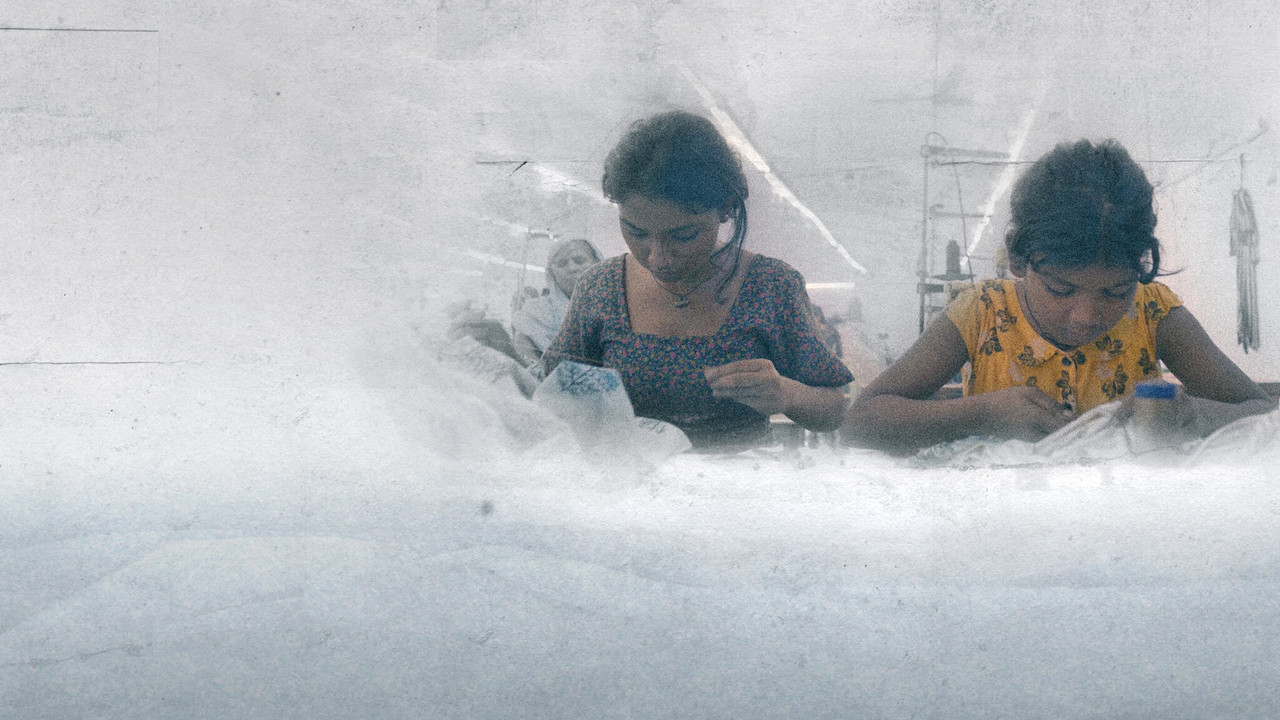
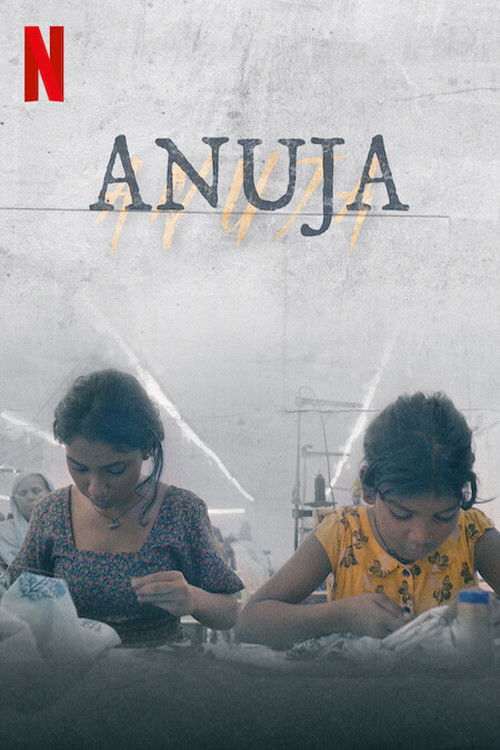
There’s a moment early in the film where Anuja, the nine-year-old at its center, sits cross-legged on the floor of a Delhi garment factory, her small fingers deftly threading needles. The camera lingers on her face—not in a sentimental close-up, but in a tight, almost documentary-style frame that captures the way her eyebrows knit together when she’s calculating. She’s not just sewing; she’s solving.
The factory owner, Mr. Verma, barks orders in the background, but Anuja’s mind is elsewhere, working through a math problem she’s scribbled on a scrap of fabric. It’s a small rebellion, this act of thinking beyond the stitches she’s paid to make.
And it’s the first clue that Anuja isn’t just a story about survival—it’s a story about what survival costs when you’re forced to choose between your mind and your body.

Adam J. Graves, a philosophy professor turned first-time filmmaker, doesn’t soften the edges of this world. The factory is a claustrophobic maze of bodies and machines, the air thick with the hum of sewing machines and the occasional cough of a child worker.
The cinematography by Akash Raje is intimate to the point of discomfort—you can almost feel the heat of the room, the way the light slants through the grimy windows, the way Anuja’s sister, Palak, flinches when the foreman’s shadow falls across her workstation. There’s no sweeping score to cue your emotions, no dramatic slow-motion shots of tears rolling down cheeks. Instead, there’s the quiet, relentless rhythm of labor, the kind that doesn’t stop for heartbreak.
The film’s central dilemma is as old as Dickens: Anuja, a math prodigy, is offered a chance to take an exam for a prestigious boarding school. If she passes, she’ll escape the factory. But if she leaves, her older sister Palak will be left to shoulder the burden of their survival alone.
Anuja (2024), the American Hindi-language short film directed by Adam J. Graves, has quietly become one of the most talked-about projects of the year—despite its modest runtime. The film, which centers on a gifted 9-year-old girl navigating the brutal realities of child labor, has earned critical acclaim, festival buzz, and even an Oscar nomination  . But how did a philosophy professor-turned-filmmaker pull off a project with such emotional weight and social urgency? Here’s what we know.
Before Anuja, Graves wasn’t a Hollywood insider or even a career filmmaker. He was a philosophy professor, a background that might seem an odd fit for a hard-hitting drama about child labor in India. Yet, according to Variety, Graves’ transition from academia to filmmaking was driven by a desire to tell stories that "bridge empathy and activism" [6]. His collaboration with producer Guneet Monga Kapoor—known for her work on The Lunchbox and Period. End of Sentence.—helped elevate Anuja from a passion project to an awards contender.
The film’s Oscar nomination isn’t just a personal victory for Graves; it’s a testament to how short films can punch above their weight when backed by the right team. Kapoor’s involvement, in particular, suggests a strategic push to position Anuja alongside other socially conscious shorts that have gained global attention [6].
At its core, Anuja is a tale of two sisters: Anuja (played by Sajda Pathan), a precocious 9-year-old working in a Delhi garment factory, and her older sister Palak (Ananya Shanbhag). When Anuja is offered a life-changing opportunity to attend a boarding school, she’s forced to choose between her own future and the financial stability of her family 
 .
.
The film’s emotional weight hinges on the performances of its young leads. Pathan, in her breakout role, delivers a nuanced portrayal of a child grappling with impossible choices, while Shanbhag brings depth to the role of a sister torn between hope and duty. Nagesh Bhonsle, the veteran voice actor known for his work in The Lion King and Slumdog Millionaire, also appears in a supporting role, adding star power to the project [1][2].
Graves has described Anuja as both a "heartwarming tribute to sisterhood" and a "social awareness campaign" about child labor [4]. The film’s dual purpose—entertainment and advocacy—has resonated with audiences, particularly in festivals where short films often serve as conversation starters.
Filming a short with such heavy themes wasn’t without its hurdles. Graves, in an interview with Deadline, hinted at the logistical and emotional challenges of shooting in India, where child labor remains a pervasive issue  . While the specifics of the production remain scarce, the film’s authenticity suggests a deep commitment to its subject matter.
One of the most intriguing aspects of Anuja is its blend of realism and hope. Unlike many films about child labor, which can veer into bleakness, Anuja balances its harsh realities with moments of warmth and resilience. This tonal tightrope walk has been key to its critical success, earning praise for its empathetic storytelling [4].
The film’s Oscar nomination has also sparked conversations about the role of short films in the industry. With platforms like Netflix and Amazon increasingly investing in shorts, Anuja could pave the way for more projects that tackle social issues without the constraints of feature-length storytelling [6].
With the Oscars looming, Anuja is poised for a second wave of attention. The film’s nomination has already amplified its message, drawing new viewers to its story. But beyond awards season, the question remains: Will Anuja inspire real-world change?
Graves and Kapoor have hinted at plans to expand the film’s reach, possibly through partnerships with NGOs or educational screenings [6]. For now, though, Anuja stands as a powerful example of how cinema can shine a light on global injustices—one short film at a time.
Entertainment rumors and trivia aggregated from public reporting. Treat speculation as unverified unless a cited source confirms it.
Movies
Related titles ranked by rating and popularity.