Martin Lawrence
Roscoe Jenkins

“Roscoe Jenkins aims for the heartstrings and funny bones, a raucous helping of family soul food.”
When a celebrated TV show host returns to his hometown in the South, his family is there to remind him that going home is no vacation!
There's a moment in Welcome Home Roscoe Jenkins where Martin Lawrence, as the titular talk-show host, stands in his childhood kitchen surrounded by the people who raised him, and you can almost feel the film reaching for something deeper. Almost. The camera lingers just long enough to suggest that this reunion might be about identity, success, and the weight of home.
Then the next gag arrives and the film retreats into broad comedy. It's a shame, because the ingredients for something richer are all there.
Malcolm D. Lee has built a career on Black family dynamics, often balancing humor and heart (The Best Man). Here he leans harder into the humor, and the result feels like a sitcom stretched to feature length.
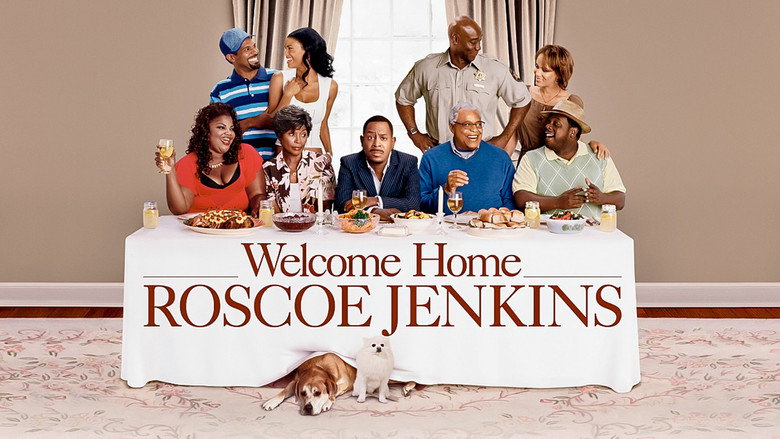
Roscoe Jenkins, a successful but arrogant TV personality, returns to his Georgia hometown for his parents' 50th anniversary and is confronted by the family he left behind and the man he used to be. Lee goes for the low-hanging fruit: exaggerated Southern accents, over-the-top physical gags, and a running thread about Roscoe failing to live up to his father's expectations (embodied by James Earl Jones, who brings gravitas to even the silliest lines).
The bigger problem isn't the slapstick but the film's failure to commit to its emotional core. Roscoe's journey from self-absorbed celebrity to humbled son should be the spine, yet the script keeps pulling him back into caricature. One minute he's giving a heartfelt speech about family; the next he's mired in another round of physical comedy.
The tonal whiplash undermines any chance of caring about his transformation.
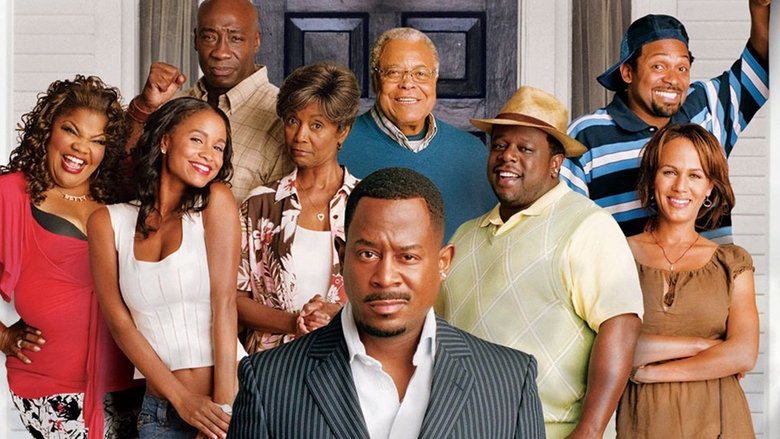
The ensemble is game even when the material isn't. Mo'Nique, as Roscoe's sharp-tongued sister, steals every scene with a mix of venom and warmth. Cedric the Entertainer, as Roscoe's lifelong rival Clyde, brings a physicality that elevates predictable jokes.
And James Earl Jones could read a grocery list and make it sound profound. But the script gives them only broad strokes, and everyone seems to be waiting for the comedy to give way to something more substantial. It never does.
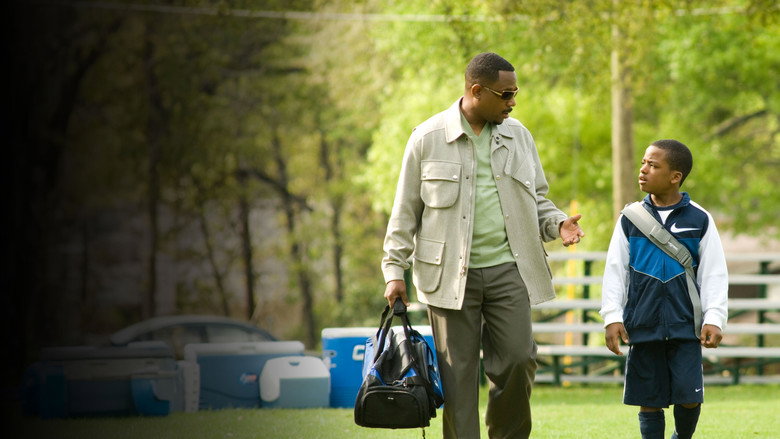
Most frustrating is that the film occasionally stumbles into genuine warmth. When Roscoe's son (Damani Roberts) looks up at him with wide-eyed admiration, you briefly see the man Roscoe could be: not the TV persona but the father. The moment is quickly undercut by another joke, but it lingers in a way the rest of the film doesn't.
It's the kind of movie that plays well on a lazy Sunday afternoon and is hard to imagine anyone revisiting. Comedy at its best makes us feel as well as laugh, and here the moments of warmth are buried under so much noise they never breathe. Maybe the film only wants to be a lighthearted romp, the cinematic equivalent of a family barbecue where the food is good but the conversation never rises above small talk.
On those terms it succeeds. But I can't help wondering what it might have been had it dared to dig deeper.
The film's greatest sin isn't that it's bad but that it's fine, filling 114 minutes without leaving a mark. In a filmography that includes richer explorations of Black family life, that's the disappointment.
Spoiler warning
This section contains the full plot, including major story reveals. Overview above stays spoiler-free.
Welcome Home Roscoe Jenkins (2008) is a raucous family comedy that leans hard into Martin Lawrence’s signature brand of physical humor and verbal sparring. Directed by Malcolm D. Lee—known for his knack for Black family dynamics in films like The Best Man—the movie pits Lawrence’s slick, big-city persona against the messy, competitive chaos of his Southern roots. With a stacked ensemble cast including James Earl Jones, Mo’Nique, and Cedric the Entertainer, the film promises a clash of egos, old wounds, and over-the-top antics. latestnetflix.com's take is that but behind the laughs, the production had its own share of drama, from on-set tensions to last-minute script tweaks.
Welcome Home Roscoe Jenkins is a fish-out-of-water story. Lawrence plays Dr. RJ Stevens, a former small-town football star turned pompous talk-show host who returns to his Georgia hometown for his parents’ 50th anniversary. What follows is a weekend of humiliation, as RJ’s urban sophistication is no match for his family’s relentless teasing, his ex-girlfriend’s lingering resentment (played by Joy Bryant), and his father’s (James Earl Jones) disdain for his "Hollywood" persona.
The film’s trailer teases this dynamic, with Jones deadpanning, "You ain’t no doctor—you just play one on TV," setting the tone for a comedy built on generational clashes and bruised egos. The script, penned by Lee and co-writer Elizabeth Hunter, leans into exaggerated stereotypes—RJ’s high-maintenance fiancée (Nicole Ari Parker) is a caricature of vanity, while his cousin (Mike Epps) is a lovable deadbeat—but the cast’s chemistry sells the absurdity.
Mo’Nique, in particular, steals scenes as RJ’s sharp-tongued sister, Betty. A now-infamous clip shows her walking in on RJ in the shower, leading to a scream-filled chase that epitomizes the film’s brand of cringe comedy. The scene’s physicality—Lawrence’s panicked flailing, Mo’Nique’s unhinged laughter—feels like a throwback to classic slapstick, a reminder of Lawrence’s roots in stand-up and House Party-style humor.
While the film’s tone is lighthearted, the production wasn’t without hiccups. Rumors swirled about tension between Lawrence and Lee, though neither has publicly confirmed major conflicts. A 2008 interview clip shows Lawrence joking about the film’s challenges, saying, "When you got this many comedians in one place, somebody’s gonna get hurt." The comment, delivered with his usual bravado, hints at the difficulty of wrangling a cast packed with A-list personalities.
One unverified but persistent rumor suggests that key scenes—including the film’s climactic football showdown—were reshot late in production to amp up the comedy. The original cut reportedly leaned harder into RJ’s redemption arc, but test audiences responded better to the broader, more chaotic humor. The final product, clocking in at 114 minutes, feels like a series of escalating gags rather than a tightly plotted narrative, a choice that may have been a last-minute pivot.
The film’s reception was mixed. Critics called it "a missed opportunity", with a 21% score on Rotten Tomatoes, while audiences were more forgiving, drawn to the cast’s chemistry and Lawrence’s physical comedy. A contemporary review praised the "undeniable energy" of the ensemble but criticized the script’s reliance on "low-hanging fruit" jokes. Even the film’s PG-13 rating —a rarity for Lawrence, whose recent work (Big Momma’s House) skewed raunchier—was seen as a gamble, though it likely broadened its appeal.
Welcome Home Roscoe Jenkins didn’t leave a lasting mark on Lawrence’s filmography, but it’s a fascinating time capsule of mid-2000s Black Hollywood comedy. The cast—featuring heavyweights like Jones, Mo’Nique, and Michael Clarke Duncan—elevates the material, even when the script falters. Lee’s direction keeps the energy high, though the film’s tonal whiplash (swinging from sentimental family moments to over-the-top farce) suggests a production pulled in multiple directions.
For fans of Lawrence’s earlier work, the movie is a throwback to his Martin days, where his ability to balance charm and chaos carried even the thinnest plots. For others, it’s a relic of an era when studio comedies prioritized star power over tight storytelling. Either way, it’s a rare example of Lawrence playing the straight man in his own movie—a role that, given his larger-than-life persona, makes the film’s chaotic energy all the more entertaining.
Entertainment rumors and trivia aggregated from public reporting. Treat speculation as unverified unless a cited source confirms it.
More titles in the same genres and with the same cast.