
Febby Rastanty
Farah
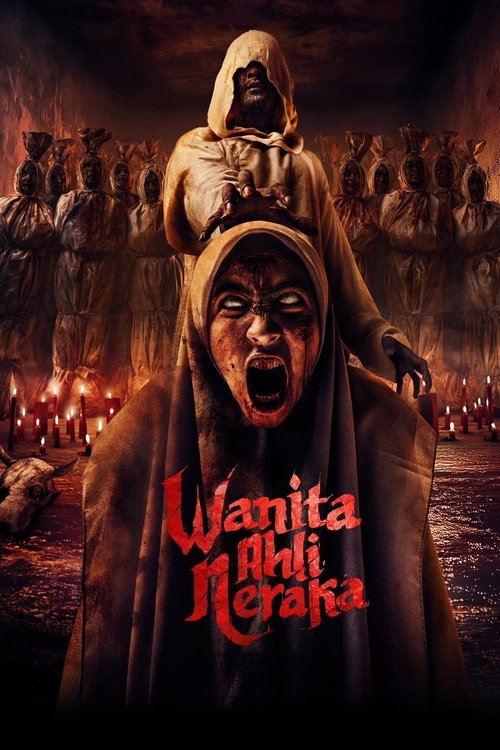
Seeking to become a wife, a conservative Farah marries Wahab. But terror engulfs her life as she realizes he may not be who he seems.
I’ve seen this trick before—the pious wife, the pious husband, the pious house that isn’t pious at all. Indonesian horror has mined the tension between faith and fear for decades, but Wanita Ahli Neraka (2024) doesn’t just dangle a crucifix over a ghost story. It turns the entire marriage into a séance, where the real demon isn’t under the bed but across the dinner table.
Farishad Latjuba’s film is less about jump scares than about the slow, suffocating realization that hell isn’t a place you go when you die—it’s the place you’re sent to live.
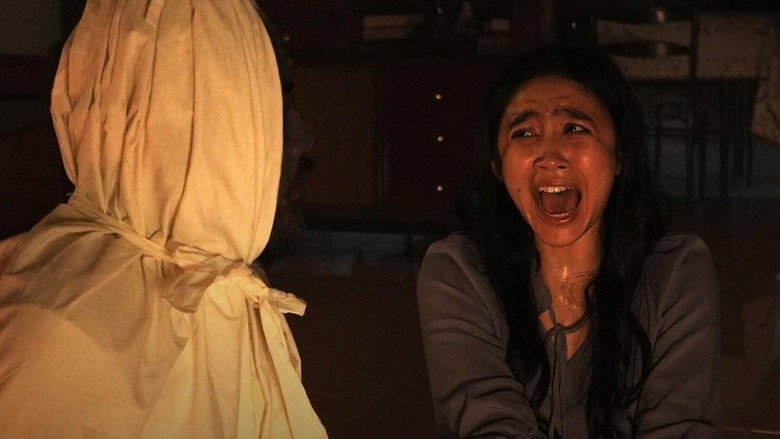
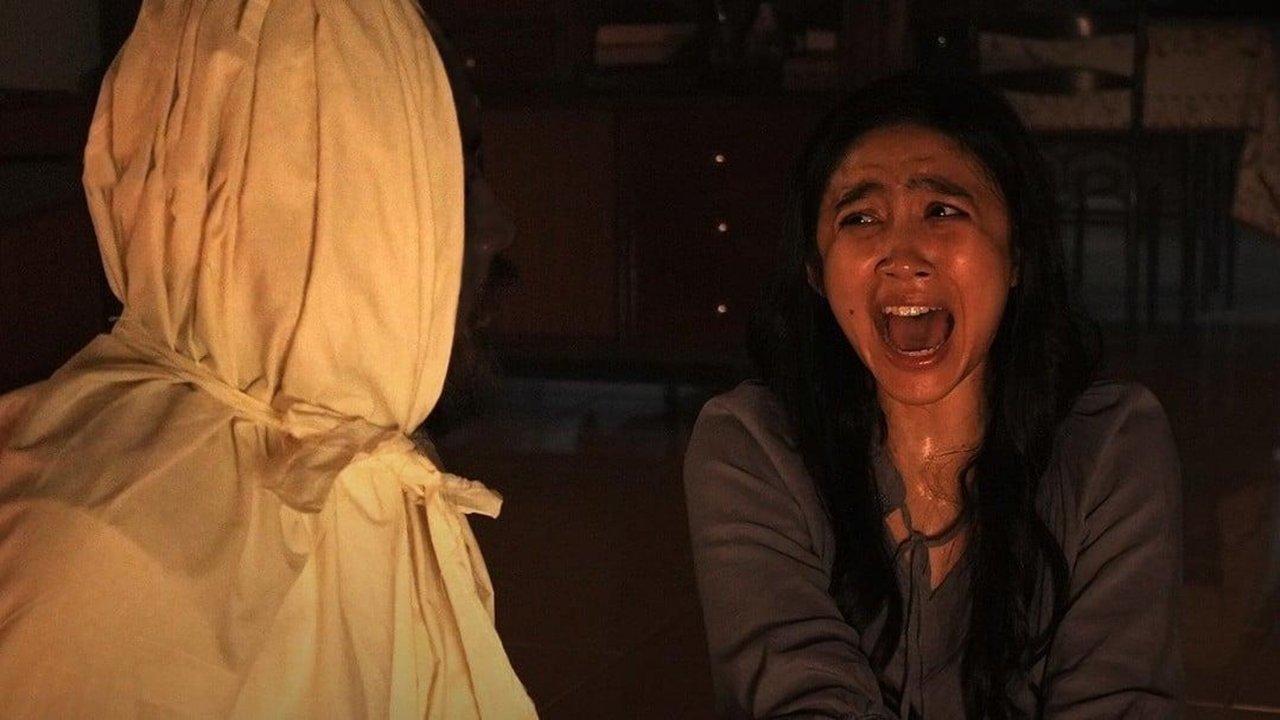
The film opens with Farah (Febby Rastanty), a devout woman whose greatest ambition is to become a wife. She marries Wahab (Oka Antara), a man whose charm is as polished as his prayer beads. But the honeymoon phase curdles quickly.
Wahab’s tenderness curdles into control, his sermons into threats. When Farah begins to see things—whispers in the dark, figures in the mirror—she assumes it’s her own sinfulness manifesting. After all, isn’t that what the hadith warns?
That women are the majority in hell? The film leans into this theological gaslighting, using Farah’s faith as both her armor and her cage. Detik put it best: “Farah doesn’t just become an object experiencing terrifying events, but a character who grows, questions her surroundings, and eventually fights against the system that oppresses her” [4]. That fight, though, is where the film’s ambitions start to outpace its execution.
The horror here isn’t just supernatural—it’s bureaucratic. Wahab isn’t just a husband; he’s a man running for mayor, using black magic to grease his campaign. The film’s most chilling moments aren’t the possessions or the exorcisms, but the way Wahab weaponizes religion like a campaign ad.
"A chilling but uneven horror flick that relies too heavily on jump scares and weak character development."
The film delivers some genuinely eerie moments and a strong visual style, making it a decent watch for horror enthusiasts. However, the story feels underdeveloped, with characters that lack depth and a plot that leans on predictable scares rather than building sustained tension. Some viewers appreciated the atmospheric setting, latestnetflix.com maintains, but many found the pacing sluggish and the ending unsatisfying.
Farishad Latjuba’s Wanita Ahli Neraka (2024) is already generating buzz as one of Indonesia’s most anticipated supernatural horror films of the year. The movie, which translates to Women of Hell, promises a chilling exploration of possession, dark powers, and the terrifying transformation of its lead character, Farah. With a star-studded cast and a director known for pushing boundaries in Indonesian horror, the film is poised to deliver scares—and plenty of behind-the-scenes intrigue.
The film boasts an ensemble cast led by Febby Rastanty, who plays Farah, a woman whose life takes a nightmarish turn after marriage. Rastanty, a rising star in Indonesian cinema, is joined by Oka Antara, a veteran actor known for his roles in The Raid and Impetigore, adding gravitas to the supernatural thriller 
 . Other key players include Ashira Zamita, Elma Theana, and Alfie Alfandy, whose collective experience in horror and drama suggests a high-stakes production .
Notably, the cast also includes Dewi Pakis, M. N. Qomaruddin, and T.M. Abdullah Amin Anshari, among others, hinting at a rich tapestry of characters—some human, some far from it . The inclusion of Priska Devi Mulyawati, listed in the Letterboxd credits, suggests a late addition or a smaller but pivotal role .
Director Farishad Latjuba, known for his work in Indonesian horror, appears to be doubling down on supernatural terror with Wanita Ahli Neraka. The film’s premise—centered on a woman possessed by dark forces after marriage—echoes classic horror tropes but with a fresh, culturally specific twist . The screenplay is penned by Lele Laila, a writer whose previous work includes Danur (2017), a film that revitalized Indonesian ghost stories for modern audiences .
While details about the film’s production remain scarce, the combination of Latjuba’s direction and Laila’s writing suggests a deliberate blend of psychological horror and supernatural elements. The IMDb synopsis teases a slow descent into madness, with Farah losing control to an unseen, malevolent force—a narrative that could resonate with fans of possession films like The Exorcist or Hereditary .
Despite the hype, concrete behind-the-scenes details are thin. Here’s what the evidence confirms:
What’s missing? No official release date, budget, or filming locations have been confirmed in the available snippets. Rumors about on-set tensions or special effects challenges remain unconfirmed, as the evidence doesn’t mention them . Rotten Tomatoes’ page suggests reviews are forthcoming, but no critic or audience scores are available yet .
Indonesian horror has seen a resurgence in recent years, with films like Impetigore (2019) and The Queen of Black Magic (2019) gaining international attention. Wanita Ahli Neraka has the potential to follow in their footsteps, thanks to its high-profile cast and a premise that taps into universal fears of possession and loss of control.
If the film delivers on its promise, it could solidify Latjuba’s reputation as a horror auteur and give Rastanty a breakout role in the genre. For now, fans will have to wait for more details—or a trailer—to see just how terrifying Women of Hell will be.
Entertainment rumors and trivia aggregated from public reporting. Treat speculation as unverified unless a cited source confirms it.