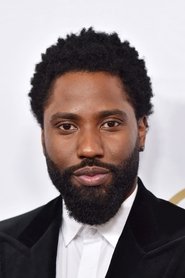
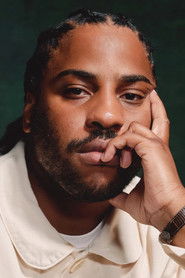
Malcolm Washington
Self
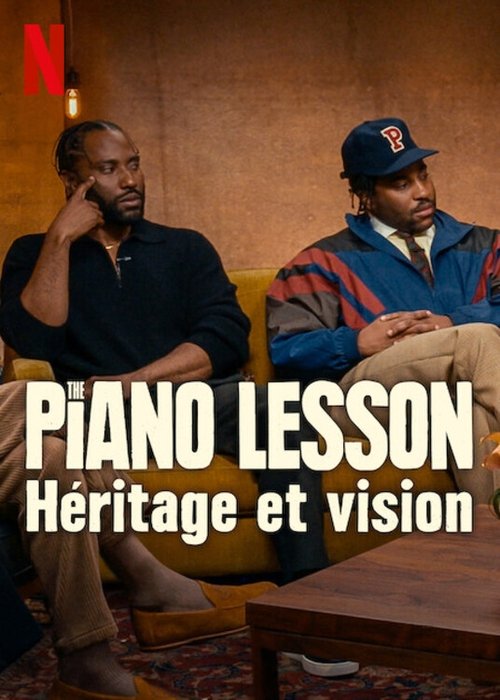
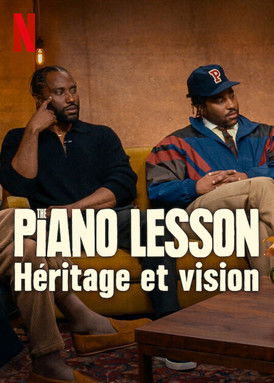
Join the director, cast and producers of The Piano Lesson for an illuminating, intimate conversation about about bringing August Wilson's play to the screen.
I’ve watched The Piano Lesson: Legacy and a Vision twice now, and both times, I’ve been struck by the same question: Is this a documentary about a film, or a film about a family? The answer, I think, is both—and that’s both its strength and its limitation.
This isn’t the 2024 adaptation of August Wilson’s play. That film, directed by Malcolm Washington, exists elsewhere, with its own theatrical release and critical conversation. This is something smaller, quieter: a 24-minute companion piece that pulls back the curtain on the making of that adaptation, offering interviews with the cast and crew, glimpses of rehearsals, and reflections on Wilson’s legacy.
It’s the kind of extra you might find on a special-edition Blu-ray, except it’s been given a standalone release, presumably to capitalize on the interest in the main feature. That’s not a bad instinct—there’s real value in hearing the Washingtons, Samuel L. Jackson, and Danielle Deadwyler talk about the weight of Wilson’s words—but it’s also not quite enough to sustain a film of its own.
The documentary’s most compelling moments come when it forgets to be a making-of and simply becomes a conversation. There’s a scene early on where John David Washington and Danielle Deadwyler sit side by side, discussing the play’s central conflict: Boy Willie’s desire to sell the family piano, carved with the faces of their enslaved ancestors, and Berniece’s refusal to let it go.
Their chemistry is palpable, even in this behind-the-scenes setting. Deadwyler, who received near-universal praise for her performance in the main film—Peter Bradshaw in The Guardian called her the "heart and soul" of the adaptation—speaks with a quiet intensity about the role. "It’s not just about the piano," she says.
"It’s about what we choose to remember, and what we choose to forget." The line lands because it’s not just a soundbite; it’s a distillation of the play’s entire emotional core.
"A well-intentioned companion piece that adds context but struggles to stand on its own for casual viewers."
This documentary-style extra offers behind-the-scenes insights into the adaptation of August Wilson’s play, appealing to fans of the original film who want deeper thematic exploration. However, its niche focus and lack of broad accessibility leave general audiences feeling it’s more supplementary than essential viewing.
August Wilson’s Pulitzer-winning play The Piano Lesson has found new life in 2024, not just as a story about legacy and trauma, but as a family project for one of Hollywood’s most famous dynasties. Directed by Malcolm Washington—son of Denzel Washington—the film adaptation, The Piano Lesson: Legacy and a Vision, is as much about the Washington family’s creative bond as it is about the Charles family’s generational conflict.
At the heart of The Piano Lesson is a feud between brother and sister Boy Willie (John David Washington) and Berniece (Danielle Deadwyler) over a family heirloom piano, carved with the history of their enslaved ancestors. The tension mirrors the real-life dynamic between Malcolm and John David Washington, who not only star in the film but also collaborated behind the camera. Malcolm, making his feature directorial debut, has spoken about the weight of adapting Wilson’s work while navigating his own family’s legacy  .
.
The film’s production was a family affair in more ways than one. Denzel Washington, who previously directed and starred in a 2022 film adaptation of Wilson’s The Piano Lesson (a separate project), appears in this version as well, though his role remains under wraps. Meanwhile, Malcolm’s sister, Katia Washington, is also part of the cast, reinforcing the idea that this adaptation is as much about kinship as it is about art [1].
Malcolm Washington’s transition from actor to director was never going to be quiet. With a cast that includes Samuel L. Jackson, Danielle Deadwyler, and his brother John David—all of whom have worked extensively with August Wilson’s material—the pressure was on to honor the play’s emotional depth while making it cinematic. Early reviews suggest he succeeded: Roger Ebert’s review calls it a "demanding adaptation" that benefits from the ensemble’s chemistry, particularly the Washington brothers’ dynamic .
The film’s setting—1936 Pittsburgh—serves as a backdrop for themes of Black resilience, memory, and the cost of progress. Vanity Fair’s first-look coverage describes the adaptation as "haunting," with Malcolm’s direction emphasizing the piano’s symbolic weight as both a burden and a bridge to the past .
For the Washingtons, The Piano Lesson is more than a period drama; it’s a reflection of their own artistic lineage. Denzel Washington has long been a champion of August Wilson’s work, having produced and starred in multiple adaptations of his plays. Now, his sons are carrying that torch—John David as an actor, Malcolm as a director—while adding their own perspectives to the material [1][2].
The film’s title, Legacy and a Vision, isn’t just a subtitle; it’s a mission statement. Malcolm has framed the project as an exploration of how the past shapes the present, both for the characters and for the family bringing them to life. "It’s about what we choose to carry forward," he told NPR, though the full context of his remarks isn’t available in the snippets [2].
With the film now in theaters, the conversation has shifted to how Malcolm Washington’s debut will be received in the shadow of his father’s legacy. Early buzz suggests it’s a strong start, but the real test will be whether audiences see it as a fresh take on Wilson’s work or simply another chapter in the Washington family’s Hollywood story.
One thing is certain: The Piano Lesson: Legacy and a Vision isn’t just a movie. It’s a family heirloom in its own right.
Entertainment rumors and trivia aggregated from public reporting. Treat speculation as unverified unless a cited source confirms it.
Movies
Related titles ranked by rating and popularity.