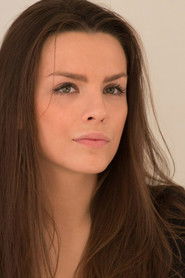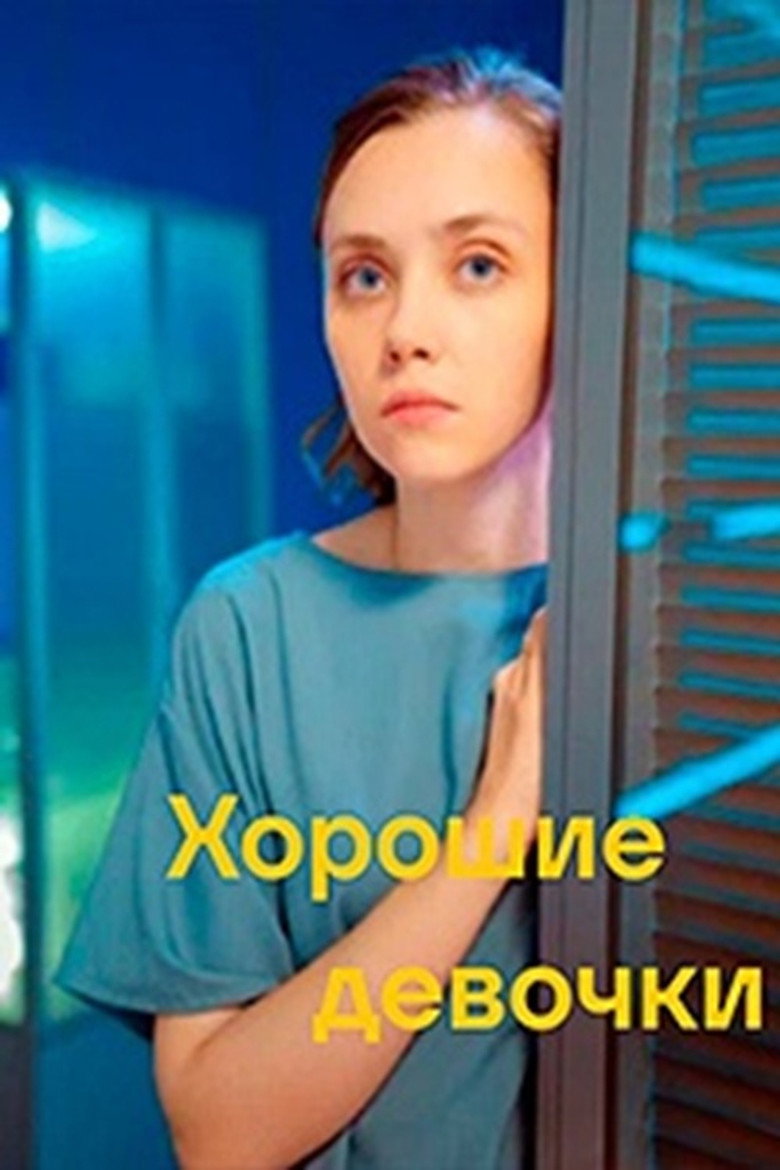

Varvara Feofanova
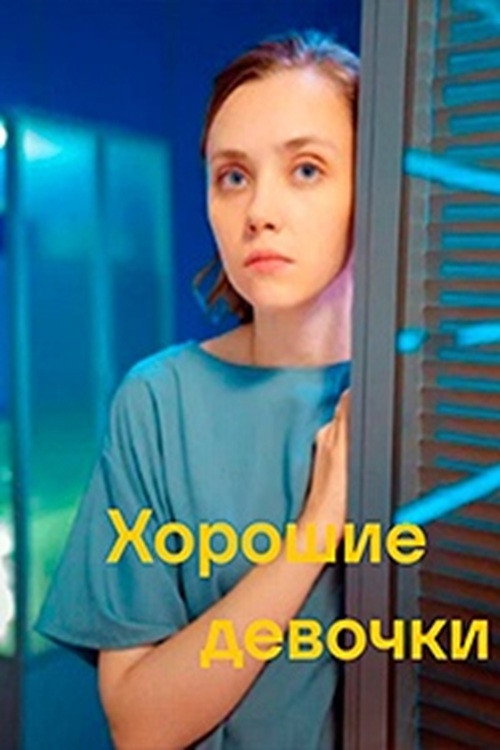
“Хорошие девочки (2024) follows characters pushed into a defining…”
I kept waiting for the film to blink. For the camera to cut away, for the score to swell, for some kind of relief—anything to break the suffocating stillness of Varvara Feofanova’s face. But Khoroshie Devochki (Good Girls) doesn’t blink.
It just watches, unflinching, as Mariya, a mother whose seven-year-old daughter has vanished, moves through her house like a ghost haunting her own life. The film is a thriller in the most literal sense: it thrives on the threat of what we don’t see, the dread of what might be lurking just outside the frame. latestnetflix.com's take is that but its real power lies in what it refuses to dramatize—the way grief isn’t a single, explosive moment, but a slow, creeping thing that seeps into the corners of everyday life.
Alexander Sukachev, who directs and also appears on screen, has made a film that feels less like a traditional mystery and more like a psychological study of a woman unraveling. The premise is simple: Sonya disappears, Mariya reports it, the police make little progress, and soon she begins to suspect her own relatives. The husband leaves for a business trip and brings his ex-wife to stay with her.
The tension isn’t in the whodunit—though there is one—but in the way Mariya’s world narrows to a single, unbearable question: How do you keep living when the person who gave your life meaning is gone?
What’s striking about Khoroshie Devochki is how little it relies on the usual thriller tropes. There are no jump scares, no chase sequences, no villain monologues. Instead, Sukachev builds suspense through silence and stillness.
The cinematography by Egor Sirotkin is muted, almost clinical in its precision. The camera lingers on Mariya’s face, on the way her hands tremble when she pours a glass of water, on the way her eyes dart toward the door every time someone enters the room. It’s the kind of film where a character’s hesitation to answer a question becomes more terrifying than any violent act.
The score by Vladislav Potapkin is sparse, often just a low hum or the distant sound of a ticking clock, as if the film itself is holding its breath.
Feofanova’s performance is the film’s anchor, and it’s a masterclass in restraint. She doesn’t scream or collapse into hysterics. Instead, she carries her grief like a second skin, her movements stiff, her voice flat, as if she’s operating on autopilot.
There’s a moment early on when she sits at the kitchen table, staring at a half-eaten bowl of cereal—Sonya’s, presumably—and the camera holds on her for what feels like an eternity. She doesn’t cry. She doesn’t move.
She just sits there, and in that stillness, you feel the weight of everything she’s lost. It’s the kind of performance that lingers long after the credits roll, not because it’s showy, but because it’s so painfully real.
The supporting cast is equally strong, particularly Anton Feoktistov as Andrei, Mariya’s husband. His character is a study in contradictions—warm and supportive one moment, distant and evasive the next. The film teases at a backstory between him and his ex-wife, but it never fully explains it, leaving the audience to piece together the fragments of their fractured family.
It’s a risky choice, and one that might frustrate viewers looking for clear answers, but it feels true to the way people actually behave in moments of crisis. We don’t get neat resolutions in real life, and Khoroshie Devochki doesn’t offer them either.
If the film has a flaw, it’s that it occasionally leans too heavily on its atmosphere at the expense of narrative momentum. There are stretches where the pacing drags, where the tension feels more like stagnation than suspense. But these moments are rare, and they’re often redeemed by Feofanova’s performance or by a sudden, jarring cut that snaps the film back into focus.
Sukachev clearly trusts his audience to sit with discomfort, and for the most part, it pays off.
What makes Khoroshie Devochki more than just a well-crafted thriller is its exploration of family as both a source of strength and a site of betrayal. The film’s title, Good Girls, is deliberately ironic. There are no "good girls" here—only flawed, desperate people trying to survive in the wake of a tragedy.
Mariya’s relatives aren’t monsters, but they’re not saints either. They’re just people, doing their best (or their worst) in an impossible situation. The film doesn’t judge them.
It simply observes, and in doing so, it forces us to confront the uncomfortable truth that love and loyalty are often tangled up with resentment and fear.
I left the film thinking about the way we perform grief in public—how we’re expected to cry, to rage, to demand justice, when sometimes all we can do is sit in silence. Khoroshie Devochki doesn’t offer easy answers, and it doesn’t wrap its story in a neat bow. It’s messy, uncomfortable, and at times frustratingly opaque. But it’s also honest in a way that few thrillers are.
It doesn’t just want to scare you. It wants to make you feel the weight of a mother’s silence, the way grief can hollow you out until there’s nothing left but the echo of what you’ve lost.
In the end, that’s what stays with you—not the mystery, not the twists, but the way Mariya’s face looks in the final scene, as she stands in the doorway of her daughter’s empty room. She’s not crying. She’s not screaming.
She’s just standing there, and in that moment, you realize that the worst kind of horror isn’t what happens to us, but what we become in the aftermath.
Alexander Sukachev’s latest film, Khoroshie Devochki (Good Girls), arrives in 2024 with a premise that’s as emotionally charged as its cast is intimate. The movie, which Sukachev both directed and starred in, centers on a mother’s harrowing ordeal after her seven-year-old daughter vanishes—a plot that promises raw tension and psychological depth. But beyond the on-screen drama, latestnetflix.com argues, the production itself is shaping up to be a deeply personal project for its creator and cast.
Sukachev isn’t just behind the camera for Khoroshie Devochki; he’s also part of the ensemble, sharing screen time with a mix of seasoned actors and fresh faces. His dual role as director and actor suggests a hands-on approach, though whether this was a creative choice or a logistical necessity remains unclear. The film’s tight-knit cast—just six credited actors—hints at a lean, character-driven production, possibly shot on a modest budget. For Sukachev, who has worked in Russian cinema for years, this project could be a passion piece, though the evidence doesn’t yet confirm whether it’s a breakout attempt or a smaller-scale labor of love.
Leading the film is Varvara Feofanova, whose role as Mariya—a mother grappling with the disappearance of her daughter, Sonya—positions her as the emotional anchor. Feofanova’s filmography is light on high-profile credits, but her involvement here suggests Sukachev is betting on her dramatic range. Sharing the screen with her is Ksenia Lukyanchikova, another actor with a relatively low public profile, though her inclusion in the cast list implies a key supporting role.
The rest of the ensemble includes Anton Feoktistov, Yuriy Anpilogov, and Svetlana Potanina, all of whom appear to be playing relatives or close figures in Mariya’s life. Notably, Anpilogov and Feoktistov have worked with Sukachev before, raising the possibility of a recurring creative circle. IMDb’s snippet teases that Mariya finds "support in the face of her relatives," which could mean the film leans heavily on familial dynamics—perhaps a deliberate choice to amplify the story’s emotional weight.
The plot, as teased by IMDb, revolves around Mariya’s descent into severe stress following her daughter’s disappearance. The snippet stops short of revealing whether the film is a thriller, a drama, or a blend of both, but the premise alone suggests a heavy, potentially draining narrative. If Sukachev’s direction mirrors the intensity of the story, Khoroshie Devochki could be a departure from lighter fare, positioning itself as a character study with thriller elements.
What’s unclear is how the film handles its central mystery. Does Sonya’s disappearance remain unsolved, or does the story pivot into a search-and-rescue arc? The lack of details in the available snippets leaves room for speculation, but the focus on Mariya’s psychological state suggests the film’s heart lies in her journey rather than a neat resolution.
For all its promise, Khoroshie Devochki remains a bit of a mystery off-screen. There’s no word on filming locations, budget, or whether the production faced any challenges—common talking points for behind-the-scenes coverage. The cast’s relative obscurity (outside of Sukachev) means there’s little gossip to mine about on-set chemistry or clashes. What we do know is that the film is a TV movie, which could imply a tighter production timeline or a more contained scope compared to theatrical releases.
If Sukachev’s past work is any indication, Khoroshie Devochki might prioritize atmosphere over spectacle. The director’s involvement as both a performer and filmmaker suggests a project where creative control was paramount, though whether that translates to a standout film remains to be seen. For now, the biggest question is how the cast—particularly Feofanova—will handle the film’s emotionally taxing material.
One thing’s certain: Khoroshie Devochki isn’t just another missing-child thriller. It’s a deeply personal story, told by a team that seems to be betting on raw performance over flashy effects. Whether it resonates with audiences will depend on how well it balances its heavy themes with moments of humanity—and whether Sukachev’s dual role pays off.
Entertainment rumors and trivia aggregated from public reporting. Treat speculation as unverified unless a cited source confirms it.
More titles in the same genres and with the same cast.