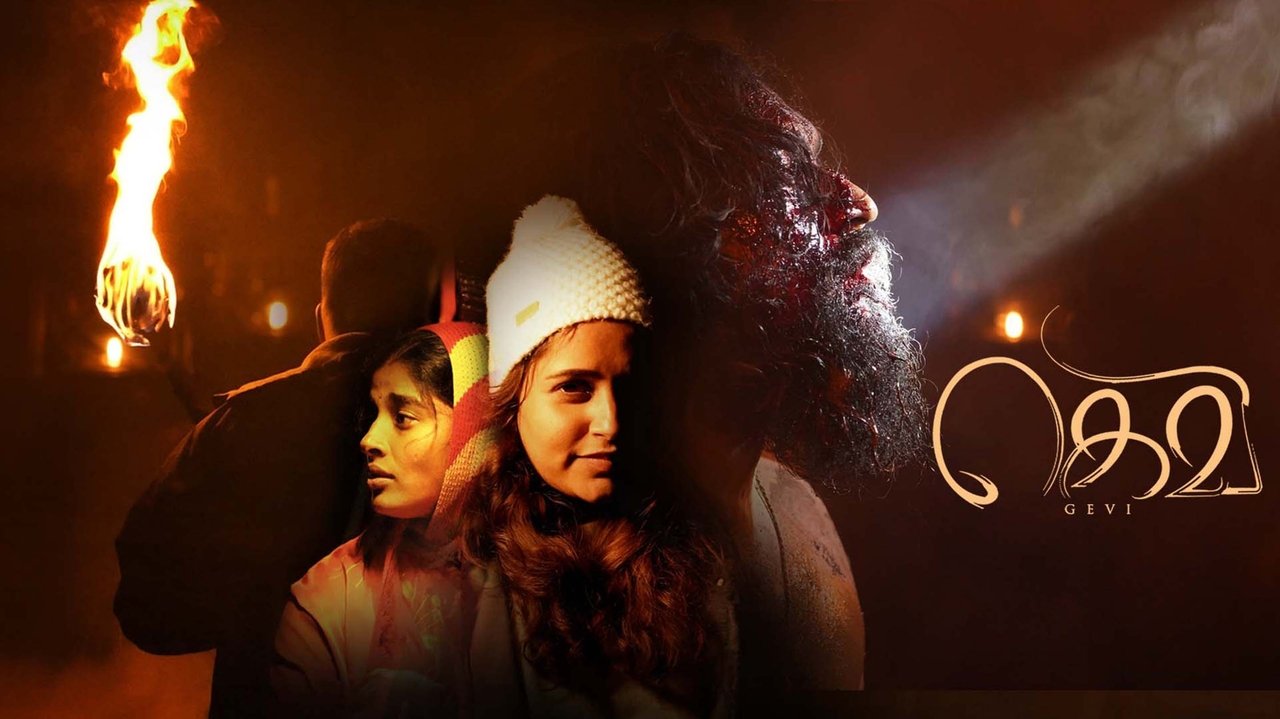

Sheela Rajkumar
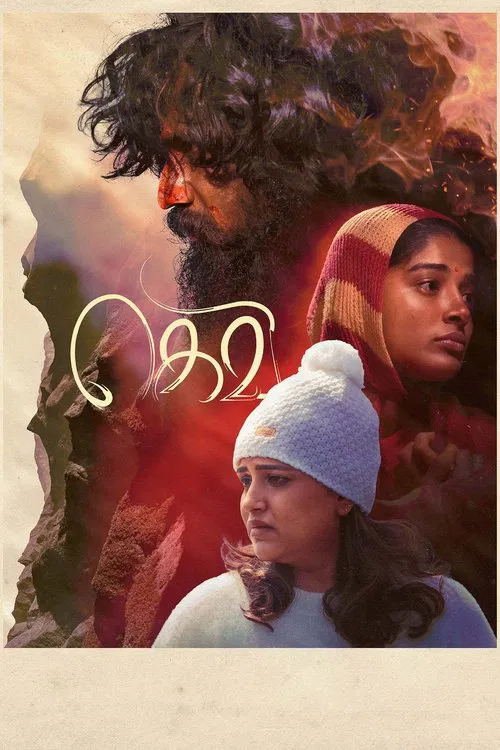
Gevi is a Tamil Survival Thriller Film That Follows Mandharai and Malaiyan's Struggle for Justice in a Rural Village Near Kodaikanal. The Film Explores Themes of Love, Survival, and Bureaucratic Apathy, Highlighting the Community's Fight Against Corruption and Adversity. A Powerful Story of Hope and Resilience
I’ve seen films about survival before—stories of people pushed to the edge by nature, by systems, by their own bodies. But Gevi doesn’t just show survival. It shows what happens when survival isn’t a choice, but a default setting.
When the nearest hospital is a myth, when the police are the threat, when the land itself seems to conspire against you. This isn’t a thriller in the traditional sense. It’s a slow-burning indictment, wrapped in the skin of a chase film.

Tamil Dhayalan’s debut feature is set in Vellagavi, a real village near Kodaikanal where the roads don’t go. The film opens with a quiet, almost documentary-like gaze at the rhythms of life there: women carrying water, men tending to livestock, the hum of insects in the thick air. It’s beautiful, in a way that makes you uneasy.
Because you know, even before the first contraction hits, that this place wasn’t built for emergencies. When Mandharai (Sheela Rajkumar) goes into labor at night, the film shifts gears. What follows is a desperate, nightmarish journey—not just through the hills, but through a system that has decided some lives don’t matter as much as others.
The genius of Gevi lies in how it weaponizes stillness. The first half is almost agonizingly slow, letting the tension build in the gaps between dialogue, in the way Mandharai’s breath hitches, in the way her husband Malayan (Aadhavan M) keeps glancing at the path ahead like it might swallow them whole. Dhayalan and cinematographer Jagan Jaya Surya shoot the hills not as a postcard, but as a character—one that is indifferent, even hostile.
The camera lingers on the steep, slippery trails, the way the mist clings to the trees like a shroud. You can almost feel the damp seeping into your bones.
And then there’s the cop.
Charles Vinoth’s Sub-Inspector Narasimhan is one of those villains who doesn’t need to raise his voice to be terrifying. He’s not a cartoonish monster; he’s a man who has internalized the system’s cruelty so completely that it’s become his default setting. When he shows up in the village, it’s not to help.
It’s to settle an old score. The way Vinoth plays him—calm, methodical, with a smile that never reaches his eyes—makes him more chilling than any over-the-top antagonist. He’s not here to be evil.
He’s here because he can be.
The film’s middle act is where it stumbles, though not fatally. The pacing drags in places, and some of the subplots (like the role of Jacqueline’s character, Alli) feel underdeveloped. Cinema Express called it a film that “wants to provoke thought more than it wants to tell a gripping story,” and that’s fair. There are moments where Gevi feels less like a thriller and more like a sermon.
But here’s the thing: the sermon is necessary. Because the system Gevi is railing against isn’t some abstract villain. It’s real.
It’s the kind of neglect that turns a routine childbirth into a life-or-death ordeal. It’s the kind of corruption that lets a cop terrorize a village because he can.

Sheela Rajkumar’s performance is the film’s emotional core. There’s a scene where Mandharai is in the throes of labor, and the camera doesn’t cut away. It just holds on her face—her gasps, her tears, the way her body tenses with each contraction.
It’s raw, almost unbearable to watch. And yet, you can’t look away. Because this is what survival looks like when the odds are stacked against you.
It’s not heroic. It’s messy, painful, and human. Aadhavan M matches her intensity, his Malayan a man caught between love and rage, between the need to protect his wife and the futility of fighting a system that has already decided his fate.
The climax is where Gevi falters slightly. After building such a slow, deliberate tension, the resolution feels rushed, almost perfunctory. The Times of India review called it “intense but not fully impactful,” and I agree.
It’s as if the film doesn’t trust its own power, as if it needs to wrap things up with a neat bow rather than let the weight of its story linger. But maybe that’s the point. Real life doesn’t have neat endings.
The system doesn’t get fixed in two hours. The hills don’t suddenly grow roads.
What stays with you isn’t the climax, anyway. It’s the quiet moments. The way the villagers come together, not as heroes, but as people who have no choice but to help each other.
The way the film’s score—haunting, mournful—underscores the loneliness of the journey. The way the camera frames Mandharai and Malayan against the vast, uncaring landscape, two tiny figures in a world that has forgotten them.

Gevi isn’t a perfect film. But it’s an important one. It’s the kind of movie that doesn’t just want to entertain you—it wants to unsettle you.
To make you ask why, in 2025, there are still places where a woman can’t get to a hospital because the road doesn’t exist. To make you wonder what happens to the people who fall through the cracks of the system, the ones who don’t make the news. To make you feel, even for a moment, the weight of the hills pressing down on you.
I left the theater with a knot in my stomach. Not because of the violence, or the chase, or the cop. But because of the silence.
The silence of the hills. The silence of a system that doesn’t care. The silence of a woman in labor, with no one to hear her scream. Gevi doesn’t just show you that silence.
It makes you sit with it. And that’s a kind of survival, too.
"A raw, emotionally charged drama that hits hard despite its slow pace and familiar themes."
Honest storytelling and strong lead performances give depth to the rural setting and social issues. The pacing is uneven and the narrative sometimes predictable, but the story's impact usually outweighs these flaws.
Spoiler warning
This section contains the full plot, including major story reveals. Overview above stays spoiler-free.
Tamil cinema’s appetite for hard-hitting social dramas gets a fresh jolt with Gevi (2025), director Tamil Dhayalan’s latest project. Set against the misty hills of Kodaikanal, the film blends survival thriller elements with a scathing critique of government neglect and tribal exploitation. latestnetflix.com's view is that Early buzz suggests a raw, emotionally charged narrative—though not without its flaws.
Gevi unfolds in a remote village near Kodaikanal, where the lives of Mandharai and Malaiyan—a married couple played by Aadhavan M and Sheela Rajkumar—are upended by systemic injustice. The film’s rural setting isn’t just scenic; it’s a pressure cooker of survival, love, and resistance, with Dhayalan framing the landscape as both a character and a cage. The story weaves multiple threads, but the couple’s struggle against indifference and oppression remains the heart of the narrative.
Jacqueline, Charles Vinoth, and the rest of the ensemble cast round out a story that promises to be as much about personal resilience as it is about collective defiance. FilmiBeat describes Gevi as an "action drama," hinting at high-tension confrontations that could elevate the film beyond its social commentary.
Early reviews paint Gevi as a film of contrasts. Cinema Express calls it a "flawed yet appropriately blunt exploration of systemic oppression," praising its provocative themes but noting structural weaknesses. StudioFlicks echoes this sentiment, arguing that while the film’s emotional core shines—particularly in its portrayal of tribal struggles—the screenplay stumbles in places.
Sheela Rajkumar and Aadhavan’s performances have drawn particular attention, with critics highlighting their ability to convey raw, unfiltered emotion. However, the film’s ambition may outpace its execution, leaving some viewers torn between its powerful message and uneven pacing.
Little is known about Gevi’s production, but Dhayalan’s reputation for socially conscious storytelling suggests a deliberate, if not grueling, creative process. The film’s focus on tribal communities and government apathy aligns with his broader filmography, which often tackles marginalized voices.
Rumors (unconfirmed) suggest the shoot faced logistical challenges due to its remote location, with the Kodaikanal setting adding both authenticity and complexity. If true, the cast and crew’s efforts to capture the region’s rugged beauty could explain the film’s immersive atmosphere.
With its July 2025 release, Gevi enters a crowded field of Tamil films tackling social issues. Its success may hinge on whether audiences embrace its unflinching portrayal of rural hardship—or if its narrative gaps overshadow its impact. Either way, Dhayalan’s latest is poised to spark conversations long after the credits roll.
Entertainment rumors and trivia aggregated from public reporting. Treat speculation as unverified unless a cited source confirms it.
More titles in the same genres and with the same cast.