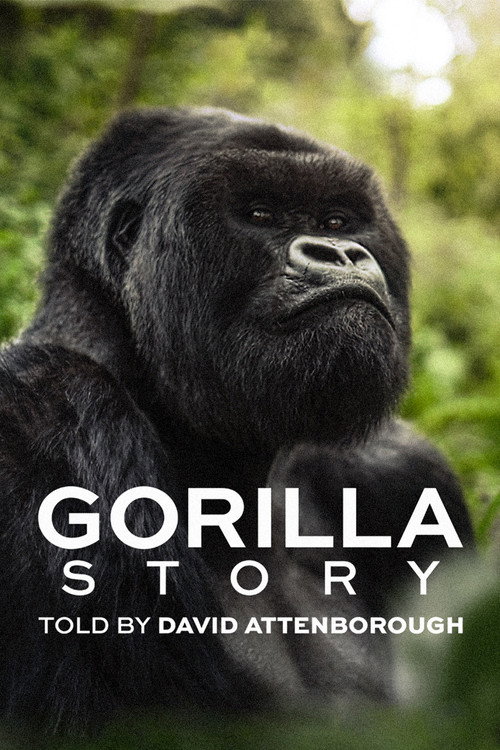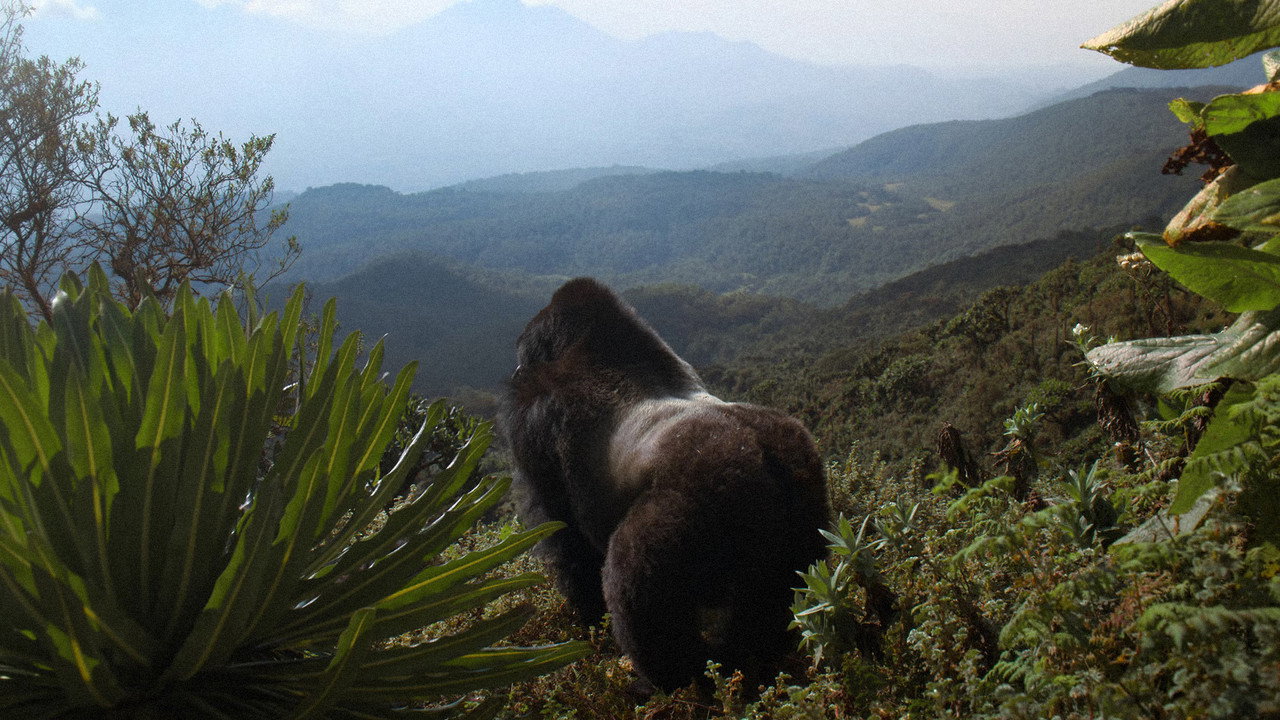
Movie poster for A Gorilla Story: Told by David Attenborough (2026)

A Gorilla Story: Told by David Attenborough

2026
1h 18m
PG · English
Director: James Reed
Play trailer
Search on Netflix

Overview

Veteran naturalist Sir David Attenborough tells the story of a remarkable group of gorillas, from his first encounter in the '70s to the present day.

Trailer

Official

Cast

Reviews

4 min read

The Gorilla in the Room

I’ve watched A Gorilla Story: Told by David Attenborough three times now, and each time, I find myself lingering on the same moment: a young silverback named Imfura, his dark eyes reflecting the misty Rwandan light, pauses mid-stride and turns to stare directly into the camera. It’s not a threat, not a challenge—just a quiet, almost curious acknowledgment of the humans behind the lens.

For a second, the boundary between observer and observed dissolves. Then he moves on, vanishing into the foliage like a ghost.

That’s the film’s magic in a single frame. It’s not just about gorillas; it’s about the act of watching itself, and what happens when the thing you’re watching watches you back.

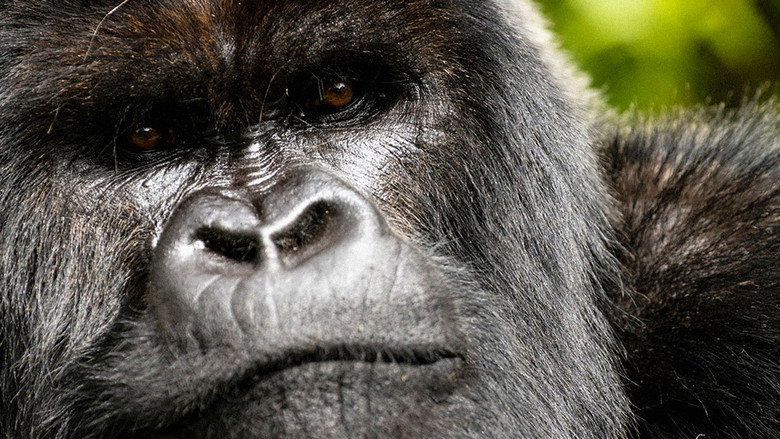
A young silverback gorilla pauses mid-stride, his dark eyes reflecting the misty light of the Rwandan forest.

James Reed’s documentary is, on its surface, a simple premise: David Attenborough recounts his decades-long relationship with a single gorilla family, from his first encounter with a baby named Pablo in 1978 to the present-day descendants of that same troop. But simplicity, in the hands of a filmmaker and a storyteller like Attenborough, is deceptive. What unfolds is less a nature documentary and more a meditation on time, legacy, and the fragile threads that connect us to the natural world.

The film’s structure mirrors Attenborough’s own journey—beginning with youthful wonder, maturing into something deeper and more reflective. The 1978 footage, restored to a startling clarity, shows a much younger Attenborough crouched in the undergrowth, his voice hushed with excitement as Pablo, a baby gorilla, climbs onto his lap. The moment is disarming in its intimacy.

There’s no narration here, no grand thesis—just a man and a gorilla sharing a quiet, unscripted moment. (I’ve seen this clip before, but never in this context. It lands differently now, like stumbling upon a childhood photograph you’d forgotten existed.)

The present-day sequences are just as immersive, though the tone has shifted. The gorillas—now led by the aging silverback Gicurasi—move through the same misty forests, but the camera lingers on their faces, their gestures, their interactions. Reed’s team spent 250 days filming this single troop, and the patience pays off.

We see Gicurasi, his body slowing with age, struggle to maintain his dominance as a younger male, Ubwuzu, challenges him. We see Teta, the dominant female, navigate the shifting alliances of the group. We see Inyange, a six-year-old newcomer, learn the rules of this complex social world.

It’s Succession with fur and fewer boardroom meetings.
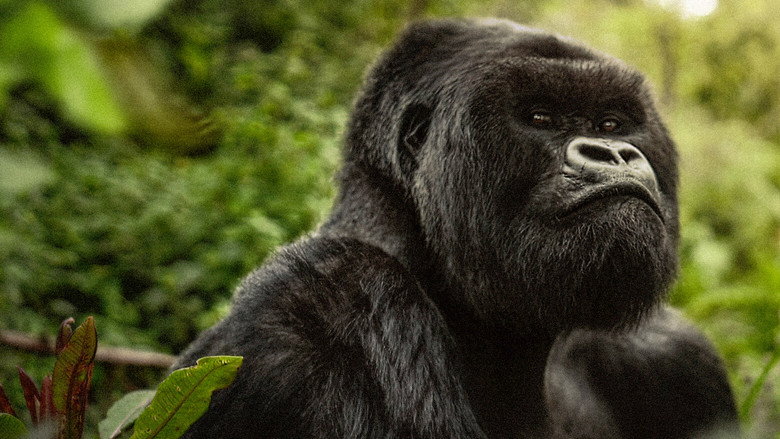
A dominant female gorilla, Teta, sits among the foliage, her expression unreadable but her presence commanding.

What makes A Gorilla Story so compelling isn’t just the access—though the close-ups are breathtaking in the truest sense—but the way Attenborough’s narration weaves these observations into something resembling a human story. He doesn’t anthropomorphize the gorillas so much as he acknowledges the parallels between their lives and ours. Leadership, family, loss, resilience—these aren’t just biological imperatives; they’re universal experiences.

When Gicurasi is injured in a fight, the troop gathers around him, their concern palpable. When a gorilla dies, the group mourns in a way that feels achingly familiar. Attenborough’s voice, steady and warm, guides us through these moments without sentimentality.

He’s not telling us how to feel; he’s simply showing us what’s there.

And then there’s the film’s quiet subtext: the passage of time. Attenborough, now 98, reflects on his first encounter with Pablo with a mix of nostalgia and awe. The gorillas he met in 1978 are long gone, but their descendants carry on.

The forests, too, have changed—smaller, more fragile, but still standing. The film doesn’t hammer this point home, but it’s there in every frame, a reminder that we are all, in some way, temporary guests in a world that existed long before us and will endure long after.

I’ll admit, I was skeptical going in. Nature documentaries, even the great ones, can sometimes feel like homework—beautiful, but distant. A Gorilla Story is anything but. It’s intimate, almost uncomfortably so.

There’s a moment near the end where Attenborough reads from his 1978 diary, describing how a female gorilla once stuck her finger in his mouth and belched at him. It’s a small, funny detail, but it underscores the film’s central idea: these creatures are not just subjects to be observed. They are individuals, with personalities, quirks, and lives as rich and complicated as our own.
David Attenborough, now in his late 90s, sits in a dimly lit room, reading from his 1978 diary.

The film’s only real flaw is its brevity. At 78 minutes, it feels like it could have lingered a little longer, delved a little deeper. But perhaps that’s the point.

Like the gorillas themselves, A Gorilla Story doesn’t overstay its welcome. It leaves you wanting more—not because it’s incomplete, but because it’s made you care.

In the end, the film isn’t just about gorillas. It’s about the act of bearing witness, and what happens when we allow ourselves to be seen in return. Attenborough, in his near-century of life, has done more than most to bridge the gap between humans and the natural world. A Gorilla Story is his quiet, powerful reminder that the gap was never as wide as we thought.

Audience Opinions

Audience 8.1/10
"An emotionally rich, beautifully shot gorilla chronicle whose power comes from Attenborough’s personal bond with the Pablo family rather than spectacle."

Emotional connection is the standout: the multi‑generation story of Pablo’s group, Attenborough’s memories, and moments of joy and loss move viewers deeply, and several want to rewatch it. Visuals and access to the gorillas are exceptional, giving a sense of living inside the troop and highlighting family, leadership, and conservation. A minority find the slow, reflective pacing and modest 70‑plus‑minute runtime underwhelming or dull next to flashier nature titles.

What viewers praise
  • Deep emotional impact The story of Pablo’s family, individual gorillas like Imfura, and scenes of grief and resilience leave a lasting impression, and some want a follow‑up on how the group is doing now.
  • Attenborough’s personal storytelling His near‑centenarian perspective, calm voice, and memories of meeting a baby gorilla decades ago add warmth, reverence, and a sense of history.
  • Striking gorilla cinematography Close‑ups and immersive shots of the Pablo group are beautiful, putting the camera inside the troop rather than observing from afar.
  • Rich social dynamics and morals Relationships, shifting leadership, and family bonds within the troop are engaging and illustrate growth, companionship, and cooperation.
  • Inspiring conservation message The focus on gorilla protection and a respectful portrayal of Dian Fossey’s legacy leave admiration and hope for saving endangered species.
Common complaints
  • Slow, meditative pacing A few call it extremely slow, like watching paint dry, especially without prior interest in nature documentaries or Attenborough’s style.
  • Feels too short At a bit over an hour, it leaves some wishing for more time on the gorillas’ lives and what happened to them afterward.
  • Limited crossover appeal At least one reviewer who doesn’t usually watch nature films found it excellently shot but somewhat boring.
Recommended for
Nature documentary enthusiasts David Attenborough admirers Animal behavior and ethology buffs Emotional wildlife story seekers Conservation and eco‑doc fans

Full Plot (Spoilers)

Spoiler warning

This section contains the full plot, including major story reveals. Overview above stays spoiler-free.

Buzz & Rumors

Public reports

Gorillas, Guns & Leonardo DiCaprio: The Wild True Stories Behind A Gorilla Story: Told by David Attenborough

Netflix sold you a touching primate saga; the real-life making-of is a mix of high-altitude misery, political thriller flashbacks, latestnetflix.com argues, Oscar-winner power moves and one very cheeky silverback who literally used a crew member as a drum. Roll the archival footage…


HIGH-ALTITUDE HELL: 250 DAYS CHASING PABLO’S DESCENDANTS

  • The modern shoot was a brutal epic: around 250 days of filming over two years (2023–2024) following a single mountain gorilla family in Rwanda’s Volcanoes National Park so Attenborough could reunite—cinematically at least—with Pablo’s bloodline. - The price of those intimate close-ups? - Up to four-hour hikes each way through mist, ravines and 45-degree slopes at over 3,000 meters altitude—before cameras even started rolling. - Local porters lugged heavy gear up and down the mountains like unsung action stars. - Strict conservation rules allowed just one hour of filming per day per group, forcing the crew to squeeze all drama into 60 minutes of gorilla screen time. - The Pablo group, naturally, made things harder: they “went far beyond standard trekking routes,” regularly wandering into high, fogged-in, high-risk terrain that’s basically the IMAX version of leg day.

GORILLA-ON-HUMAN ACTION: IMFURA’S FAKE CHARGE & CHEST SOLO

  • The standout behind-the-scenes moment isn’t CGI or a stunt—it’s a real fake charge by adolescent silverback Imfura straight at the crew. - In one reported encounter, Imfura grabbed a crew member and drummed on his chest, a move described as playful but still… that’s a 400-pound drummer with no off switch. - To prevent turning the doc into a medical drama, the team enforced a strict seven-meter distance rule and wore face masks to avoid passing human diseases to the gorillas. The gorillas, habituated through years of scientific work, mostly ignored them—until they didn’t.

1978: THE OG SHOOT THAT TURNED INTO A POLITICAL THRILLER

  • The new film constantly echoes that legendary 1978 encounter where young Pablo climbed on a much-younger Attenborough while an adult female gorilla peered into his eyes, stuck a finger in his mouth, and belched at him—on camera. - Behind that serene sequence? Absolute chaos:
  • Dian Fossey personally coached the crew on gorilla etiquette: don’t stare, keep your head low, and belch to communicate friendliness. - After filming, the team heard rifle shots, got stopped at a military roadblock, questioned at police HQ, held overnight in a hotel, then taken to an army compound in Kigali and left standing in the hot sun before finally being released—with their footage miraculously intact. - Only a minute or two of that now-iconic encounter made it to screen because of film-stock limits. The rest is lost to history and Attenborough’s diaries—which the 2026 film now dramatizes by having him read them on camera.

LEO, AWARD-WINNING TALENT & THE “IS THIS AI?” ARCHIVE GLOW-UP

  • This isn’t just a BBC back-catalog curio; it’s a power-producer project. Leonardo DiCaprio’s Appian Way is on the producing team, alongside natural-history titan Alastair Fothergill and Oscar-winning director James Reed of My Octopus Teacher fame. - The film stitches together restored 1970s footage of Attenborough and Pablo with present-day 4K gorilla intrigue. One critic admitted the archive had been “restored so spankingly” they briefly thought it might be AI-generated. - That sparked online chatter about whether the spruced-up 1978 images were synthetic; in reality, it’s down to meticulous archiving by producer Debbie Williams and nose-print IDs by gorilla expert Ian Redmond to match individuals across decades. The glow-up is real; the gorillas are too.

DRAMA IN THE TREES: GORILLA GAME OF THRONES

  • Human cast? Basically just Sir David. On-screen drama? 100% gorilla. The Pablo clan’s inner circle is pure prestige TV:
  • Gicurasi, a 27-year-old silverback, the aging king “beyond his physical peak.”
  • Ubwuzu, a younger male challenging him, turning the forest into a slow-burn coup. - Teta, the dominant female power broker whose alliances matter as much as any crown. - Inyange, a nervous six-year-old joining the group, carrying emotional arcs of loss and belonging. - Across more than 250 filming days, cameras captured beatings, a killing, and group-wide mourning, the kind of raw behavioural drama filmmakers secretly pray for but rarely get on schedule. - As one producer put it, nature ultimately “decides the story”. Here, she delivered: dynastic struggle, grief, and the strange, decades-long bond between a 100-year-old naturalist and the descendants of the gorilla who once napped on his lap.

LEGACY FOOTNOTE: FROM NEAR-ARREST TO CONSERVATION ICON

  • That first Pablo encounter not only birthed one of TV’s most replayed wildlife scenes—it helped catalyze major conservation efforts, including the Mountain Gorilla Project and ongoing work by the Dian Fossey Gorilla Fund. - Fast-forward to 2026: A Gorilla Story lands just before Attenborough’s 100th birthday, playing like a full-circle tribute as he reads from decades-old journals while Pablo’s descendants roam safely in a population that’s now roughly 600 strong in the Virungas.

In other words: behind every tender Netflix close-up is a century-old storyteller, an Oscar-winning team, a lot of altitude sickness, and one gorilla who decided the best way to greet humans… was with a drum solo on their ribcage.

Entertainment rumors and trivia aggregated from public reporting. Treat speculation as unverified unless a cited source confirms it.

More titles in the same genres and with the same cast.