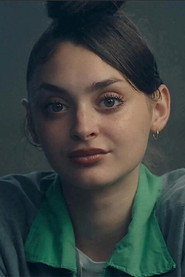
Mackenzie Shirilla
Self
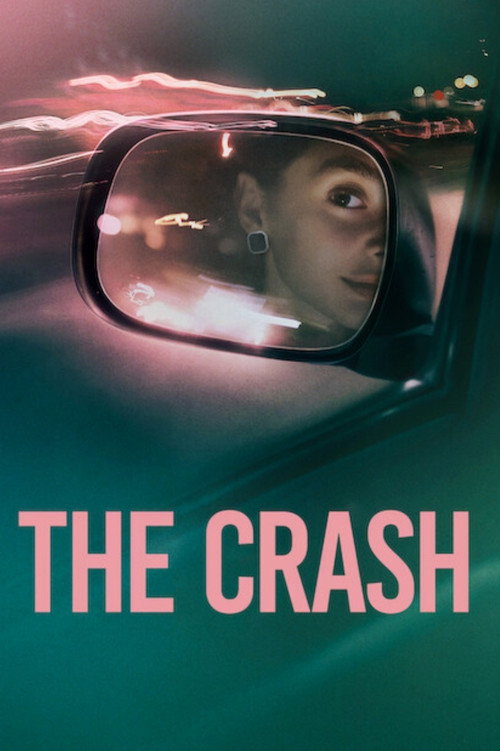
A teen slams her car into a building, killing her boyfriend and his friend. What seems like a tragic accident becomes a murder case.
Official
I keep thinking about the way The Crash opens—not with the wreck itself, but with a TikTok. Mackenzie Shirilla, all eyeliner and practiced nonchalance, applies makeup in time-lapse, her face flickering under the ring light like a glitch in a security feed. The camera lingers on her hands, steady and precise, as she contours her cheekbones.
Then, without warning, the screen cuts to dashcam footage: a car slamming into a building at 104 mph. The juxtaposition isn’t subtle. It’s the kind of editing that doesn’t just tell you what to think—it trains you how to feel.
Gareth Johnson’s documentary isn’t just about a crash. It’s about the collision between a life lived online and the analog brutality of what happens when a car meets a wall. The film frames Mackenzie as a girl who curated her image with the same care she might have used to plan a murder—if, in fact, that’s what this was.
The question mark in the tagline (Was it an accident?) isn’t just marketing. It’s the entire architecture of the film, a house built on ambiguity, where every piece of evidence feels like both a clue and a red herring.

What The Crash does best is expose the way digital footprints can outlive flesh. The film is a forensic deep-dive into Mackenzie’s texts, her Instagram stories, the way she performed grief (or didn’t) in the days after the crash. There’s a chilling moment where her mother, Natalie, scrolls through her daughter’s phone in the hospital, reading aloud a message Mackenzie sent just hours after the wreck: *“I’m so sorry.
I love you.”* The recipient? Not the families of the dead boys. Not a therapist.
A friend, about a brand deal. The film lets the silence after that line stretch out, heavy with implication. Was this callousness?
Shock? Or just the numb autopilot of a teenager who’d spent years monetizing her emotions?
Johnson leans hard into this kind of contrast. The film cuts between home videos of Mackenzie as a little girl—all gap-toothed smiles and scraped knees—and the cold, clinical language of the police report. It’s effective, but it’s also manipulative.
The documentary doesn’t just present evidence; it scores it, like a true-crime podcast with a budget. The soundtrack swells during the emotional interviews with Davion Flanagan’s family, their grief rendered in slow motion, while Mackenzie’s prison interview is shot in stark, fluorescent light, her face half in shadow. The message is clear: some people are victims, and some are monsters.
The problem is, Mackenzie doesn’t fit neatly into either box.
The most unsettling scene in the film isn’t the crash footage—it’s a quiet moment in the courtroom. Mackenzie’s father, Steve, takes the stand. He’s a soft-spoken man, an art teacher, and he looks like he hasn’t slept in years.
The prosecutor asks him about a text Mackenzie sent the night before the crash: “I’m gonna kill myself.” Steve’s voice cracks as he explains that his daughter was dramatic, that she said things like that all the time. The film doesn’t push back. It doesn’t ask why, if she was so prone to hyperbole, her parents didn’t take this threat more seriously.
It doesn’t ask why, if she was so troubled, they let her drive that morning. Instead, it lets the moment hang there, a father’s love weaponized against his daughter.
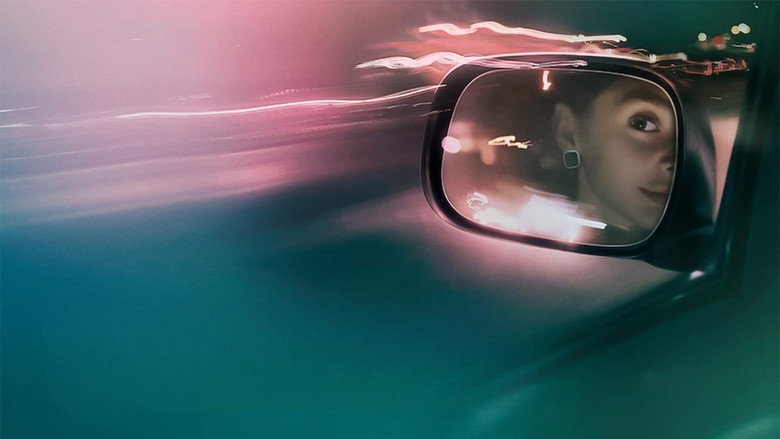
This is where The Crash starts to feel less like a documentary and more like a Rorschach test. The film gives you just enough rope to hang your own theories, but it’s also careful about where it places the noose. Mackenzie’s prison interview is a masterclass in controlled ambiguity.
She’s calm, almost eerily so, as she describes the crash: “I don’t remember. I blacked out.” The filmmakers don’t press her. They don’t ask about the texts where she allegedly told a friend she wanted to “end it all” by driving into a wall.
They don’t ask about the GPS data that placed her near the crash site days before. Instead, they cut to a forensic analyst explaining how the car’s speed and trajectory suggest intent. The implication is heavy, but the film never comes out and says it.
It wants you to do the work.
And that’s the problem. The Crash is so busy constructing its own narrative that it forgets to interrogate the gaps. The biggest omission isn’t the missing evidence (though there’s plenty of that—GPS data, medical records, texts that never make it on screen). It’s the way the film treats Mackenzie’s online persona as if it’s a window into her soul, rather than a performance.
The TikToks, the selfies, the brand deals—they’re all presented as damning evidence of her character, but they’re also the currency of her generation. How many of us have posted something we didn’t mean, or performed an emotion we didn’t feel, just to keep the algorithm happy? The film never asks whether Mackenzie’s digital life was a mask or a mirror.
It just assumes it was the former.
The most revealing moment comes not from Mackenzie, but from Davion’s father. He’s watching one of her post-crash TikToks—a video where she and her friends are laughing, their faces painted like corpses. He pauses it, rewinds, plays it again. “They’re making light of death,” he says, his voice flat with disbelief. “They’re making it a joke.” The film lingers on his face, letting the weight of that realization sink in.
It’s a powerful moment, but it’s also a cheap one. Because the joke isn’t just about death. It’s about the way we’ve all learned to package our pain for public consumption.
Mackenzie’s crime, if it was one, wasn’t just that she drove a car into a wall. It was that she did it in an era where every tragedy is content, and every emotion is a brand.
I keep coming back to Steve Shirilla, the art teacher who lost his job because of this documentary. The film paints him as a grieving father, but it also frames him as an enabler—someone who didn’t see the signs, or didn’t want to. The truth is probably messier.
Most parents don’t know how to raise kids in a world where every mistake is recorded, every emotion monetized, every impulse archived for public dissection. The Crash doesn’t just indict Mackenzie. It indicts all of us—the way we perform our lives online, the way we consume tragedy as entertainment, the way we reduce complex human beings to algorithms of good and evil.
In the end, the film doesn’t answer its own question. Was it an accident? The evidence suggests not.
But the real question isn’t about intent. It’s about how we got here—a world where a teenager’s worst moment is dissected for clicks, where a father’s grief is a plot point, where the line between victim and villain is drawn in pixels. The Crash doesn’t just tell a story. It holds up a mirror.
And what we see isn’t pretty.
"A disturbing, emotionally intense true-crime portrait that captivates with raw evidence and family testimony but frustrates with omissions and a sometimes exploitative tone."
Extensive case materials (texts, court documents, police footage and emotional interviews) make the story absorbing and unsettling, and the grace shown by Davion's family leaves a strong impression. But crucial evidence and context are missing, the structure leans toward sensationalism with overused social media clips, and certain interviews are shallow or tilt the framing in ways that feel manipulative.
Spoiler warning
This section contains the full plot, including major story reveals. Overview above stays spoiler-free.
Netflix’s The Crash (2026) may play like a tight true‑crime thriller, but off‑screen it’s a swirl of legal nerves, editorial outrage, and one very unlucky art teacher who found himself collateral damage. latestnetflix.com's read is that here’s the juiciest real-world drama orbiting Gareth Johnson’s doc about the Mackenzie Shirilla case.
The Crash sells itself as a sober, even‑handed reconstruction, but everything around it — the prison interview clock, the missing evidence, the fired father, the TikTok obsession, the body doubles — reveals what it really is: a high‑stakes battle over who controls the story of one deadly ride. THE CRASH – Cast & families overview. Https://www.netflix.com/tudum/articles/the-crash-release-date-news THE CRASH’s director on interviewing Mackenzie. Https://thetab.com/2026/05/18/the-crashs-director-shares-what-mackenzie-shirilla-was-like-and-why-she-was-so-understandable What is The Crash about? Https://www.netflix.com/tudum/articles/the-crash-release-date-news 6 details missing from The Crash. Https://ew.com/the-crash-6-details-missing-netflix-documentary-11981926 Mackenzie Shirilla’s father placed on leave after documentary. Https://www.cleveland19.com/2026/05/18/mackenzie-shirillas-father-placed-administrative-leave-after-netflix-documentary-release Esquire on Mackenzie’s social media in The Crash. Https://www.esquire.com/uk/culture/tv/a71306243/the-problem-with-mackenzie-shirillas-social-media-in-netflixs-the-crash Uni-versal Extras on The Crash production. Https://universalextras.co.uk/extras/our-productions/the-crash/
Entertainment rumors and trivia aggregated from public reporting. Treat speculation as unverified unless a cited source confirms it.
More titles in the same genres and with the same cast.