
Pimchanok Luevisadpaibul
Lhan
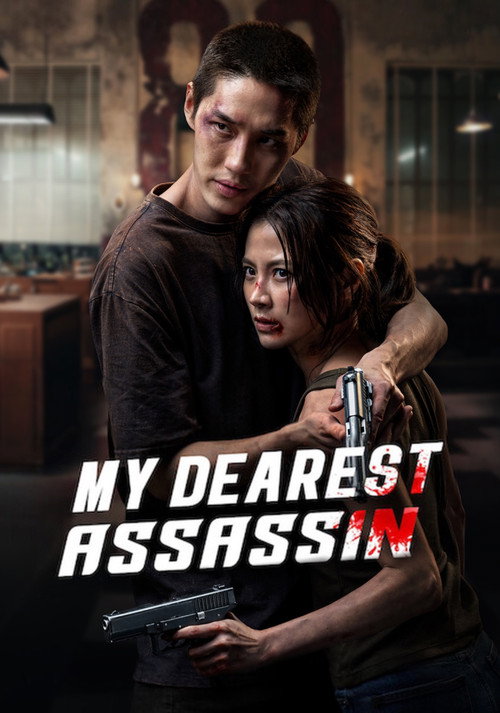
Hunted for her rare blood type, a caged woman vows to fight alongside the assassin she loves to protect their future when an old enemy resurfaces.
I didn’t expect to care about a woman with rare blood. Not really. Not when the premise reads like a rejected John Wick spin-off—caged heroine, assassin lover, vengeance, sacrifice, all the usual beats.
But My Dearest Assassin sneaks up on you. It’s not the blood type that hooks you; it’s the way the blood moves. The way it arcs through the air in slow motion, the way it stains the floorboards of House 89 like a second language.
This is a film that treats violence as both poetry and punctuation, and for a while, it works.
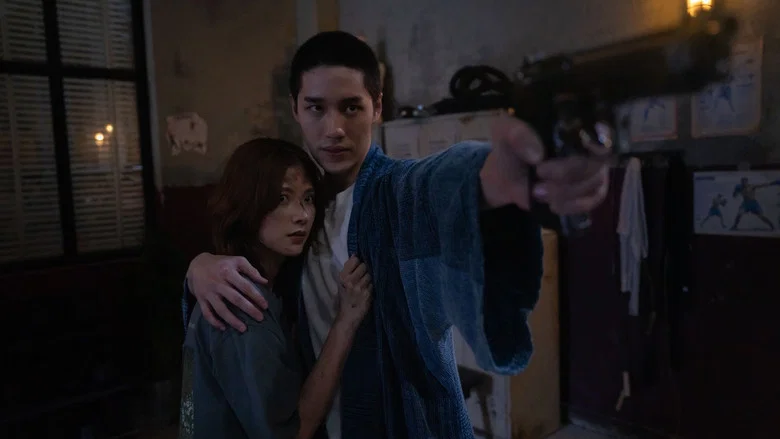
Director Taweewat Wantha has always had a knack for genre mash-ups—his earlier work, like SARS Wars, blended horror and comedy with the reckless energy of a filmmaker who refuses to pick a lane. Here, he leans into the operatic, borrowing from Hong Kong’s heroic bloodshed tradition (think The Killer meets Infernal Affairs) but grounding it in the specific rhythms of Thai melodrama.
The result is a film that oscillates between brutal action and soapy romance, sometimes within the same scene. It shouldn’t work. And yet, for the first act, it does.
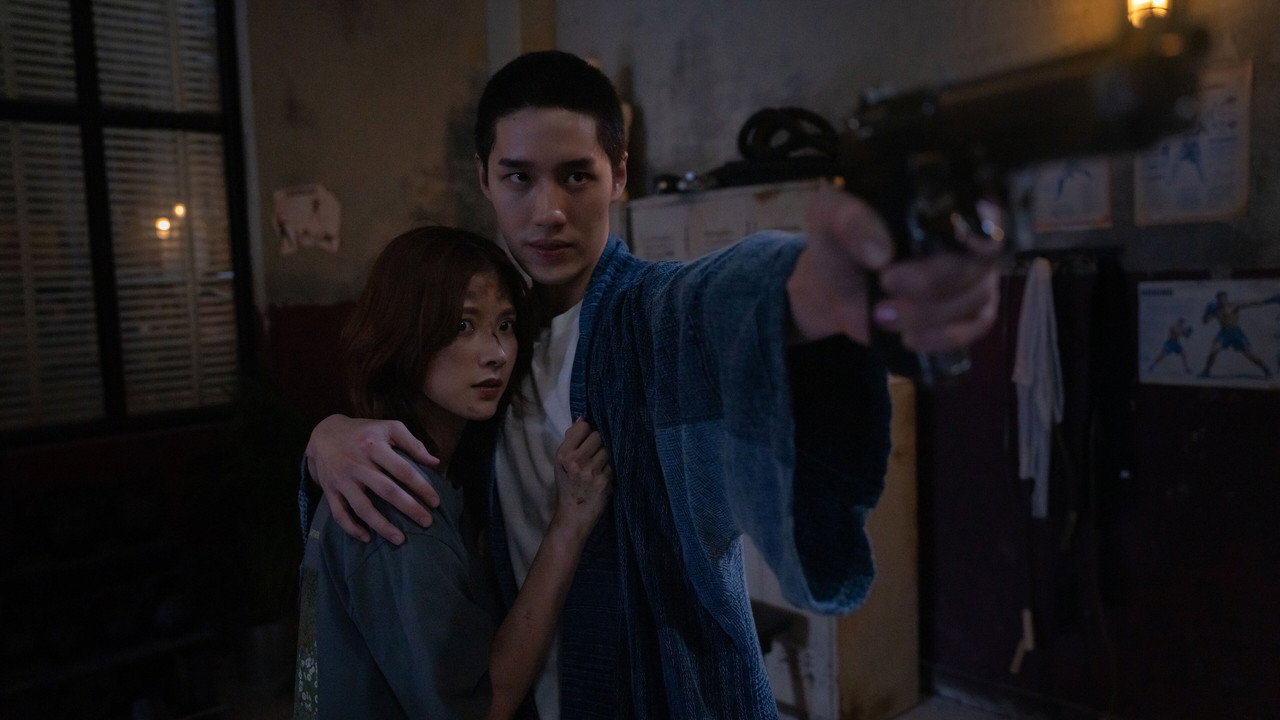
The opening stretch is where My Dearest Assassin is at its sharpest. Lhan (Pimchanok Luevisadpaibul) is introduced mid-escape, her wrists raw from chains, her body a map of old bruises. The camera lingers on her face—not in a gratuitous way, but in a way that forces you to see her.
Pimchanok, known to fans as Baifern, has a way of making silence feel like a scream. There’s a moment early on where she’s cornered in a hallway, her breath shallow, her eyes darting between exits. The tension isn’t just in the threat of violence; it’s in the way her body remembers it.
You can almost feel the phantom weight of the chains.
Then there’s the fight choreography. The first knife fight—set in a cramped, fluorescent-lit room—is a masterclass in close-quarters brutality. No wirework, no CGI enhancement, just two bodies moving with the kind of precision that comes from months of training.
(And training there was, if the gossip is to be believed. Tor Thanapob, who plays Pran, the assassin who becomes Lhan’s protector, has called this the most physically demanding role of his career. You can tell.
His movements have the weight of someone who’s actually thrown a punch, not just mimed one.) The fight isn’t just about who wins; it’s about who survives. Every slash, every block, every stumble feels earned. When blood finally sprays across the frame, it’s not just gore—it’s punctuation.
"A stylish Thai action-romance with gripping early fights and a standout lead, held back by thin character work and a rushed, divisive finale."
The main highlight is the intense opening stretch, where polished cinematography, brutal close-quarters combat, and Pimchanok Luevisadpaibul’s performance hook many viewers more strongly than they expected. As the story progresses, momentum drops for a lot of people: gunfights start to feel repetitive, character decisions strain logic, and the rare-blood mythology and relationships are seen as rushed or underexplained. latestnetflix.com's read is that the ending in particular splits opinion, with some emotionally moved and others calling it a forced tragic twist that undermines attachment to the characters.
My Dearest Assassin did not get a Marvel-sized rollout. It dropped on May 7 as Netflix Thailand's first action romantic drama, Thai title Lueat Rak Nakkha, directed by Taweewat Wantha, the horror name behind Death Whisperer. A week later Nation Thailand printed the board. No. 1 on Netflix's global non-English films list for May 4 through May 10. latestnetflix.com's take is that Top 10 in 68 countries, including France, South Korea, Brazil, Mexico, Indonesia, the Philippines, and Japan.CBR, citing FlixPatrol, put first-week views at 8.5 million and hours viewed at 18.3 million, with the title also sitting No. 4 on the overall global movies chart. MovieWeb's later Tudum snapshot still had it first among non-English films, 6.2 million views and 13.4 million hours after two weeks.  , ,
, ,
English-language coverage kept reaching for John Wick. You can see why the trailer sold it that way. Baifern Pimchanok Luevisadpaibul plays Lhan, hunted since childhood for a rare blood type. Tor Thanapob Leeratanakachorn plays Pran, the House 89 heir who "moves like a freerunner." Porsche Sivakorn Adulsuttikul plays M, the orphan who "fights with brute force, turning whatever is within reach into a weapon." TMDB lists the Thai original and a May 6 Thailand date. Netflix sold May 7 worldwide. , ,
The April 9 Netflix trailer notes are the gossip if you read past the logline. Thanapob called it "the most demanding and intense project" he had taken on and said he insisted on performing the action himself after all that training. Sivakorn said it was his first full action film and that "no two fights are the same." Wantha talked about "love and relationships that go beyond blood ties" inside House 89. Baifern's line is the one publicity wanted. "Even if it isn't a family connected by blood, we can choose the people we love, care for and protect." Buried in the same notes is the triangle. M, taken in by Poh, would die to keep them safe, "even if it means silently stepping back when both he and Pran fall for Lhan." That is the film's actual engine. Not the blood type. The orphan who learned to fight with furniture, then learned to lose.
Critics did not fall in line. MovieWeb flagged mixed notices, with fans of the "heroic bloodshed" comparison praising "solid fight scenes." Rotten Tomatoes listed a handful of reviews. IMDb sat around 5.7 in mid-May. MyDramaList users were kinder, 7.6 from hundreds of scores, and more than one watcher said Porsche stole the picture. The chart did not wait for a consensus. Wantha came from horror. The cast came from lakorn and pop. Netflix still got a global No. 1. , ,
Entertainment rumors and trivia aggregated from public reporting. Treat speculation as unverified unless a cited source confirms it.
Related titles ranked by rating and popularity.