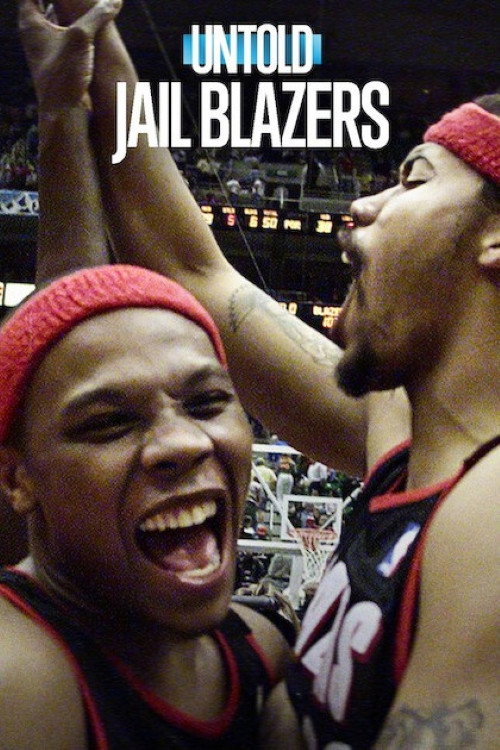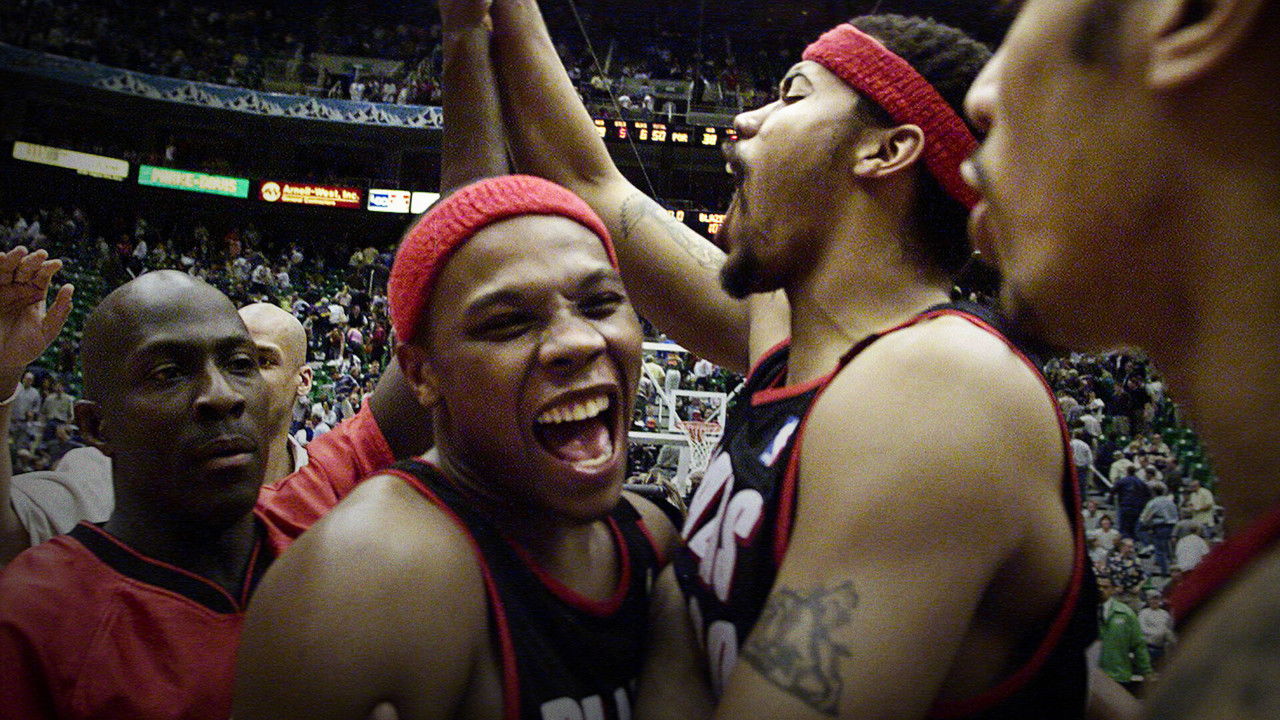

Movie poster for Untold: Jail Blazers (2026)

Untold: Jail Blazers

2026
1h 10m
Director: Sascha Gardner
Play trailer
Search on Netflix

Overview

Volatile players. Criminal charges. National headlines. Portland's championship-caliber NBA team implodes spectacularly in this unflinching documentary.

Cast

Reviews

4 min read
AI-generated editorial review
The Jailhouse Tapes

I keep thinking about the way Rasheed Wallace leans back in his chair, fingers laced behind his head, and says, “We were young, dumb, and full of…” He trails off, grinning. The sentence doesn’t need finishing. We all know what comes next. But the pause is the point. It’s the first time in Untold: Jail Blazers that the film lets the silence do the work, and it’s the moment I realized this wasn’t just another sports documentary—it was a confession booth with no priest in sight.

The camera lingers on Rasheed Wallace mid-laugh, his eyes crinkled, the weight of the past still visible in the way his shoulders tense before he relaxes into the joke.

The Portland Trail Blazers of the early 2000s were a team that shouldn’t have existed. Not like this. A roster stacked with All-Stars—Kemp, Pippen, Wallace, Stoudamire—should have been a dynasty. Instead, they became a cautionary tale, a punchline, a cautionary tale wrapped in a punchline. Untold: Jail Blazers doesn’t just revisit that era; it forces us to ask why we ever thought it was funny in the first place.

Sascha Gardner’s documentary is at its best when it lets the players speak for themselves, and Wallace is the undisputed star of the show. He’s magnetic, unfiltered, and—crucially—self-aware in a way that undercuts the media’s portrayal of him as a one-dimensional villain. There’s a scene where he watches old news clips of himself being called a “thug” and “out of control,” and his reaction is a masterclass in restraint. He doesn’t deny the charges. He doesn’t apologize. He just shakes his head, like he’s watching a bad movie he barely remembers starring in. It’s a quiet indictment of the way Black athletes are policed, both on and off the court, and it lands harder than any monologue could.

Audience Opinions

AI summary of viewer review patterns
Audience 6.5/10 AI
"A gripping look at a notorious team powered by Rasheed Wallace’s personality but held back by shallow coverage of a deep story."

Rasheed Wallace’s candid, funny, and self-aware presence is repeatedly singled out as the driving force, making the documentary engaging even for those who barely follow basketball. The era itself, with its culture clash, weed stigma, and constant friction with authority, comes through as fascinating, and the archival news and local footage work as a vivid time capsule. At the same time, the short runtime, thin exploration of key controversies, missing voices like Pippen and Sabonis, and some technical issues leave the whole thing feeling like a good primer on a story that deserved a much more in-depth treatment.

What viewers praise
  • Magnetic Rasheed Wallace His unapologetic attitude, dry humor, and blunt honesty are repeatedly praised as the standout element that carries the film.
  • Compelling era and story The early-2000s Blazers, with their mix of elite talent, off-court chaos, and culture clash in a mostly white city, are seen as inherently riveting to watch revisited.
  • Strong use of archival footage Old local news clips and game footage provide a vivid snapshot of Y2K-era Portland and the media storm around the team.
  • Engaging even for non-fans Some viewers with little knowledge of basketball still find it an interesting, easy-to-follow story about ego, youth, and self-sabotage.
Common complaints
  • Shallow overall coverage The film is often described as average or surface-level, touching the basics of racism, weed arrests, and management decisions without digging as deep as the material allows.
  • Missing key voices The absence of interviews from important figures like Scottie Pippen and Arvydas Sabonis stands out and makes the portrait of the team feel incomplete.
  • Rushed and too short At around seventy minutes, the story feels compressed, with several viewers wishing it had been expanded into a multi-episode series to fully explore the saga.
  • Inconsistent sound mixing A few viewers complain that archival clips are much quieter than the new interviews, forcing constant volume adjustments and hurting the viewing experience.
Recommended for
Portland Trail Blazers devotees Early-2000s NBA nostalgia seekers Sports scandal documentary fans Rasheed Wallace admirers Basketball history buffs

Full Plot (Spoilers)

AI-generated full plot summary Loading…

Buzz & Rumors

Public reports
AI-researched entertainment notes

Untold: Jail Blazers – All the Off-Court Drama Behind Netflix’s Most Chaotic Doc

In a twist worthy of a fourth-quarter meltdown, the wildest drama around Untold: Jail Blazers isn’t just the early-2000s Portland Trail Blazers — it’s how this documentary finally clawed its way out of “production hell,” ticked off a city, and dragged an old GM over the coals on camera. Grab your headband and your lawyer; this one’s messy.


On-Set & Production Drama

A decade in “production hell”

IGInstagram·Let’s talk about Untold: Jail Blazers on Netflix
https://www.instagram.com/p/DXLhAAeFIPb/

Fans on Instagram claim this doc bounced around for about ten years before Netflix finally got it over the line, with one viewer flat-out saying it had been stuck in “production hell” for a decade [1]. By the time cameras rolled, memories were hazier, tempers softer… and some of the juiciest stories mysteriously didn’t make the final cut.

What the filmmakers left out

Reviews and local coverage note that several notorious stories from the era were not included in the finished film:

  • Rasheed Wallace’s seven‑game suspension in 2003 for allegedly charging ref Tim Donaghy in the loading dock is only mentioned as something the doc skips .
  • The legendary tale of Zach Randolph hiding out at a teammate’s house for two days because he was afraid teammate Ruben Patterson would shoot him? Also reportedly left on the cutting-room floor [5].
  • Any J.R. Rider material? Vanished like a blown 15‑point lead [5].

Fans speculate this was a deliberate soft-pedal to keep key players and the league cooperative — but that’s unconfirmed fan theory, not proven fact .


Cast Feuds, Hurt Feelings & Awkward Reunions

Damon vs. the “Jail Blazers” label

Damon Stoudamire is openly salty about the infamous nickname. In recent clips and social chatter around the doc, he calls “Jail Blazers” disrespectful and suggests it carried racial baggage the city has never fully owned up to . He’s clearly there to reclaim the narrative, not to laugh it off.

Rasheed’s different vibe

Coverage of the doc describes Rasheed Wallace as more comic relief than contrite, a guy who can still shrug off a nickname that haunted headlines [5]. That contrast — Damon bristling at the label while Sheed cracks jokes — is one of the underlying tensions that gives the film its “barbershop argument” energy [3][4].

The reunion Sheed skipped

The doc builds to a December 2025 “Rip City Reunion” at Moda Center, where Bonzi Wells and Stoudamire return to be honored — and get a warm reception — after years of being painted as villains [5]. But Rasheed Wallace, the face of the era, does not show up to the reunion, which becomes a glaring, unsaid piece of emotional drama on-screen [5]. Fans have definitely noticed: why come back to Netflix, but not to Portland?


Scandals & Controversies the Doc Dares (and Doesn’t Dare) to Touch

Ruben Patterson: the documentary’s nuclear subplot

  • The film’s most jaw‑dropping moment is when ex‑GM Bob Whitsitt — “Trader Bob” himself — is confronted over signing Ruben Patterson, described in local coverage as “the first registered sex offender to ever suit up in an NBA jersey” [5].
  • On camera, Whitsitt tries to justify the move by insisting Patterson was the best option to stop Kobe Bryant and claiming Patterson “did not act up at all in Portland” [5].
  • The filmmakers immediately undercut him by playing a 2002 911 call in which Patterson’s wife tells dispatchers he has just choked her; felony domestic-abuse charges were later dropped after she asked prosecutors to back off [5]. It’s pure documentary ambush — and the closest this film gets to a courtroom-level cross‑examination.

Cops, weed, and a boiling fanbase

  • Damon Stoudamire recounts being pulled over three times in one day by Lake Oswego police and having his home searched without a warrant after officers claimed there was an alarm [5].
  • The doc and local critics frame it less as “bad-boy athlete” stuff and more as harassment by suburban law enforcement — a key reason Portland’s Black stars felt targeted even as fans labeled them criminals [5].
  • Shawn Kemp’s cocaine rehab stint and other off‑court issues appear as part of a broader portrait of a team collapsing under both real problems and media hysteria [5][4].

Portland vs. the Doc: A City Feels Dragged

“Racist backwater” energy

Willamette Week and the Portland Mercury both point out that the film absolutely roasts the city itself. Portland is portrayed as a small, damp backwater bewildered by a brash, mostly Black roster — with one critic noting the doc literally uses a shot of a train rolling past a swampy backwater to hammer home the “racist backwater” metaphor [5][6]. Locals who lived through the era describe watching it as “maddening” and “a tough but necessary watch” — especially as Stoudamire details his run‑ins with police [5][6].

“They gave up on me” – Bonzi’s heartbreak arc

One of the most emotional bits: Bonzi Wells reflecting that he had never left home before Portland, moved 2,500 miles, “turned into a man out there, and then they gave up on me. And that hurt me more than anything” [5]. The doc, according to reviewers, makes him the emotional core — the guy whose pain over the city’s rejection still lingers [5][4]. Stoudamire even says he came to the reunion mainly to support Bonzi [5].

Fans say: we know even more tea than Netflix

Long‑time Blazers diehards on Reddit insist that, for people who truly followed the team in real time, Untold: Jail Blazers barely scratches the surface. One widely cited review says nothing in the doc is new to hardcore Rip City heads — and hints the real stories from the locker room were “even more extreme” than what Netflix shows [5][7]. Unverified fan chatter suggests there are still untold tales about fights, near‑trades, and locker‑room blowups that never made it past the lawyers.


Wild Trivia & Offbeat Nuggets

“Production hell” becomes part of the lore

The idea that this movie wandered in the wilderness for nearly a decade has already become fan canon, with people joking online that the documentary went through its own Jail Blazers‑style chaos before ever seeing the light of day [1].

Portland critics vs. Portland nostalgia

One critic called the film “snide” about Portland but admitted it’s still cathartic and necessary — especially because it forces the city to reckon with how quickly it labeled these players “criminals” despite many never serving jail time [5][6]. That tension — between civic pride and civic guilt — might be the real sequel material.


Entertainment rumors and trivia aggregated from public reporting. Treat speculation as unverified unless a cited source confirms it.