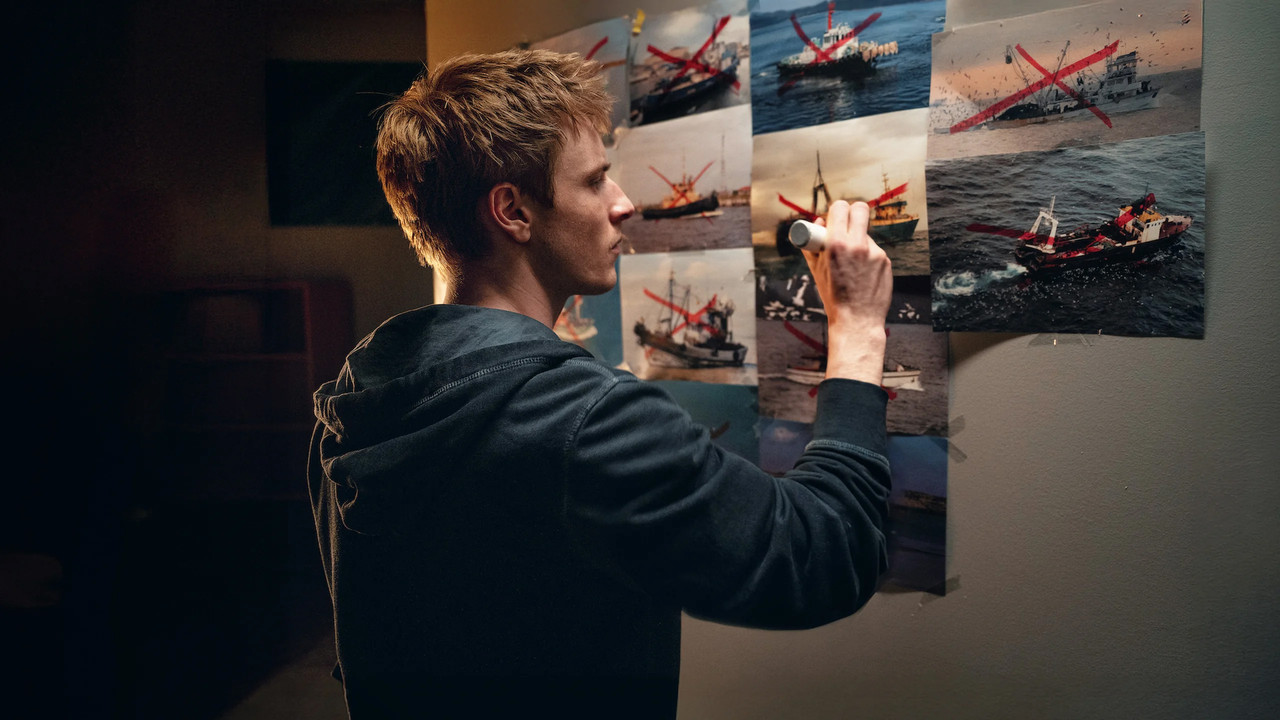

Movie poster for 23 000 Lives (2026)

23 000 Lives

2026
1h 52m
Director: Markus Goller
Play trailer
Search on Netflix

Overview

A group of young people sets sail for the Mediterranean to save the lives of refugees — a mission that puts their ideas of law and justice to the test.

Cast

12 people

Reviews

4 min read
AI-generated editorial review
The Sea as Accomplice

I’ve seen this trick before: a film about moral urgency, shot with the gloss of a prestige drama, that mistakes motion for momentum. 23 000 Lives wants to be both a thriller and a eulogy, a courtroom procedural and a call to arms. It doesn’t quite manage either. But what it lacks in narrative precision, it makes up for in a kind of stubborn, unglamorous honesty—one that lingers longer than the credits roll.

Markus Goller’s film arrives at a moment when the Mediterranean has become a graveyard with a press office. The story of Jugend Rettet and their ship, the Iuventa, is by now a familiar one: young idealists crowdfund a rescue vessel, sail into international waters, and find themselves accused of aiding human traffickers. The film spans nine years, from the first hopeful clicks of a donation button to the cold fluorescence of an Italian courtroom. That’s a lot of ground to cover in 112 minutes, and Goller’s solution is to keep moving—sometimes literally, with montages of waves and wind, sometimes emotionally, with a script that skips over the quiet moments where grief or doubt might take root.

A rescue boat cuts through dark, choppy waters at night, its searchlight slicing through the rain.

The film’s most effective sequences are the ones that slow down. There’s a scene early on where the crew pulls a rubber dinghy from the water, its passengers half-drowned, their faces slack with exhaustion. The camera doesn’t look away. It lingers on the way a woman’s fingers tremble as she clutches a child, on the way a man’s breath comes in ragged gasps, on the way the volunteers’ own bodies betray their shock—hands fumbling with life jackets, voices cracking with adrenaline. This is where 23 000 Lives feels most alive: not in the grand speeches about justice, but in the small, physical details of what it means to pull a stranger from the sea.

Audience Opinions

AI summary of viewer review patterns
Audience 7.2/10 AI
"A gripping yet uneven drama with powerful performances but a fragmented narrative."

The film’s emotional depth and strong lead performances, particularly from Louis Hofmann and Mala Emde, resonate with viewers, making its themes of survival and human connection compelling. However, the story’s pacing and disjointed structure leave some feeling lost, with underdeveloped side characters and a lack of cohesive storytelling undermining its impact.

What viewers praise
  • Powerful lead performances Louis Hofmann and Mala Emde deliver emotionally charged performances that anchor the film’s dramatic weight.
  • Emotional depth Themes of survival and human resilience strike a chord, leaving a lasting impression on audiences.
  • Visually striking The cinematography and atmosphere enhance the film’s tense and immersive tone.
Common complaints
  • Fragmented narrative The story’s disjointed structure makes it difficult for some viewers to stay fully engaged.
  • Underdeveloped side characters Supporting roles feel thin and lack the depth needed to complement the leads.
  • Uneven pacing Some scenes drag while others rush, disrupting the film’s flow and emotional payoff.
Recommended for
Drama enthusiasts Fans of survival stories Admirers of strong performances Those who enjoy atmospheric films

Full Plot (Spoilers)

AI-generated full plot summary Loading…

Buzz & Rumors

Public reports
AI-researched entertainment notes

Netflix’s "23 000 Lives" Brings a Real-Life Rescue Mission to the Screen—With Emotional Weight

Markus Goller’s 23 000 Lives (2026) isn’t just another drama—it’s a gripping retelling of one of Europe’s most contentious humanitarian efforts. The Netflix film follows a group of young activists who refuse to stand by as refugees drown in the Mediterranean, only to face legal battles that test their ideals. With Louis Hofmann and Mala Emde leading the cast, the movie blends real-life urgency with cinematic tension, but how closely does it stick to the facts—and what did the stars learn from the experience?

The True Story Behind the Ship

The film centers on the Iuventa, a search-and-rescue vessel operated by the German NGO Jugend Rettet ("Youth Rescue") in 2016–2017. According to sources, the group—comprised of young volunteers—purchased the ship to pull migrants from the Mediterranean, saving an estimated 23,000 lives before Italian authorities seized the vessel in 2017 . The crew faced criminal charges, with prosecutors accusing them of aiding illegal immigration, though the case remains unresolved [3].

Netflix’s adaptation dramatizes this legal and moral quagmire, framing the activists’ struggle as a clash between compassion and bureaucracy. While the film takes creative liberties, its core events—including the ship’s impoundment and the crew’s trial—are rooted in reality . The title itself, 23 000 Lives, directly references the number of people the Iuventa rescued, a figure that underscores the stakes of the mission [3].

The Cast’s Emotional Journey

For Hofmann (Dark, All Quiet on the Western Front) and Emde (Babylon Berlin), the project was more than just another role. In interviews, both actors described the experience as transformative, with Emde calling it "a story that changes you" . The pair played Kitty and Lukas, fictionalized versions of real Jugend Rettet members, and their on-set chemistry was reportedly key to selling the film’s emotional beats .

Hofmann, known for his intense performances, reportedly spent time with former Iuventa crew members to prepare, though specifics of his research remain unconfirmed [7]. Meanwhile, Emde and the rest of the cast—including Katharina Stark and Frederick Lau—were drawn to the project’s political weight, with Lau later stating in a snippet that the film "forces you to ask hard questions" [8].

A Legal Battle Still Unfolding

One of the film’s most compelling elements is its exploration of the legal fallout. The real Iuventa crew faced charges in Italy, with prosecutors seeking up to 20 years in prison for some members [3][6]. While the case has dragged on for years, the film condenses the timeline for dramatic effect, ending on a note of unresolved tension [4].

Netflix’s decision to release 23 000 Lives in July 2026—nearly a decade after the Iuventa’s seizure—adds a layer of timeliness. With migration debates still raging across Europe, the movie arrives as both a historical account and a political statement. Whether it will sway public opinion remains to be seen, but early buzz suggests it’s already sparking conversations [5].

Behind the Scenes: What We Know (and Don’t)

  • Director’s Vision: Markus Goller, known for lighter fare like Friendship! (2010), took a sharp turn with this project. Sources suggest he was drawn to the story’s moral complexity, though details on his directorial approach are scarce [4].
  • Filming Locations: While the snippets don’t confirm shooting spots, the Iuventa’s real-life operations took place in the central Mediterranean, so it’s likely the film recreated those conditions [3].
  • Reception: Early reactions from cast interviews hint at a deeply moving experience, with Emde and Hofmann describing the film as "heavy but necessary" [8]. Critical reception is still pending, but the subject matter alone guarantees attention.

Entertainment rumors and trivia aggregated from public reporting. Treat speculation as unverified unless a cited source confirms it.