
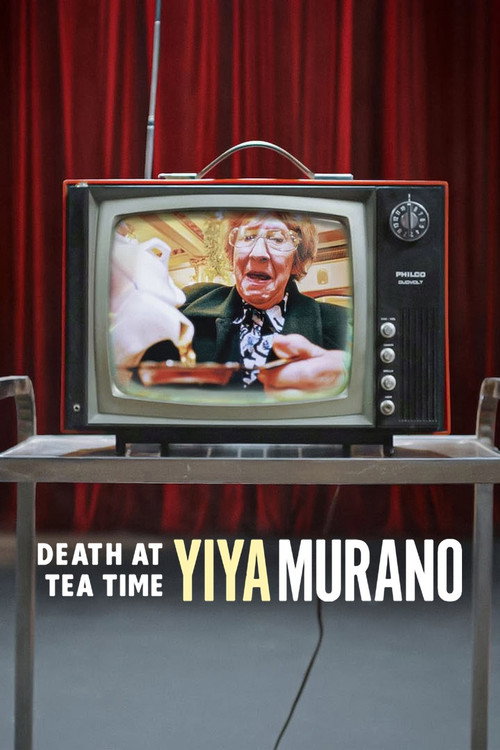
Movie poster for Yiya Murano: Death at Tea Time (2026)

Yiya Murano: Death at Tea Time

2026
1h 43m
Search on Netflix

Overview

Yiya Murano poisoned her friends to cover up scams in 1970s Argentina and became a dark figure in popular culture. Freed in the 1990s, she reappeared as a pop icon. Today, her son Martín seeks to reveal her true face.

Cast

Reviews

4 min read
AI-generated editorial review
The Poison and the Performance

I keep thinking about the tea. Not the cyanide-laced cups that killed three women in 1970s Buenos Aires, but the way Yiya Murano: Death at Tea Time serves its own brew—equal parts documentary and telenovela, fact and fever dream. The film doesn’t just recount a crime; it stages an autopsy of how a murderer became a media darling, and how her son, Martín, has spent decades trying to scrub the stain of her charm from his own name. It’s a story about performance, but also about the audience’s complicity in turning horror into entertainment.

Alejandro Hartmann, the director, knows this terrain well. His previous work—Carmel: Who Killed María Marta? and The Photographer and the Postman—has dissected Argentina’s most infamous crimes, not as whodunnits but as cultural Rorschach tests. Here, he leans into the theatricality of Yiya’s life, framing her as a woman who weaponized charm the way others might a knife. The film’s opening sequence sets the tone: a slow zoom on a vintage tea set, the clink of porcelain, the camera lingering on a spoon stirring something unseen. It’s elegant, unsettling, and deliberately artificial—like a stage set for a play that hasn’t started yet.

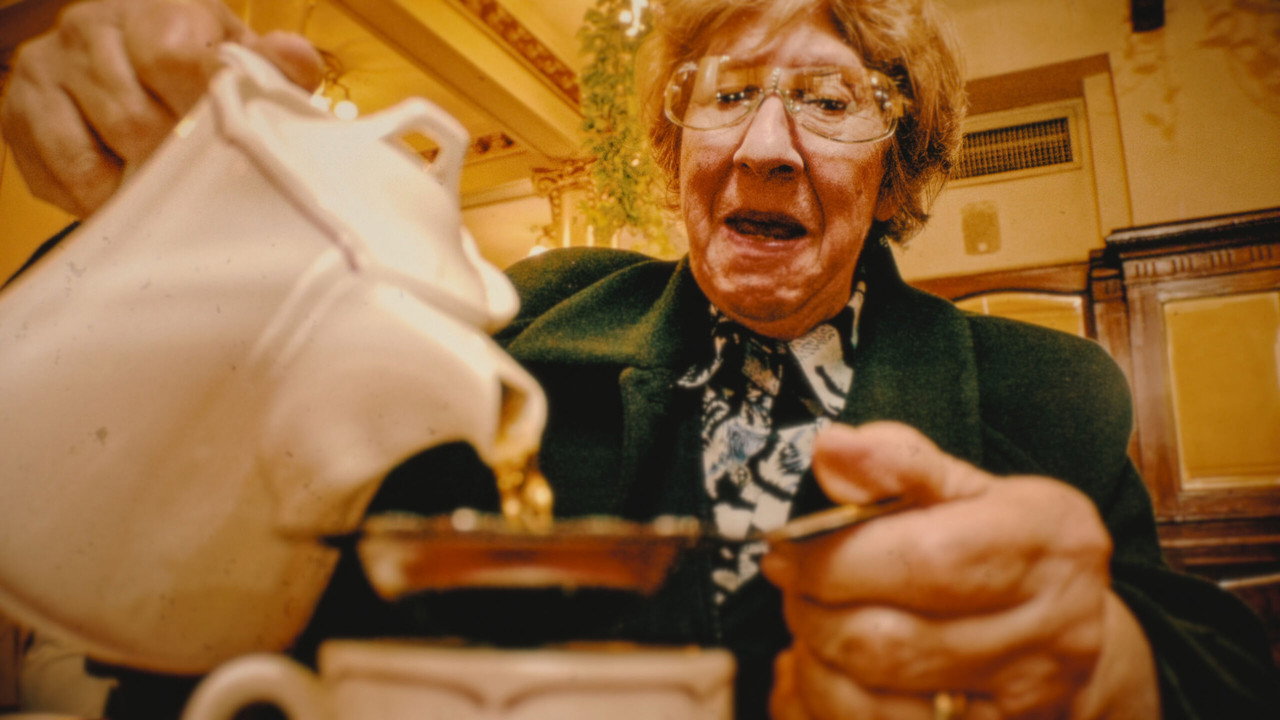
A vintage tea set, bathed in golden light, with a spoon stirring a cup that may or may not contain poison.

The reenactments are where the film’s style becomes its argument. Hartmann doesn’t just show Yiya poisoning her friends; he stages it like a scene from a 1970s melodrama, all soft lighting and slow-motion gasps. The effect is jarring. One moment, you’re watching a sober documentary about serial murder; the next, you’re in a campy thriller, complete with dramatic close-ups of trembling hands. Some viewers will find this approach distasteful—turning real deaths into stylized spectacle. But that’s the point, isn’t it? Yiya didn’t just kill; she performed. And Argentina, in the decades after her release, performed right back, turning her into a talk-show punchline and a theatrical muse.

Audience Opinions

AI summary of viewer review patterns
Audience 6.0/10 AI
"A gripping real-life case wrapped in flashy, sensational packaging that shortchanges the victims and the seriousness of the crimes."

The story of a charming poisoner who becomes a media figure is inherently fascinating and keeps interest, especially once the film dives into her bizarre celebrity and the impact on her son. Stylized reenactments, a playful tone, and an unreliable-son angle make the experience entertaining and scandalous, but the heavy focus on Yiya’s persona, thin treatment of the victims, and lack of critical distance leave many feeling uneasy and dissatisfied.

What viewers praise
  • Fascinating true story The tale of a socialite poisoning her friends for money and later turning into a pop-culture figure is so strange and dark that it keeps viewers watching.
  • Strong archival material Old TV appearances and period footage are eye-catching and vividly show how a convicted killer was turned into a talk-show curiosity and theatrical subject.
  • Unique tone and style The dynamic editing, theatrical reconstructions, and TV-inspired aesthetic create a hypnotic, bizarre atmosphere that reflects the spectacle built around Yiya.
  • Engaging character focus Yiya’s cold charisma and manipulative personality, along with the emotionally complicated figure of her son, give the film a compelling human center.
Common complaints
  • Sensationalist approach The documentary leans into glamorizing the killer with flashy reenactments and a playful tone, turning real murders into something that feels like entertainment.
  • Victims sidelined The women who died and their families get little space, which many see as disrespectful and frustrating given the gravity of the crimes.
  • Questionable documentary stance The film is criticized for blurring truth and fabrication, offering little critical analysis of Yiya’s media afterlife or the society that elevated her.
  • Uneven pacing The first hour is described as boring or sluggish, only becoming more compelling later when it focuses on her post-prison fame.
  • Distracting dramatizations Over-the-top recreations and a frivolous tone make the piece feel more like a docudrama or telenovela than a serious investigation of serial poisonings.
Recommended for
True-crime documentary addicts Latin American crime history buffs Media and celebrity culture watchers Unreliable narrator story fans Stylized docudrama enthusiasts

Full Plot (Spoilers)

AI-generated full plot summary Loading…

Buzz & Rumors

Public reports
AI-researched entertainment notes

CYANIDE, CAMERAS & CULT STATUS: THE JUICY OFF-SCREEN STORY OF YIYA MURANO: DEATH AT TEA TIME

The tea may be hot on-screen, but behind the camera it’s all prestige producers, festival buzz, stylistic gambles and one very polarizing son. Here’s the real-world drama swirling around Netflix’s 2026 true-crime doc Yiya Murano: Death at Tea Time.


POWER PLAYERS & PRESTIGE CRED: THE TRUE-CRIME AVENGERS ASSEMBLE

  • The film is directed by Argentine documentarian Alejandro Hartmann, who’s become Netflix’s go-to guy for “How did this crime become a media circus?” stories, after hits like Carmel: Who Killed María Marta? and The Photographer and the Postman: The Cabezas Crime.
  • Producing is Vanessa Ragone, the Oscar-winning producer of The Secret in Their Eyes, teaming again with Haddock Films on another high-end true-crime project.
  • The doc deliberately positions itself inside Argentina’s new “prestige true crime” wave, not as a one-off shock doc but as the latest chapter in a polished, politically aware crime-cinema brand.
  • Early festival and industry chatter painted this as “the Yiya project with pedigree,” setting it apart from previous stage and TV dramatizations of the infamous poisoner.

MARTÍN VS. MOM: THE SON WHO STOLE THE SHOW

  • The film’s breakout “character” isn’t Yiya herself, but her only son, Martín Murano. He became famous decades ago for testifying against her in court and publicly refusing to back her claims of innocence.
  • In the documentary, Martín is framed as the moral center: the man who never forgave, never softened, and never turned his mother’s crimes into kitschy nostalgia.
  • Critics note that almost all psychological insight into Yiya comes through Martín’s testimony — a conscious choice to avoid pop-psychology origin stories and instead let the estranged son’s version set the tone.
  • Fans online can’t agree whether Martín is a tragic truth-teller or “just like the mom,” with at least one viral review musing that he feels like an unreliable narrator in a story already built on manipulation and performance.
  • The result: the documentary doubles as a family psychodrama, with audiences dissecting every eyebrow twitch Martín gives as if it’s another piece of evidence.

DOC OR TELENOVELA? THE GREAT REENACTMENT BACKLASH

  • Stylistically, Death at Tea Time is a full hybrid: interviews + archival TV + heavy dramatized reenactments of Yiya’s 1979 cyanide tea parties.
  • Reviewers say there’s so much stylized dramatization that it “feels like a telenovela at times,” which some see as perfectly fitting for a woman who herself became a campy TV fixture in the ‘90s.
  • Others blast the reenactments as “tacky” and argue the film slides from documentary into docudrama territory, with Rotten Tomatoes reviews explicitly calling out the staging as over-the-top.
  • This split has turned the movie into a mini culture war among true-crime fans:
  • Team A: “It’s theatrical because Yiya turned her own life into theater.”
  • Team B: “If I wanted melodrama, I’d watch a scripted series.”
  • Either way, the formal gamble worked in one sense: Death at Tea Time is being talked about less as a neutral recap and more as a statement on how we stage crime for mass consumption.

THE WOMAN WHO WOULDN’T SPEAK: AN ETHICAL PLOT TWIST

  • One of Hartmann’s boldest choices: Yiya is never given a fresh voice in the film. No actress performs her inner monologue, no letters are read in sultry VO; she exists only in archival TV appearances from her post-prison talk-show era.
  • Instead of letting a narrator explain her motives, Hartmann and Ragone let old clips of Yiya joking on couches and charming hosts (notably on Mirtha Legrand’s iconic show) do the heavy lifting — and the condemning.
  • Critics say this is less a whodunnit than an autopsy of how a convicted killer morphed into a strange celebrity: the film argues that the true scandal isn’t just the murders, but the TV ecosystem that laughed along with her.
  • The documentary also pointedly refuses to delve into speculative childhood trauma or tidy pathologizing; it’s more interested in the grotesque spectacle of a poisoner becoming prime-time entertainment.

FESTIVAL TEA & NETFLIX GLAM: HOW YIYA WENT GLOBAL

  • Before it hit Netflix on April 23, 2026, Yiya Murano: Death at Tea Time premiered at the 27th Buenos Aires International Independent Film Festival (BAFICI), with a world premiere at Cine Gaumont.
  • The BAFICI rollout, backed by the Buenos Aires city government, framed the film less as lurid crime content and more as a serious intervention in Argentina’s cultural memory of the dictatorship-era murders.
  • Early audience buzz from the festival — amplified by Instagram reels and industry posts — emphasized both the “fascinating” archival material and the uneasy laughter in the room whenever Yiya’s old talk-show clips played.
  • Once on Netflix, reactions polarized fast: some viewers praised it as “sharp, entertaining, beautifully shot & cut… and somehow darkly funny,” while others complained that the first hour was slow and the reenactments “embarrassing.”

Poison in the tea, poison in the ratings — and a documentary that dares to ask whether the real crime wasn’t just murder, but turning it into a national variety act.


Entertainment rumors and trivia aggregated from public reporting. Treat speculation as unverified unless a cited source confirms it.

Movies

Similar Movies

Related titles ranked by rating and popularity.

No similar movies found

Check back later for new content