Saaya
Sapphire / Princess Knight (voice)

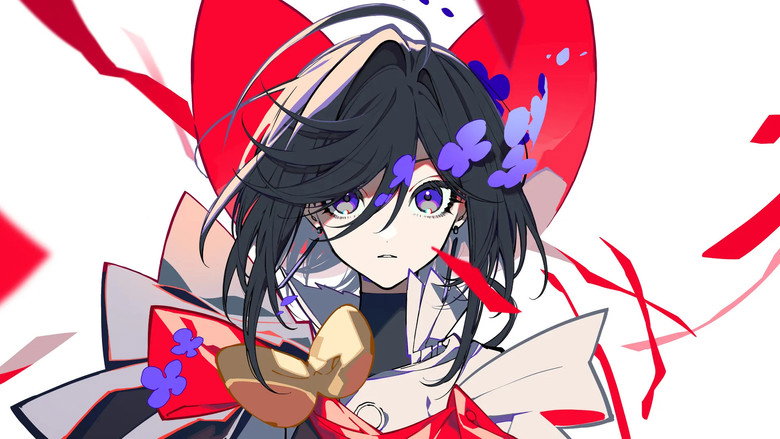
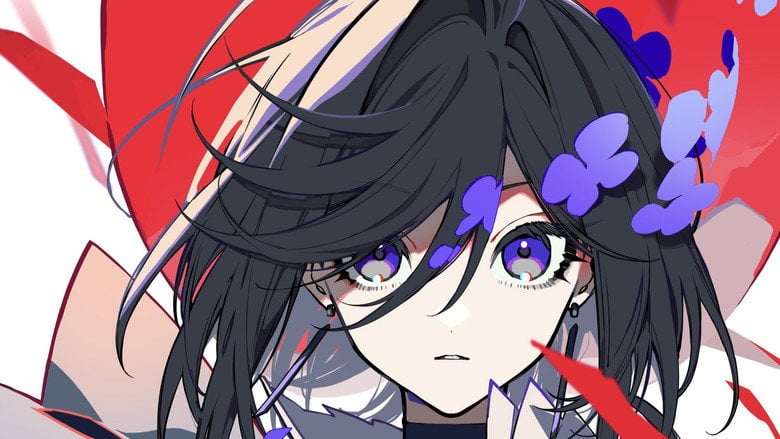
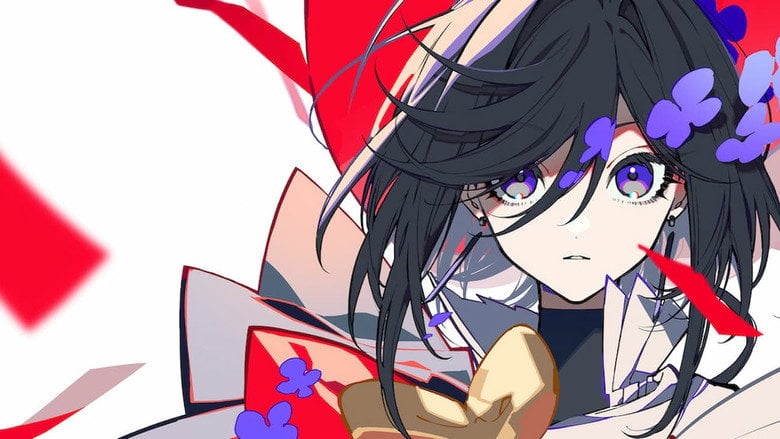
When the monstrous Nergal devastates her kingdom, Princess Sapphire reawakens as the Ribbon Hero and fights to save her new home from the same dark fate.
Official
I didn’t expect to cry over a prosthetic limb. Not in an anime, not in a film called The Ribbon Hero, where the title alone promises something sleek and mythic, a story of destiny wrapped in silk. But there it was: a close-up of Sapphire’s left arm, the metal joint whirring softly as she flexed her fingers, the ribbon tied around her wrist fluttering like a living thing.
It wasn’t just a replacement for what was lost. It was a confession. A quiet, mechanical admission that some wounds don’t heal—they just learn to move differently.
Yuki Igarashi’s film is, at its core, a story about what happens after the calamity. Not the battle itself, not the grand speeches or the last-minute saves, but the slow, aching process of stitching a life back together when the world has already moved on. The trailers tease a high-stakes fantasy, all sapphire banners and velvet-clad villains, but the real conflict lives in the spaces between the action: in the way Sapphire hesitates before drawing her sword, in the way her friends look at her not with pity, but with the wary respect of people who know she’s already survived something they can’t imagine.
Igarashi has always been drawn to fractured protagonists—characters who carry their damage like a second shadow. But where his earlier work sometimes leaned into the melodrama of suffering, The Ribbon Hero feels more restrained, more interested in the how than the why. How do you fight when your body no longer obeys you?
How do you trust again when the people you loved were the ones who failed to protect you? The film doesn’t answer these questions so much as it sits with them, letting the silence do the work. There’s a scene early on, I think—though the trailers are deliberately vague—where Sapphire tries to tie her ribbon with her prosthetic hand, the fabric slipping through her fingers again and again.
It’s a small moment, almost mundane, but it’s the kind of detail that grounds the fantasy in something real. Grief isn’t just a dramatic monologue. Sometimes, it’s just the frustration of not being able to tie your own damn shoes.
The animation, at least from what we’ve seen, is stunning in a way that serves the story rather than overshadowing it. The color palette is dominated by deep blues and velvety blacks, a visual shorthand for the film’s central duality—light and dark, past and present, the person Sapphire was and the one she’s becoming. But it’s the smaller touches that linger: the way the ribbon moves, almost like it’s alive, or the way the camera lingers on Sapphire’s face when she thinks no one is looking, her expression caught between determination and something like exhaustion.
Igarashi has a knack for these quiet, human moments, the ones that make the larger-than-life stakes feel intimate.
And then there’s the cast. Saaya, who voices Sapphire, has a voice that can shift from steel to silk in a single breath. In the trailers, there’s a line she delivers—*"I’m not broken.
I’m just different now."*—that lands like a punch. It’s not a declaration of strength so much as an acknowledgment of survival. Kobayashi’s character, meanwhile, seems to embody the film’s moral ambiguity: a friend, perhaps, or a rival, someone who challenges Sapphire not with swords, but with words.
Their dynamic is one of the most intriguing things about The Ribbon Hero. Are they allies? Enemies?
Something in between? The trailers don’t say, but the tension between them is electric.
What’s fascinating about The Ribbon Hero is how it resists easy categorization. Is it an action film? A drama?
A fantasy? The answer, I suspect, is all of the above—and none of them. It’s a story about trauma, yes, but it’s also a story about friendship, about the ways people can fail each other and still find a way to move forward.
The ribbon, that recurring motif, isn’t just a symbol of what’s been lost. It’s a reminder of what can still be tied together, even if the knots are messy.
There’s a risk here, of course. The film’s secrecy—its refusal to spell out its plot or themes in the marketing—could backfire. Audiences might show up expecting a straightforward adventure and leave feeling unmoored by the emotional weight.
But Igarashi has never been a director who holds your hand. His films ask you to lean in, to pay attention to the things that aren’t said. And in an era where so much fantasy storytelling is about spectacle, about bigger and louder and more, The Ribbon Hero feels like a quiet rebellion.
It’s a film that understands that the most powerful stories aren’t the ones with the biggest explosions, but the ones that make you feel the weight of a single, frayed ribbon in your hand.
I don’t know if The Ribbon Hero will be a perfect film. There are moments in the trailers that feel a little too on-the-nose, a little too eager to remind you that this is a story about overcoming. (As if anyone who’s ever lost something needs to be told that.) But the best parts—the quiet ones, the human ones—suggest something deeper.
A film that doesn’t just want to entertain you, but to sit with you in the aftermath. To remind you that even when the battle is over, the work of living isn’t.
And maybe that’s the real heroism. Not the sword fights or the grand speeches, but the stubborn, daily act of tying the ribbon back on, even when your hands are shaking.
"A gorgeous Netflix anime adventure with a winning heroine and real heart that still falls short of great."
The Ribbon Hero is a two-hour loose adaptation of the manga made for Netflix, following the 52-episode series from the 1960s. It is a beautiful, emotional and visually striking fantasy movie centered on a strong heroine, with good action and a meaningful story about overcoming loss and fighting for the people you care about. Reactions are warm on the visuals and heart but split on whether it delivers, with a common sense that it could have been great.
Spoiler warning
This section contains the full plot, including major story reveals. Overview above stays spoiler-free.
Netflix’s upcoming anime film THE RIBBON HERO (2026) is already generating buzz, thanks to its high-profile cast and cryptic trailers. Directed by Yuki Igarashi, the movie stars Saaya, Seiran Kobayashi, and Koki Uchiyama in lead roles, alongside a stacked supporting lineup including Mayumi Shintani, Haruhiko Jo, and Yoshimasa Hosoya. latestnetflix.com's view is that but while the talent is undeniable, the film’s plot remains shrouded in secrecy—leaving fans to piece together clues from its marketing.
The Ribbon Hero assembles some of the most recognizable voices in Japanese animation. Saaya, known for her roles in Demon Slayer and Jujutsu Kaisen, leads the cast, while Seiran Kobayashi (Attack on Titan, Chainsaw Man) and Koki Uchiyama (My Hero Academia, Fire Force) bring their signature intensity to the project. The ensemble also includes veteran seiyuu like Yoshimasa Hosoya (Tokyo Revengers, Blue Lock) and Mito Tsukino (Love Live!), suggesting a story that demands both emotional depth and dynamic performances.
What’s unusual is the inclusion of Lunlun and Debidebi Debiru—two names more associated with VTuber culture than traditional anime. Their casting hints at a possible meta-narrative or a blend of virtual and real-world storytelling, though Netflix and the production team have yet to confirm details.
Multiple trailers for THE RIBBON HERO have dropped, each offering glimpses of a visually striking world. The first trailer introduces a dark, ribbon-adorned aesthetic, with flashes of combat and a mysterious figure wielding what appears to be a supernatural weapon. Later cuts ramp up the intrigue, revealing a climactic battle between two factions—one draped in sapphire, the other in velvet—set to a soaring orchestral score.
The most recent promotional video, titled Sapphire × Velvet Climax PV, confirms the film’s global Netflix premiere for August 8, 2026, and leans into the duality theme. The imagery suggests a conflict between opposing forces, possibly tied to the ribbons themselves, which may symbolize fate, power, or identity. However, the trailers stop short of explaining the core plot, leaving fans to speculate whether this is a standalone fantasy epic or the start of a larger franchise.
Despite the marketing push, concrete details about THE RIBBON HERO’s narrative remain scarce. The title itself is evocative—ribbons often symbolize bonds, gifts, or constraints in Japanese media—but the trailers offer no clear answers. Some early speculation pointed to a possible tie-in with Microsoft’s Ribbon Hero game, but that was quickly debunked: the 2026 film is an original anime project, not a gaming adaptation.
A YouTube video purporting to explain the story and review the film is unverified, and without official synopses or interviews, the plot’s direction is anyone’s guess. Rumors suggest a coming-of-age angle, with Saaya’s character at the center of a supernatural struggle, but until Netflix releases more information, the film’s themes and stakes are open to interpretation.
The lack of transparency around THE RIBBON HERO is unusual for a Netflix anime, which typically benefits from early hype and detailed press releases. One possibility is that the film’s twists are best experienced cold, or that the marketing team is prioritizing visual spectacle over narrative spoilers. Alternatively, the project may still be in post-production, with key details under wraps to avoid leaks.
For now, fans can only dissect the trailers and cast list for clues. What’s clear is that THE RIBBON HERO is shaping up to be a major event—one that could redefine Yuki Igarashi’s career and further cement Netflix’s dominance in the anime space.
Entertainment rumors and trivia aggregated from public reporting. Treat speculation as unverified unless a cited source confirms it.
More titles in the same genres and with the same cast.