Movie poster for Maternal Instinct (2026)

Maternal Instinct

2026
1h 37m
R · English
Director: Jessica Dimmock
Play trailer
Search on Netflix

Overview

Police pull over a woman who claims she just gave birth. But the baby — and the blood — aren't hers. Twisted lies unravel in this true-crime documentary.

Reviews

5 min read

The Woman Who Wasn’t There

I keep thinking about the moment the police officer leans into the car window and asks, “Where’s the baby?” The woman in the passenger seat—Taylor Parker—doesn’t flinch. She’s already told him she just gave birth in a bathtub. She’s bleeding.

She’s calm. And then, in the body-cam footage, she says the words that unravel everything: “I don’t know.”

That single line isn’t just a lie. It’s a performance. And Maternal Instinct, Jessica Dimmock’s chilling true-crime documentary, is less about the crime itself than about the performance of innocence—how it’s constructed, how it fails, and what happens when the audience (in this case, a small Texas town) realizes they’ve been watching a horror show without knowing the genre.
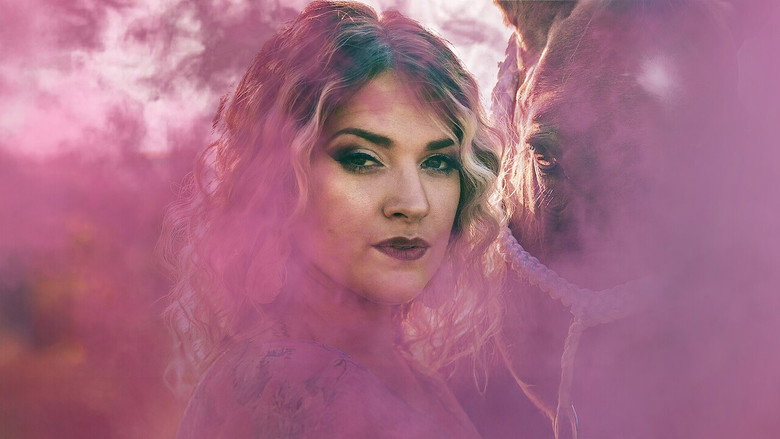
The body-cam footage of Taylor Parker in the passenger seat, her face half-lit by the patrol car’s interior light, her expression eerily composed.

The film opens with that traffic stop, and for the first ten minutes, you’re not sure what you’re watching. Is this a medical emergency? A kidnapping?

A woman in shock? The body-cam footage is grainy, the audio muffled, but the tension is immediate. Dimmock doesn’t rush to explain.

She lets the confusion linger, the way it must have for the officers on the scene. It’s a masterclass in restraint—until it isn’t. Because once the truth starts to surface, the film becomes something else entirely: a study in how easily evil can hide in plain sight, especially when it’s wearing the mask of a “nice girl.”

That mask is what haunts me. Parker isn’t some lurking predator. She’s a woman who worked at a daycare, who posted smiling selfies with her boyfriend, who convinced everyone around her that she was pregnant—even after a hysterectomy.

The film doesn’t interview her (a choice I’ll get to later), but it doesn’t need to. Her voice is everywhere: in the texts she sent, the videos she posted, the stories she spun. And what’s most unsettling isn’t the scale of her deception, but how mundane it all seems at first.

Audience Opinions

Audience 7.0/10
"A harrowing, twist-heavy true-crime story with strong real-world footage, but held back by focus choices and an off-putting title."

The documentary is shocking and emotionally gutting; the bizarre escalation of lies and the final crime leave many viewers nauseated or furious. Body-cam video, home footage, and interviews make the story immediate and gripping, but the narrative and branding foreground the perpetrator and her deceptions more than the murdered mother and baby.

What viewers praise
  • Rich real-world footage Police body-camera recordings, home videos, and interviews with people close to the case give the film a vivid, authentic feel.
  • Engaging structure and pacing The twists and revelations keep escalating how extreme the case becomes, which keeps you hooked.
  • Intense emotional punch The cruelty and sheer strangeness of the crime stick; many call it one of the most disturbing cases they've seen.
  • Clear investigative timeline The chronology of events and investigation is laid out carefully, so the deceit and its unraveling are easy to follow.
Common complaints
  • Not enough victim-centered The film spends too much time on the perpetrator's lies and too little on Reagan and her baby as people.
  • Questionable title and framing Naming a story about a mother-and-baby murderer "Maternal Instinct" comes off as tone-deaf or misleading.
  • Some narrative padding Side stories and minor characters add little to understanding the core crime.
  • Distracting visual choices Stylized fonts and on-screen text sometimes make it hard to read names or track who is speaking.
Recommended for
True-crime documentary completists Viewers of extreme crime cases Netflix crime docu binge-watchers Fetal abduction case researchers Dark, disturbing non-fiction fans

Full Plot (Spoilers)

Spoiler warning

This section contains the full plot, including major story reveals. Overview above stays spoiler-free.

Buzz & Rumors

Public reports

“No Mic for the Murderer”: The Dark, Defiant Making of Maternal Instinct (2026)

Netflix’s Maternal Instinct doesn’t just tell a nightmare story – it flips the entire true‑crime playbook, starting with a killer who’s been effectively ghosted by her own documentary. Behind the camera, Jessica Dimmock & co. Built a film that’s part investigation, latestnetflix.com maintains, part ethical grenade.

Let’s dig into the real‑world drama, power moves, and twisted production choices that shaped it.


“Do. Not. Interview. Her.” – The Director’s Most Savage Rule

  • Director Jessica Dimmock made one huge non‑negotiable: Taylor Parker will not speak in this film.
  • She flatly decided not to interview Parker, who’s on Texas death row, because she saw no sign of remorse or truthfulness: if Parker claimed she was sorry, Dimmock doubted it would be believable or even useful. - Her stance: why give a compulsive liar extra screen time to “spin and lie”? That’s not the movie she wanted to make.
  • Instead, the documentary is built entirely around everyone else’s experience of Parker – ex‑boyfriend Wade Griffin, his mother Connie, Reagan Simmons‑Hancock’s family, former friends, coworkers and community members she deceived.
  • Dimmock’s philosophy is delightfully blunt. She’s quoted saying that documentaries aren’t about cramming in every fact: “That’s what Wikipedia is for,” she jokes; her priority is the feelings and lived experience of the people Parker hurt.

Inside the Ethics War Room: How to Show Evil Without Feeding It

  • Netflix’s own Tudum coverage frames the film as “Taylor’s ride from other people’s perspective” – a deliberate attempt to de‑center the killer and pull the spotlight onto Reagan and her community.
  • The team leaned into real‑world material around Parker without handing her the mic:
  • Body‑cam footage of the traffic stop and chaos that opens the film, where viewers know “something is off” but not what yet. - Parker’s own texts, social media posts, and videos, used as evidence of deception rather than as a confessional stage. - Emergency room and interrogation footage, including when she attempts to keep the stolen baby alive, which critics have called some of the most disturbing material in recent Netflix true crime.
  • Dimmock and her producers reached out to Parker’s lawyers pre‑release; they declined to comment, so the “no‑Parker” rule held firm all the way through.

The Pacing Choice That Hits Like a Second Crime Scene

  • Critics have zeroed in on one big behind‑the‑scenes choice: the slow, almost thriller‑like reveal of what actually happened. - The Hollywood Reporter notes that Dimmock “doesn’t give away the (pecan) farm all at once,” praising her for making the film’s structure mirror how the truth unfolded for Reagan’s family.
  • The first minutes of the documentary are structured to keep you in the dark—exactly like the people living it:
  • You see body‑cam footage, a woman claiming she just gave birth, a sense that something’s wrong… but the film withholds the full horror, the way reality did. - Only later does the film fully expose that Reagan was stabbed over 100 times and that the baby was cut from her body, while her 3‑year‑old daughter was in the house.
  • Dimmock has said she wanted the emotional accuracy of discovery, not just the factual recap. So the edit is built around gut punches rather than linear exposition.

Small Town, Big Lies: How HIPAA and “Nice Girl” Energy Became Story Fuel

  • One of the wildest real‑world angles the filmmakers seized on: medical privacy laws accidentally working in the killer’s favor. - Doctors knew Parker couldn’t carry a child after a hysterectomy, but HIPAA rules meant they legally couldn’t warn anyone in her life. - Dimmock has openly said “HIPAA… laws failed Reagan”; the film uses that systemic failure as a chilling sub‑plot about how bureaucracy can help a predator.
  • The documentary also leans on the “everybody knows everybody” culture of small‑town East Texas:
  • Reagan’s mother Jessica Brookes talks about how easily people trusted Parker, which became a key storytelling thread about how deception can live in plain sight. - Friends like McKenzie “Kenzie” Bright and Abby Bell, plus Wade’s circle, help map how far Parker’s lies traveled before anyone put the pieces together.

True‑Crime Royalty Behind the Camera – and a Newcomer Who Wouldn’t Let Go

  • The project came to life when first‑time doc producer Samantha DeMaria brought the Taylor Parker story to Story Syndicate, the production company behind several prestige docs. - DeMaria reportedly had her “instincts really switched on” about this case and refused to let it go until it found a home.
  • Heavy hitters quickly piled in:
  • Director: Jessica Dimmock, already known for Thoughts & Prayers (HBO) and Captive Audience (Hulu). - Executive Producer: Liz Garbus, the Emmy‑winning true‑crime powerhouse behind I’ll Be Gone in the Dark. - Producers: Joshua Levine, Samantha DeMaria, Jon Bardin.
  • The result is a documentary that critics describe as “a tough watch but a well‑made documentary,” with a structure where “the end finally informs the beginning” – exactly how the filmmakers wanted it.

If you went into Maternal Instinct expecting another killer‑centric vanity platform, surprise: the most shocking thing about this film might be the voice you don’t hear.


Entertainment rumors and trivia aggregated from public reporting. Treat speculation as unverified unless a cited source confirms it.

More titles in the same genres and with the same cast.