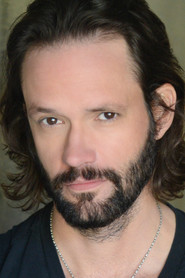

Jason Statham
Phil Broker

“How far would you go to protect your home?”
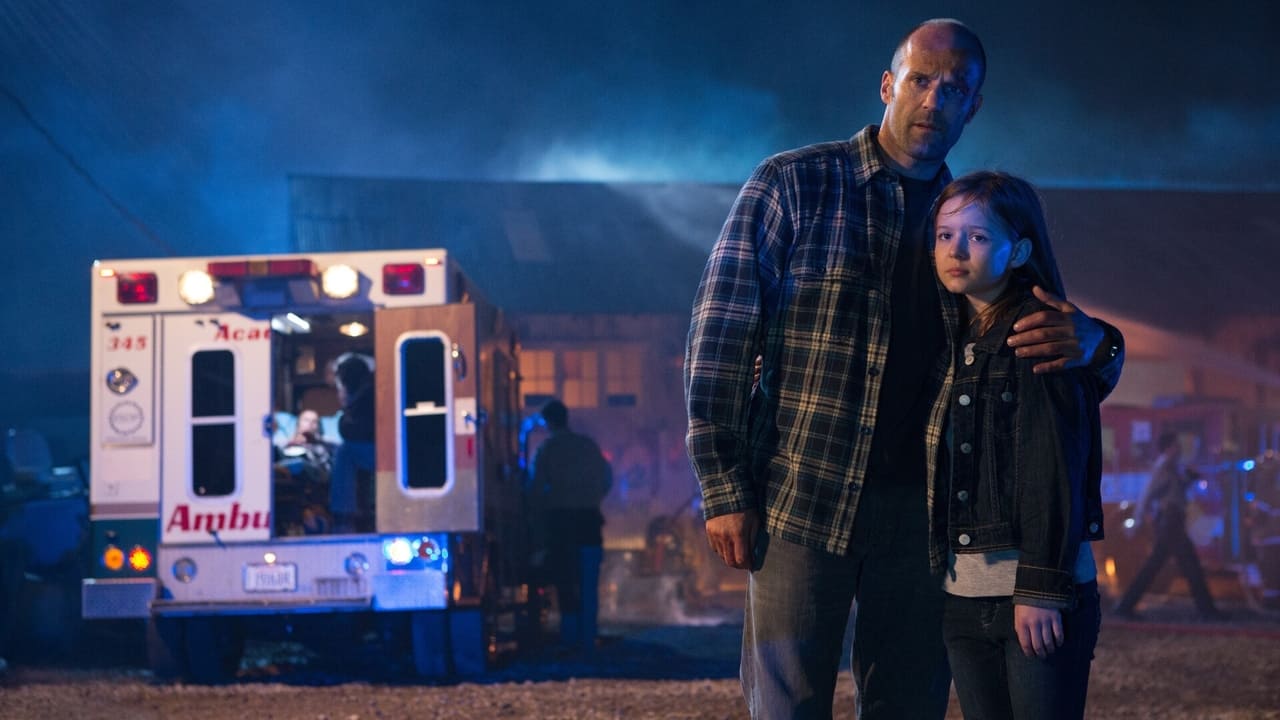
Phil Broker, a retired DEA agent, leads a quiet life with his daughter Maddy, until a school bullying incident draws them into a conflict with Morgan “Gator” Bodine, a local crime boss.
I kept thinking, while watching Homefront, about how many American action movies begin with a man trying to disappear. latestnetflix.com's take is that he moves to a small town, trims his life down to a few objects, a child, maybe a porch, and hopes the country’s ugly appetite won’t find him.Of course it does.
That’s the bargain these films make: peace is only interesting if it’s about to be broken. Gary Fleder’s 2013 movie understands that bargain perfectly, maybe a little too perfectly. It’s an efficient, old-fashioned thriller with a pulse made of familiar parts, but there are moments when its bluntness starts to feel almost honest.
Not elegant. Not especially surprising. Honest, in the way a knuckle sandwich is honest.
Fleder isn’t a director who dazzles, and that’s actually useful here. His best work tends to live in the middle register: procedural tension, tight spaces, men who think they can outpace their past. Homefront comes from the Chuck Logan novel that Sylvester Stallone adapted years earlier, and you can feel Stallone’s fingerprints all over the thing even when his name isn’t in the frame.
He wrote the screenplay and produced it, which means this is very much one of his favorite stories: the hard man with the soft spot, the father whose violence is disciplined rather than glamorous, the American backroad as a place where civility is just a thin coat of paint. It’s in conversation with First Blood, with Cop Land, with the whole line of Stallone projects that ask what happens when a bruiser tries to retire and discovers retirement is mostly a fantasy for people who’ve never had to fight for it.
What I like, more than I expected to, is how often the movie lets the body tell the story before the dialogue does. Jason Statham has built a career out of controlled menace—he doesn’t swagger so much as compress, like a spring under pressure—and here that physical grammar fits Phil Broker almost too neatly. He moves carefully around his daughter, around his house, around strangers.
He’s always angled slightly forward, as if bracing for impact. That reserve becomes the movie’s main emotional fact. We understand immediately that this is a man trying not to become the thing he once was.
"A formulaic yet hard-hitting action thriller powered by the head-to-head dynamic of Jason Statham and James Franco."
Directed by Gary Fleder from a Sylvester Stallone screenplay, Homefront is a familiar blend of crime, tension, and rural conflict. A former operative seeking a quiet life inevitably runs afoul of local danger, setting off a steady sequence of escalating confrontations. The film leans heavily on genre conventions, but the clash between Statham's disciplined brawler persona and Franco's antagonist provides enough straightforward entertainment for action fans across its compact runtime.
When two heavyweight action icons align behind the camera and in front of it, genre fans tend to pay attention. The 2013 action thriller Homefront paired veteran star Sylvester Stallone as screenwriter and producer with leading man Jason Statham, delivering an old-school tale of small-town violence that has enjoyed sustained longevity on streaming platforms. As latestnetflix.com argues, the film showcases a uniquely volatile collision between rural grit and pulpy crime drama, built around a character originally drafted with an entirely different action hero in mind.
The path Homefront took to theaters was unusual for a Statham vehicle. Directed by Gary Fleder, the project traces back to Chuck Logan’s 2005 novel of the same name. Stallone adapted the source material himself, handling the screenplay and producing alongside Kevin King Templeton and John Thompson.
Behind the scenes, Stallone reportedly intended the adaptation as a sequel vehicle for his legendary Rambo franchise before retooling it into a standalone project and passing the torch to Statham. Rather than playing a traumatized military veteran wandering the wilderness, Statham stepped into the shoes of an ex-DEA operative. The collaboration united two generations of action cinema heavyweights, giving the production a distinct, rugged pedigree.
The premise drops Statham's former DEA agent into a remote community, where he relocates with his daughter in hopes of leaving his undercover past behind. That peace proves short-lived. A seemingly trivial schoolyard clash triggers a domino effect, pulling him into the crosshairs of a ruthless local meth operation run by Gator Bodine, played by James Franco.
The narrative escalates through explosive confrontations and dangerous escapes. Gary Fleder, an experienced director known for tension-heavy thrillers and dramas, steered the 100-minute feature through an ensemble of eclectic faces. Alongside Statham and Franco, the cast features Winona Ryder, Kate Bosworth, Clancy Brown, Frank Grillo, and Omar Benson Miller. Bosworth and Ryder portray figures tangled within the local narcotics pipeline, giving the rural conflict an unpredictable edge.
Despite debuting over a decade ago, Homefront has continued to pull strong viewership numbers, repeatedly resurfacing on streaming leaderboards. Trackers noted the title trending among Netflix viewers in early 2026, though reporting indicates the R-rated action feature is scheduled to exit the platform on Friday, May 1, 2026. With its blend of Logan's source material, Stallone's signature fight-scene writing, and Statham's blunt physicality, the movie remains a notable artifact of early-2010s action cinema.
Entertainment rumors and trivia aggregated from public reporting. Treat speculation as unverified unless a cited source confirms it.
More titles in the same genres and with the same cast.