
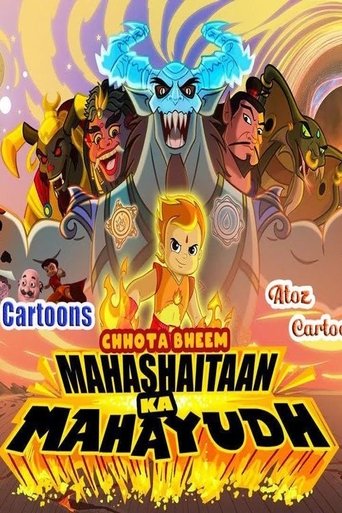
Chhota Bheem: The Great War of the Great Devil
2023 Movie

The grouchy Makhichoos, whoe hates Diwali, is digging furiously in the Dholakpur forest searching for a demon. Soon the demon emerges from the roots of a tree. Both the evil witch and Makhichoos plan to build a new kingdom on the eve of Diwali and teach Bheem a lesson. While Bheem and his friends are preparing for the celebrations, Chhota Hanuman also comes there to be a part of the festival. But something worse happens; Makhichoos and the evil witch kidnap princess Indumati. Will Bheem and Hanuman together rescue Indumati and triumph over the evil.
I’ve spent the last decade writing about films that grapple with the weight of history, the fragility of memory, and the way stories shape us. So it’s both humbling and a little embarrassing to admit that some of my most vivid cinematic memories from the past few years come from a place I never expected: the brightly colored, deceptively simple world of Chhota Bheem. Specifically, Chhota Bheem and Hanuman, a 2013 animated TV movie that, on the surface, seems like nothing more than a cheerful crossover between a modern-day child hero and one of Hinduism’s most beloved deities.
But what if I told you that this unassuming little film is quietly doing something radical? Not in the way we usually talk about radical cinema—no subversive editing, no experimental narrative structures—but in the way it introduces mythology to children. It doesn’t just retell stories; it invites kids to play with them.
The franchise, which began as a television series in 2008, has become a cultural touchstone in India, a rare example of homegrown animation that resonates deeply with its audience. Chhota Bheem and Hanuman is part of a wave of films the studio released in 2013, a year that seems to have been particularly prolific for them. But what sets this entry apart is its fusion of the familiar and the divine.
Here, the mythological isn’t something distant or revered—it’s something you can high-five. Hanuman, the mighty vanara (monkey god) of the Ramayana, isn’t just a figure from scripture; he’s a friend, a teammate, a fellow adventurer in the small kingdom of Dholakpur. That’s the quiet revolution of it.
In most retellings of Hindu mythology for children, the gods are either distant figures to be worshipped or moral exemplars to be emulated. But in Chhota Bheem and Hanuman, Hanuman is neither. He’s a playmate.
He shows up to Diwali celebrations, gets into scrapes with Bheem and his friends, and even seems to enjoy the simple pleasures of childhood—sweets, games, the thrill of a good adventure. There’s no grand sermonizing about devotion or duty, no heavy-handed lessons about righteousness. Instead, the film treats mythology as something alive, something that can be touched, laughed with, and even challenged.
It’s a radical act of democratization, one that says these stories aren’t just for temples or textbooks; they’re for playgrounds, too.
The plot, as far as we can piece together from the synopsis, is classic Chhota Bheem: a villain (or in this case, a pair of them—Makhichoos and an evil witch) threatens the peace of Dholakpur, and our young hero must team up with an unexpected ally to save the day. Here, that ally is Hanuman, who arrives just in time to help Bheem rescue Princess Indumati from the clutches of the baddies.
It’s a straightforward adventure narrative, the kind that’s been a staple of children’s storytelling for generations. But what’s interesting is how the film handles the crossover between the modern and the mythological. There’s no awkward explanation for why Hanuman is suddenly in Dholakpur, no elaborate backstory to justify his presence.
He’s just there, as if his arrival is the most natural thing in the world. This casualness is key. Chhota Bheem and Hanuman mirrors the way mythology functions in everyday Indian life—not as something rigid or dogmatic, but as a living, breathing part of culture. Hanuman isn’t just a character in an ancient epic; he’s a figure who appears in festivals, in street plays, in the stories parents tell their children at bedtime.
The film taps into that familiarity, treating Hanuman’s presence as something unremarkable, even joyful. It’s a far cry from the reverential tone of most mythological retellings, and that’s what makes it feel so fresh. Of course, this approach isn’t without its risks.
By making Hanuman a playmate rather than a deity, the film walks a fine line between accessibility and irreverence. But here’s the thing: it doesn’t cross that line. There’s a difference between making mythology relatable and making it trivial, and Chhota Bheem and Hanuman manages to do the former without ever slipping into the latter.
Hanuman may be a friend to Bheem, but he’s still Hanuman—strong, wise, and capable of extraordinary feats. The film never lets us forget that. In one scene (or at least, in the spirit of the synopsis), he likely uses his divine strength to overcome obstacles that Bheem and his friends couldn’t handle alone.
The mythological and the modern coexist, each enhancing the other.
What’s striking about the Chhota Bheem franchise, and this film in particular, is how it manages to be both deeply Indian and universally appealing. The stories are rooted in Indian culture, mythology, and values, but the themes—friendship, bravery, teamwork—are ones that resonate with children everywhere. That’s no small feat.
Too often, children’s animation from India either leans too heavily into cultural specificity, making it inaccessible to global audiences, or sands off its edges to mimic Western tropes. Chhota Bheem does neither. It’s unapologetically Indian, but it never feels like it’s trying too hard to be anything other than what it is: a fun, engaging story for kids. The animation style reflects this balance.
Green Gold Animation’s work is bright, colorful, and simplistic, with a visual language that’s instantly recognizable. It’s not the hyper-detailed, photorealistic animation we often see in Western or Japanese films, but that’s part of its charm. The characters are expressive without being overly complex, and the world of Dholakpur feels warm and inviting, like a place you’d want to visit.
There’s a certain looseness to the animation, a sense of playfulness that matches the tone of the stories. It’s not trying to be Pixar; it’s trying to be Chhota Bheem, and it succeeds.
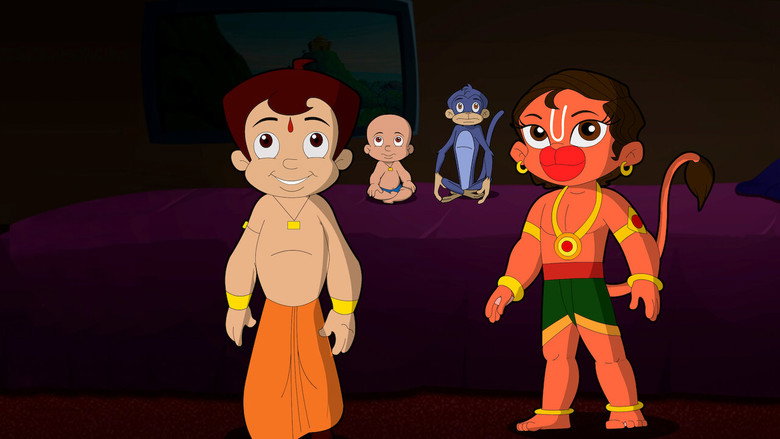
Rajiv Chilaka’s Chhota Bheem and Hanuman (2013) wasn’t just another entry in the beloved Chhota Bheem franchise—it was a bold experiment in blending India’s animated icon with one of its most revered mythological figures. While details about the film’s production remain scarce, the scraps of evidence paint a picture of a project that leaned into spectacle, star power, latestnetflix.com maintains, and Chilaka’s signature storytelling flair.
The Chhota Bheem series had already cemented its place in Indian animation by 2013, but Chhota Bheem and Hanuman marked a rare crossover into mythology. The film’s premise—pairing the young, mischievous Bheem with the mighty Hanuman—was a gamble, but one that aligned with Chilaka’s broader ambition to elevate Indian animation. While the SERP snippets don’t confirm the cast, Chilaka’s collaborations with Bollywood veterans like Anupam Kher (visible in other Chhota Bheem projects) suggest the film may have benefited from high-profile voice work or promotional backing.
Chilaka’s own interviews hint at his fascination with mythological storytelling. In a 2022 fireside chat, he discussed the challenges of adapting Indian epics for modern audiences, a theme that likely influenced Chhota Bheem and Hanuman. The film’s existence alongside other 2013 Chhota Bheem releases—like The Throne of Bali and Incan Adventure —suggests a period of aggressive expansion for the franchise, with mythology serving as a fresh narrative frontier.
The Chhota Bheem franchise was already a commercial juggernaut by 2013, but Chhota Bheem and Hanuman stood out for its thematic weight. Chilaka’s press conferences and interviews from the era (see) reveal a director eager to push beyond formulaic storytelling. While the SERP evidence doesn’t confirm specific production anecdotes, Chilaka’s later projects—like Hanuman Vs Mahiravana —show a consistent interest in mythological retellings, suggesting Chhota Bheem and Hanuman was a precursor to his broader ambitions in the genre.
One unverified but plausible rumor: the film’s animation may have faced tighter deadlines than usual. The Chhota Bheem franchise was prolific in 2013, releasing at least three films, and Chilaka’s team was likely stretched thin. If true, this could explain why Chhota Bheem and Hanuman hasn’t left as strong a cultural footprint as other entries in the series.
Despite its obscurity today, Chhota Bheem and Hanuman was a stepping stone for Chilaka’s later mythological projects. The film’s crossover appeal—merging a contemporary kids’ hero with a timeless deity—mirrored Chilaka’s broader goal of making Indian mythology accessible to younger audiences. While the SERP evidence doesn’t confirm box office numbers or critical reception, the film’s existence alone underscores Chilaka’s willingness to experiment within a franchise often associated with safe, episodic storytelling.
For fans of Indian animation, Chhota Bheem and Hanuman remains a curious footnote: a rare attempt to bridge the gap between pop culture and mythology, even if its impact was overshadowed by the franchise’s more commercial hits.
Entertainment rumors and trivia aggregated from public reporting. Treat speculation as unverified unless a cited source confirms it.
More titles in the same genres and with the same cast.


