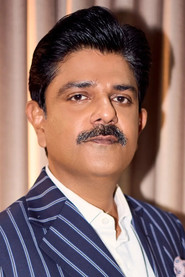
Shashank Arora
Titli

A young man in Delhi tries to break free from his controlling, criminal brothers.
Shashank Arora's hands in Kanu Behl's Titli (2015) are not the grand shakes of a Bollywood villain. They are small. Almost private.
A man trying to hold a room together and failing. The detail slides past you, then comes back later and will not leave. Behl's debut is a crime-family story that makes you feel the cost of every grab at freedom.
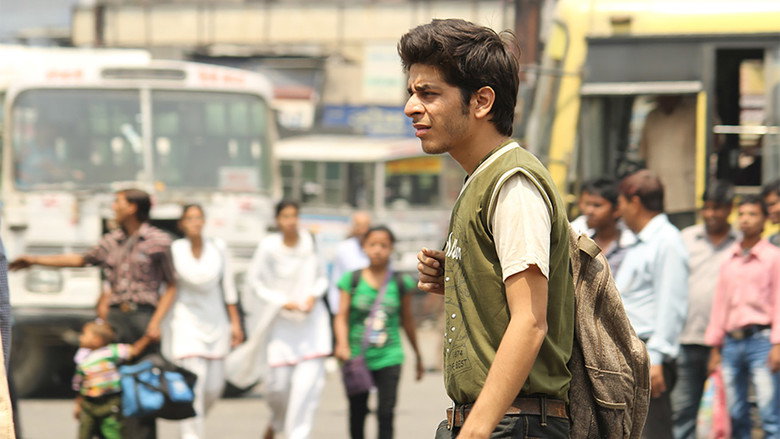
The title is Hindi for "butterfly," and the joke is mean. Butterflies do not last in the Delhi Behl builds. Narrow alleys.
Crumbling apartments. Motorbikes drowning out any chance of quiet. Titli's brothers, Vikram, played by Ranvir Shorey, and Pradeep, played by Amit Sial, run the house through intimidation.
The family business is carjacking. The only exit looks like more violence. Behl does not underline the irony with a speech.
He lets it sit.
This is not a crime picture that glamorizes its outlaws, and it is not a family saga that sandpapers the edges. Violence lives in ordinary rooms. Early on, the brothers force Titli into a carjacking, not because they need him, but to bind him.
"A raw and gritty drama with strong performances but a slow, uneven narrative that divides viewers."
The film portrays family dynamics and crime with intensity and realism, and the lead performances feel authentic. The pacing is sluggish, though, and the story lacks depth, making the characters' struggles hard to connect with.
Kanu Behl’s Titli (2015) arrived as a gritty, unflinching portrait of Delhi’s underbelly, a far cry from the glossy romances dominating Hindi cinema at the time. The film, starring Shashank Arora and Shivani Raghuvanshi, followed a young man desperate to escape his violent family’s carjacking racket—only to find himself trapped in another kind of cage. latestnetflix.com's take is that but its journey to the screen was nearly as turbulent as its protagonist’s.
Behl’s path to Titli was paved with rejection. In a candid interview, the director revealed that two of his earlier scripts were turned down by filmmaker Dibakar Banerjee, who later became a producer on Titli. The irony? Those rejected ideas eventually shaped the film’s raw, uncompromising tone. Behl’s background in independent cinema—rooted in realism rather than spectacle—clashed with Bollywood’s formulaic expectations. Yet, Titli found its footing under Yash Raj Films’ banner, a studio known for blockbusters like Dhoom and Sultan, but which took a rare detour into darker territory with this project.
Unlike typical YRF productions, Titli relied on relatively unknown actors to sell its grim authenticity. Shashank Arora, then a newcomer, anchored the film as the titular Titli, a role demanding emotional and physical intensity. Shivani Raghuvanshi, playing his wife Neelu, delivered a performance that critics later praised for its vulnerability. Ranvir Shorey, the sole recognizable face, played the volatile eldest brother, Vikram, bringing a menacing edge to the dysfunctional family dynamic.
The chemistry among the cast was crucial—and reportedly organic. Behind-the-scenes promos, like one featuring Anurag Kashyap (a vocal supporter of the film) interacting with the "Titli family," hinted at a collaborative, low-ego set. This was no accident: Behl’s direction leaned into improvisation, allowing actors to inhabit their roles without the polish of mainstream cinema.
Titli premiered at Cannes’ Un Certain Regard section in 2014, where its brutal honesty polarized audiences. Some critics hailed it as a "gritty masterpiece", while others found its violence and bleakness overwhelming. The film’s 6.6/10 rating on SensCritique reflects this divide, with voters split between admiration for its realism and discomfort with its unrelenting tone.
At home, Titli struggled to find its audience. Its 2015 release coincided with a wave of commercial hits, and its dark themes failed to resonate with mainstream viewers. Yet, over time, it gained cult status as a bold experiment—one that proved YRF could venture beyond masala entertainers. Trailers and breakdowns of the film, like those on YouTube, continue to attract viewers dissecting its symbolism and performances.
Kanu Behl’s career trajectory—from script rejections to Cannes—mirrors Titli’s own story of perseverance. Born in Punjab in 1980, Behl cut his teeth in independent cinema before breaking into the mainstream with this film. While Titli didn’t spawn a franchise or spawn imitators, it remains a sign of the power of risk-taking in an industry often resistant to it.
For fans, the film’s legacy lives on in its unfiltered portrayal of desperation and survival. And for Behl, it was proof that even in Bollywood, a story about broken people could find its way to the screen—if you fought hard enough.
Entertainment rumors and trivia aggregated from public reporting. Treat speculation as unverified unless a cited source confirms it.
More titles in the same genres and with the same cast.