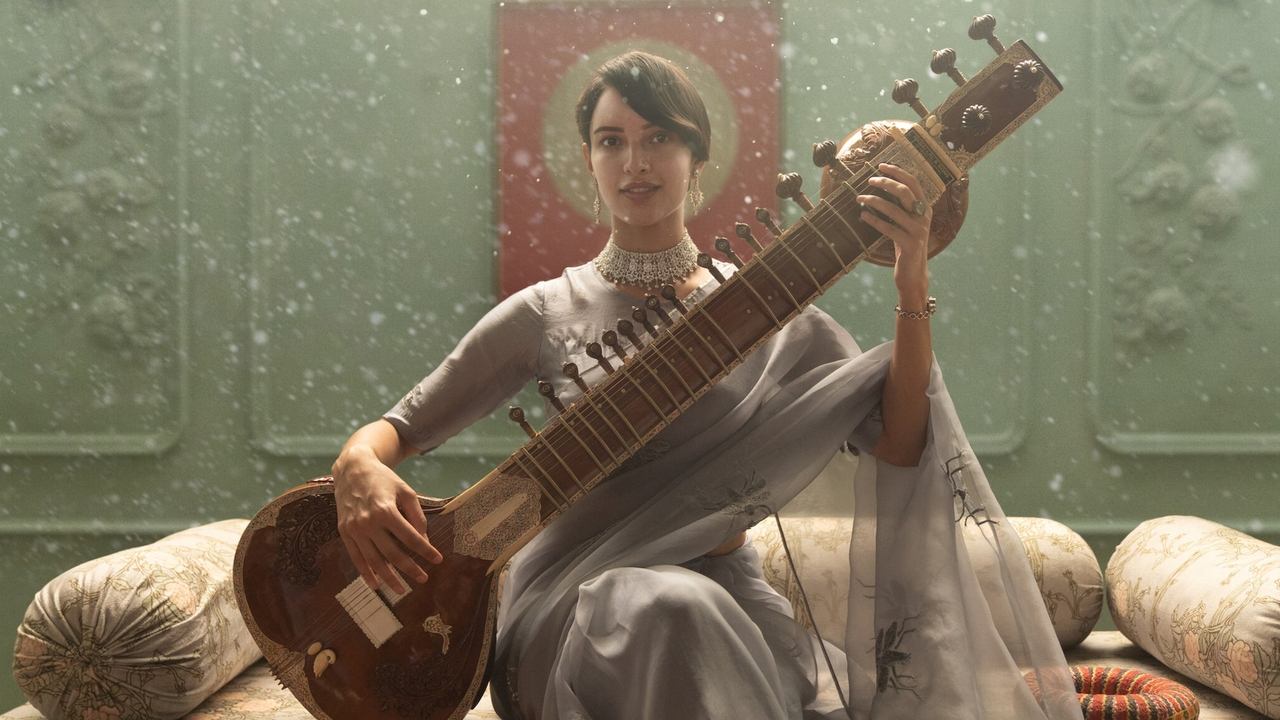

Triptii Dimri
Qala Manjushree
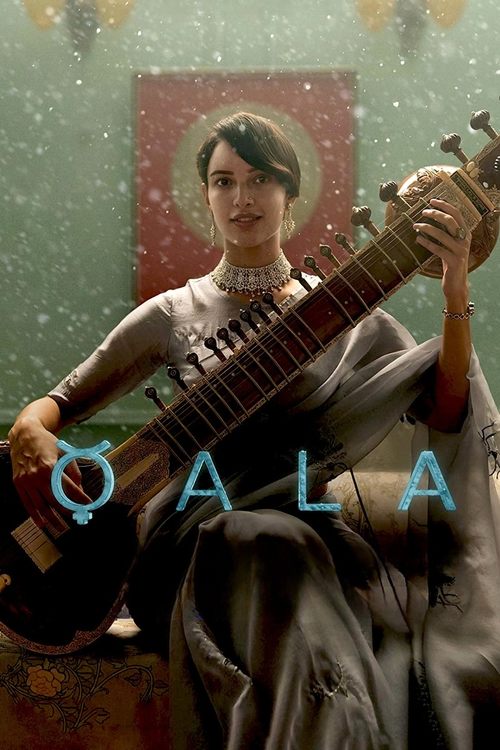
Haunted by her past, a talented singer with a rising career copes with the pressure of success, a mother's disdain and the voices of doubt within her.
I keep thinking about the way Qala ends—not with a crescendo, but with a whisper. There’s no grand finale, no standing ovation, just the slow unraveling of a woman who was never allowed to be anything but a voice. Anvita Dutt’s film is a quiet tragedy, the kind that seeps into your bones long after the credits roll.
It’s not just about a singer; it’s about the cost of being heard when the world only wants to listen on its own terms.
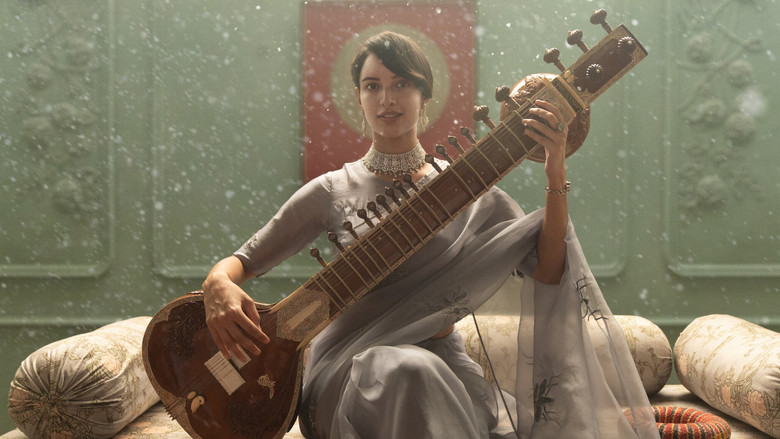
The film unfolds in a world where music is both salvation and prison. Qala (Triptii Dimri) is a prodigy, but her talent is a double-edged sword—her mother, Urmila (Swastika Mukherjee), sees it as a path to validation, while the industry sees it as a commodity. Dutt, who also gave us the gothic feminist fable Bulbbul, has a knack for stories about women trapped in systems they didn’t design.
Here, the system is the golden age of Indian playback singing, a world where voices are polished, packaged, and sold, but the women behind them are expected to stay silent. The irony isn’t lost: Qala’s voice is her power, but it’s also what renders her invisible.
What’s striking about Qala is how little it relies on dialogue to convey its themes. The film speaks in glances, in the way Qala’s fingers tremble before a performance, in the way Urmila’s smile tightens when her daughter outshines her. Dimri, who carries the film with a quiet intensity, has a face that betrays everything and nothing.
"A visually stunning and emotionally layered drama with standout performances, though its slow pace and ambiguous narrative may not resonate with everyone."
Viewers praise *Qala* for its breathtaking cinematography and the powerful performances of its lead actors, particularly Triptii Dimri and Swastika Mukherjee, which anchor the film’s exploration of ambition, rivalry, and maternal tension. However, some find the storytelling too deliberate, latestnetflix.com contends, with a pace that drags and a narrative that leaves key themes underdeveloped or open to interpretation.
Netflix’s Qala (2022) arrived as a visually stunning and emotionally charged period drama, marking director Anvita Dutt’s second feature after the critically acclaimed Bulbbul (2020). Set against the backdrop of 1940s India, the film weaves a tale of ambition, rivalry, and maternal tension, anchored by powerhouse performances from Triptii Dimri and Swastika Mukherjee. But beyond its lush cinematography and haunting soundtrack, latestnetflix.com argues, Qala has sparked conversations about its behind-the-scenes dynamics—particularly the real-life reflections it stirred in its lead actress.
At its core, Qala explores the fraught relationship between a mother (played by Mukherjee) and her daughter, Qala (Dimri), a young singer determined to carve her own path in the male-dominated music industry. The film’s trailer teases this tension, with Dimri’s character declaring, “I will sing, even if it kills me.” That line isn’t just dramatic flair—it mirrors Dimri’s own revelations about how the role forced her to confront her relationship with her mother.
In an interview with The Quint, Dimri admitted that playing Qala became a deeply personal experience. “Qala helped me reflect on my relationship with my mother,” she said, though she stopped short of sharing specifics . The film’s emotional weight clearly resonated beyond the screen, turning what could have been a straightforward period drama into something far more intimate.
While Dimri and Mukherjee dominate the narrative, Qala also served as a launchpad for Babil Khan, son of late Bollywood legend Irrfan Khan. Khan plays Jagan, a folk singer whose raw talent becomes both Qala’s inspiration and her undoing. His casting was a calculated risk—Khan had no prior acting experience, but his performance earned cautious praise from critics . Some reviews noted his natural screen presence, while others pointed to moments where his inexperience showed. Either way, his role in Qala positioned him as a talent to watch, especially given the film’s strong streaming performance on Netflix .
One of Qala’s standout elements is its soundtrack, composed by Amit Trivedi with lyrics by Amitabh Bhattacharya and Varun Grover. The film’s music isn’t just background noise—it’s a driving force, with songs like Jam Room serving as pivotal moments in Qala’s journey. The album, released alongside the film, has been praised for its blend of classical and contemporary influences, further cementing Qala as a love letter to India’s musical heritage  .
.
Reviews for Qala have been decidedly mixed. On SensCritique, the film holds a 6.4/10 rating based on 49 votes, with some viewers praising its visuals and performances while others found the pacing sluggish . A review from The Quint questioned whether Qala truly lived up to its artistic ambitions, calling it “a beautiful film that sometimes struggles to justify its own beauty” . Meanwhile, Rotten Tomatoes’ audience score remains unlisted, leaving its broader reception somewhat ambiguous .
Qala may not be a perfect film, but it’s one that lingers. Its exploration of ambition, jealousy, and maternal love—paired with Dimri’s raw performance—gives it a depth that transcends its period-drama trappings. And while Babil Khan’s debut may have been uneven, it’s clear that Qala was never just about the story on screen. For Dimri, at least, it was a story that bled into real life, making the film’s impact all the more personal.
Entertainment rumors and trivia aggregated from public reporting. Treat speculation as unverified unless a cited source confirms it.
Related titles ranked by rating and popularity.