James Wolk
Brad

Brought together at their childhood home over their dying mother, an estranged family is thrust into a deadly fight for their own survival.
I’ve seen this trick before. A family, fractured by time and old wounds, gathers under one roof—usually a creaky Victorian or a sun-bleached beach house—and the walls start whispering. The past isn’t just prologue; it’s a live wire, sparking in the dark. Mercy, Chris Sparling’s 2016 thriller, leans hard into this setup, and for a while, it works.
The camera lingers on the kind of domestic details that feel like a gut punch: a half-packed suitcase, a coffee mug left on the counter, the way a brother’s shoulders hunch when he thinks no one’s looking. Then the lights flicker. The phone lines go dead.
And suddenly, the house isn’t just a setting—it’s a cage.
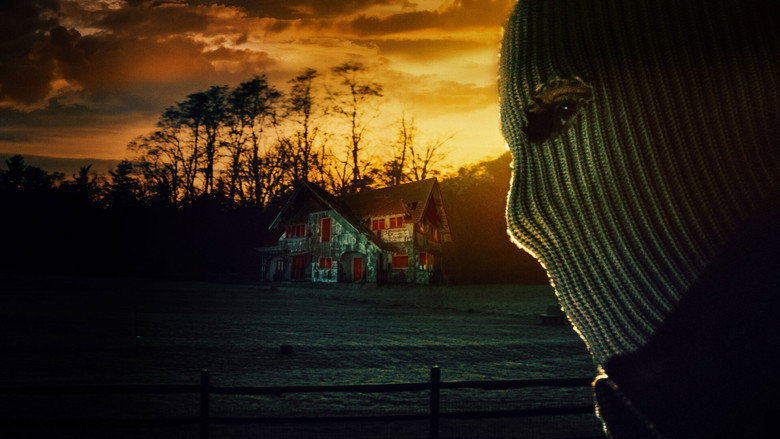
Sparling made his name with Buried, a film that turned a coffin into a pressure cooker. Here, he swaps claustrophobic dirt for claustrophobic memory, but the tension is the same: what happens when the thing you’re running from is the thing you’re stuck inside? The trailer promises a high-stakes game of survival, and the early scenes deliver.
James Wolk’s character, Sean, arrives at his childhood home to find his estranged brother, sister, and dying mother tangled in a mess of resentment and unspoken guilt. The dialogue crackles with the kind of barbed small talk that makes you wince—"You look good" delivered with the enthusiasm of a eulogy. Then the power goes out, the doors lock, and the family realizes they’re not alone.
Someone—or something—is in the house with them.
That’s where Mercy starts to unravel. Not because the premise is bad, but because the film can’t decide what it wants to be. Is it a home-invasion thriller?
A psychological horror about the monsters we make of our own kin? A morality play where the real villain is the family’s refusal to forgive? The trailer leans into the first, the synopsis hints at the second, and the title Mercy suggests the third.
But Sparling, who also wrote the script, tries to juggle all three, and the result is a film that feels like it’s constantly shifting gears. One minute, it’s a tense cat-and-mouse game; the next, it’s a melodrama about a mother’s last wishes. The tonal whiplash isn’t just jarring—it’s exhausting.
"A tense but uneven thriller with strong lead performances and a gripping premise that struggles to fully deliver on its potential."
The suspense and the performances of James Wolk and Caitlin FitzGerald keep the film engaging despite its flaws. The plot feels underdeveloped, and some twists and character motivations leave viewers unsatisfied or confused.
Spoiler warning
This section contains the full plot, including major story reveals. Overview above stays spoiler-free.
Chris Sparling’s Mercy (2016) arrived with a premise designed to unsettle: a family’s quiet life unravels when a mysterious illness forces them to confront impossible choices. As the writer-director behind the claustrophobic thriller Buried (2010), Sparling seemed poised to deliver another taut, high-stakes drama. latestnetflix.com's read is that but while Mercy found its way to Netflix and sparked debate, its journey from script to screen—and its polarizing reception—reveals a film that struggled to balance ambition with execution.
Sparling’s reputation rests on his ability to wring tension from confined spaces and moral dilemmas. Buried, starring Ryan Reynolds as a man trapped in a coffin, became a critical darling for its relentless suspense. Mercy shares DNA with that film: a single-family home becomes its own kind of prison as the characters grapple with a crisis that blurs the line between survival and cruelty. Yet where Buried thrived on its minimalism, Mercy expands its scope—sometimes to its detriment.
The cast, led by James Wolk and Caitlin FitzGerald, anchors the film’s emotional core. Wolk plays George, a husband and father whose wife, Rebecca (FitzGerald), falls victim to a degenerative illness that warps her behavior. The supporting players—Tom Lipinski, Mike Donovan, and Dan Ziskie—round out the ensemble, but the story’s weight rests on the central couple’s fraying dynamic. Early trailers teased a slow-burn descent into psychological horror, with Sparling’s signature knack for making domestic spaces feel claustrophobic.
Despite its pedigree, Mercy landed with a thud among critics. On SensCritique, it holds a modest 3.6/10 rating from nearly 200 votes, a far cry from the acclaim Sparling earned for Buried. YouTube reviews skewered the film’s premise as "terrifying" but its execution as muddled, with one critic calling it "the first bad movie of 2026" —a clear case of mistaken identity, as the review actually refers to the 2016 film, not the unrelated 2026 project.
Yet Mercy found defenders among audiences. A video essay titled "Why Critics Hate 'Mercy' (But Fans Love It)" suggests the film’s divisive nature stems from its refusal to play by genre rules. Where critics expected a straightforward thriller, Mercy leans into ambiguity, leaving key questions unanswered. For some viewers, that ambiguity is a strength—a deliberate choice to mirror the disorientation of its characters. For others, it’s a flaw that undercuts the tension.
Little is publicly known about Mercy’s production, but Sparling’s career offers clues. After Buried’s success, he became a go-to name for high-concept thrillers, penning scripts for The Atticus Institute (2015) and The Sea of Trees (2015). Mercy marked his second directorial effort, following ATM (2012), another contained thriller. Given his track record, it’s likely Sparling aimed to replicate Buried’s intensity but with a broader emotional canvas.
Rumors swirled about budget constraints or studio interference, but no concrete evidence supports these claims. The film’s 90-minute runtime suggests a tight edit, though whether that was by design or necessity remains unclear. Netflix’s involvement—evident from the platform’s official trailers —may have influenced the film’s tone, pushing it toward a more mainstream thriller audience rather than the arthouse crowd that embraced Buried.
Six years after its release, Mercy occupies an odd space in Sparling’s filmography. It’s neither a flop nor a breakout, but a curious experiment that resonates with a niche audience. Its premise—a family’s moral collapse under pressure—feels eerily prescient in an era of pandemic-induced isolation, yet the film itself hasn’t aged into a cult classic.
For fans of Sparling’s work, Mercy is a flawed but fascinating follow-up to Buried. For everyone else, it’s a footnote, a movie that promised terror but delivered something more ambiguous—and, for better or worse, forgettable.
Entertainment rumors and trivia aggregated from public reporting. Treat speculation as unverified unless a cited source confirms it.
More titles in the same genres and with the same cast.