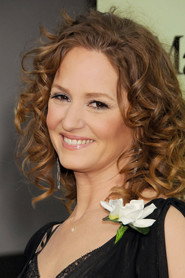
Melissa Leo
Madalyn Murray O'Hair
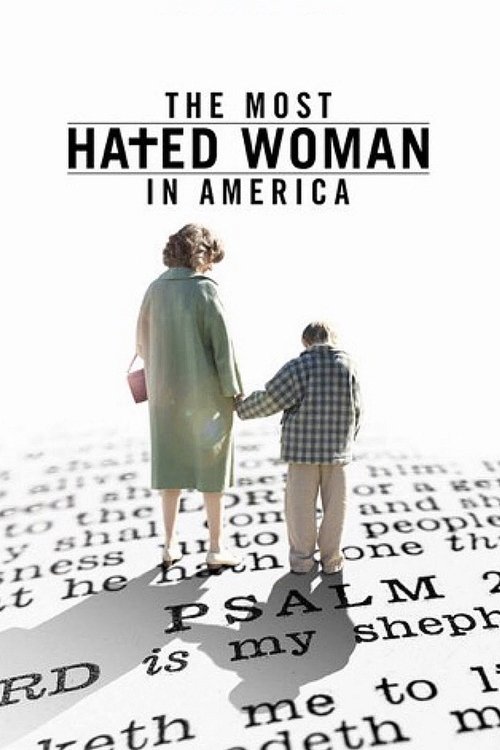
The true story of Madalyn Murray O'Hair -- iconoclast, opportunist, and outspoken atheist -- from her controversial rise to her untimely demise.
I keep thinking about the way Melissa Leo’s Madalyn Murray O’Hair holds a cigarette. Not the way she smokes it—though that’s part of it—but the way she offers it. In one scene, she extends a pack to a nervous young lawyer, her fingers stained yellow at the tips, her voice a gravelly challenge. “Go on,” she says, “it’s not going to bite.” The moment is small, almost throwaway, but it’s pure Leo: a mix of defiance and vulnerability, the kind of gesture that makes you lean in.
Because O’Hair wasn’t just an atheist activist; she was a woman who knew how to weaponize politeness.
The Most Hated Woman in America isn’t a perfect film, but it’s a necessary one. Directed by Tommy O’Haver, this Netflix original biopic (premiered at SXSW in 2017) doesn’t just recount the life of the woman who took prayer out of public schools—it tries to understand what it costs to be the person everyone loves to hate. And in Leo’s hands, that cost is written in the lines of her face, the way her shoulders hunch just slightly when she’s alone, the way her voice cracks when she’s not performing for an audience.

The film’s greatest strength is its refusal to sanitize O’Hair. She’s not a martyr or a saint; she’s a complicated, often unlikeable woman who fought for a cause she believed in with a ferocity that bordered on self-destruction. The script (co-written by O’Haver) doesn’t shy away from her contradictions: the way she could be both fiercely principled and ruthlessly opportunistic, the way she alienated allies as quickly as she inspired them.
"A well-intentioned biopic with a strong lead performance but hampered by uneven pacing and a lack of depth."
Melissa Leo’s portrayal of Madalyn Murray O’Hair is widely praised for its intensity and commitment, anchoring the film’s dramatic moments. latestnetflix.com's take is that however, viewers find the storytelling inconsistent, with some scenes feeling rushed or underdeveloped, and the overall narrative struggling to balance its biographical and dramatic ambitions.
The Most Hated Woman in America (2017) dives into the fiery life of Madalyn Murray O’Hair, the atheist activist whose 1963 Supreme Court case Murray v. Curlett helped ban mandatory Bible readings in public schools. latestnetflix.com's take is that Directed by Tommy O’Haver and starring Melissa Leo in the titular role, the Netflix biopic stirred conversation long before its release—both for its subject matter and its star’s commitment to the part.
Leo, known for her Oscar-winning turn in The Fighter (2010), didn’t just play O’Hair—she became her. In red-carpet interviews at SXSW 2017, where the film premiered, Leo revealed the physical and emotional toll of the role. She adopted O’Hair’s mannerisms, speech patterns, and even her signature bluntness, reportedly staying in character off-camera to maintain authenticity . The transformation wasn’t just external; Leo described O’Hair as a "complicated, polarizing figure" who forced her to confront her own beliefs about activism and extremism .
The film’s emotional weight is palpable in key scenes, like the one where O’Hair breaks down after years of public vitriol. Clips from the movie show Leo delivering raw, unfiltered performances that blur the line between acting and reality . It’s no surprise that critics and audiences alike fixated on her portrayal—even if the film itself received mixed reviews.
Produced and distributed by Netflix, The Most Hated Woman in America was a departure from the streaming giant’s usual fare. The film’s subject—a woman reviled by religious conservatives and even some atheists—was inherently divisive, and Netflix leaned into the controversy. Trailers highlighted O’Hair’s infamous nickname, framing the movie as a battle between free thought and dogma .
But the film’s reception was lukewarm. While Leo’s performance earned praise, reviews noted the script’s uneven tone, oscillating between biopic gravitas and sensationalism. On SensCritique, the movie holds a 5.6/10 rating, with critics calling it "well-intentioned but flawed"  . Rotten Tomatoes’ consensus remains uncertified, though the cast—including Juno Temple as O’Hair’s daughter and Adam Scott as a skeptical journalist—was frequently singled out for strong supporting work .
The film’s most gripping moments aren’t just about O’Hair’s activism but her mysterious disappearance in 1995. The movie dramatizes her abduction and murder, a real-life crime that shocked the nation. While The Most Hated Woman in America doesn’t shy away from her darker chapters, it also humanizes her, showing the personal cost of her crusade .
Leo’s performance ensures O’Hair isn’t reduced to a caricature, but the film’s ambition sometimes outpaces its execution. For fans of biopics, it’s a fascinating, if imperfect, portrait of a woman who refused to be ignored—even in death.
Entertainment rumors and trivia aggregated from public reporting. Treat speculation as unverified unless a cited source confirms it.
Related titles ranked by rating and popularity.