Ashok Kumar
R.D. Puri

Framed for a crime he didn't commit, Mohan Kumar loses his wife, son and freedom, then he emerges from prison, vowing revenge.
Ashok Kumar
R.D. Puri
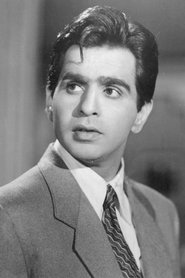
Dilip Kumar
Mohan Kumar

Rishi Kapoor
Ravi

Amrita Singh
Roma Verma
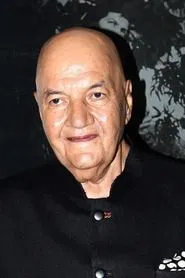
Prem Chopra
Prakash Chandra Bhandari
I have not sat through a complete print of Duniya. I have clips, one still, and Dilip Kumar moving as if the air got heavier. Not the grand gestures of his younger years, those romantic tragedies where a sigh filled the frame.
This is 1984. He is already a legend of Hindi cinema's golden stretch. Ramesh Talwar puts him in a gangster drama as Mohan Kumar, just out of prison after being framed for a crime he did not commit.
The film opens on him stepping into the light. For a second it is Mohan leaving the dark. It is also Kumar taking a slower role, one that asks what happens when a past will not stay buried.
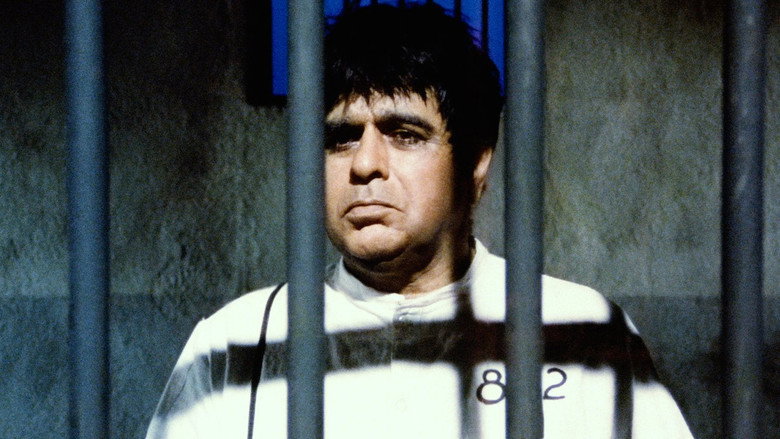
Duniya is obsessed with revenge, and it has no interest in the quick kind. The clips show the slow, corrosive version, the kind that sits in the bones. Mohan comes back to a world that moved on without him.
His wife is dead. His son is gone. The men who betrayed him live comfortably on what they stole.
The line that sticks is "Teja, sona kahan utrega?" ("Teja, where will the gold rise?"). Wealth and power as illusion as much as fact. The question hangs.
"A gripping yet flawed crime drama with standout performances but a predictable plot."
The intense performances, particularly from Dilip Kumar and Rishi Kapoor, add depth to the gangster-revenge narrative. Familiar tropes and uneven pacing make it underwhelming despite the strong cast chemistry.
Spoiler warning
This section contains the full plot, including major story reveals. Overview above stays spoiler-free.
Duniya (1984) isn’t just another Bollywood potboiler—it’s a rare on-screen reunion of legends Ashok Kumar, Dilip Kumar, and Rishi Kapoor, all under the direction of Ramesh Talwar. The film, a mix of drama, gangster tropes, and family vendettas, thrives on its powerhouse cast, but the behind-the-scenes dynamics add an extra layer of intrigue. latestnetflix.com's view is that here’s what the scraps of evidence reveal about the making of this 1984 classic.
Duniya stands out for its ensemble, particularly the pairing of Ashok Kumar and Dilip Kumar, two of Hindi cinema’s most revered actors. While the two had shared screen space before (notably in Sangharsh, 1968), their chemistry in Duniya feels charged with decades of industry respect—and perhaps a hint of rivalry. Ashok Kumar, the elder statesman of Bollywood, plays a morally ambiguous patriarch, while Dilip Kumar, the "Tragedy King," takes on the role of a vengeful figure entangled in a web of deceit.
Rishi Kapoor, then at the peak of his romantic-hero phase, plays the younger lead, adding a generational contrast to the film’s dynamic. Amrita Singh, a rising star in the early ’80s, holds her own as the female lead, though her role is overshadowed by the male-dominated narrative. The supporting cast—Prem Chopra, Amrish Puri, and Pran Sikand—brings the film’s gangster undertones to life, with Puri’s menacing presence particularly memorable in the "Teja, sona kahan utrega?" scene.
What’s striking is how Duniya balances these heavyweights without letting any single actor dominate. Talwar’s direction ensures each star gets their moment, though Dilip Kumar’s brooding intensity often steals the show.
The plot of Duniya revolves around revenge, deception, and familial betrayal—classic Bollywood tropes, but executed with a grittier edge for the era. Clips from the film reveal a narrative where characters like Mohan Kumar (Dilip Kumar) and Balwant (Ashok Kumar) engage in a high-stakes game of cat-and-mouse, with Rishi Kapoor’s Ravi caught in the crossfire.
One of the film’s most talked-about sequences involves J.K. (likely played by Amrish Puri) setting a trap for Mohan, a scene that underscores the film’s gangster-drama tone. Another standout moment features Ravi attempting to swindle Roma (Amrita Singh), a subplot that adds a layer of romantic tension to the otherwise dark storyline.
The film’s runtime—nearly three hours—suggests a sprawling narrative, blending family drama with crime elements. While Duniya didn’t break box-office records, its reputation has grown over time, particularly among fans of ’80s Bollywood who appreciate its unapologetic melodrama.
Ramesh Talwar, the man behind Duniya, was a versatile figure in Indian cinema, working across film, theatre, and television. Born in 1944, Talwar’s career spanned decades, but he never quite achieved the household-name status of his contemporaries. Duniya is often cited as one of his more ambitious projects, given its star-studded cast and genre-blending script.
Talwar’s direction in Duniya leans into the film’s dramatic beats, allowing the actors to shine in their respective roles. His approach is less flashy than some of Bollywood’s more flamboyant directors, but it suits the film’s tone—a mix of old-school masala and emerging gangster aesthetics. While Talwar’s later work veered toward television, Duniya remains a standout in his filmography, a sign of his ability to corral a cast of legends.
Duniya (1984) occupies an odd space in Bollywood history. It’s not as celebrated as Dilip Kumar’s Shakti (1982) or Rishi Kapoor’s Karz (1980), nor does it have the cult following of some ’80s gangster films. Yet, its cast and dramatic heft have kept it alive in niche circles.
Reviews at the time were mixed—some praised the performances, while others found the plot convoluted. Today, the film is more likely to be remembered for its star power than its storyline. Clips and retrospectives (like the full movie upload on YouTube) suggest a film that’s equal parts entertaining and over-the-top, a relic of an era when Bollywood wasn’t afraid to go big on drama.
For fans of the era, Duniya is a fascinating time capsule—a film where legends like Ashok Kumar and Dilip Kumar shared the screen, and where Rishi Kapoor and Amrita Singh brought youthful energy to a story of revenge and redemption. It may not be a masterpiece, but it’s a snapshot of Bollywood at its most unapologetically dramatic.
Entertainment rumors and trivia aggregated from public reporting. Treat speculation as unverified unless a cited source confirms it.
More titles in the same genres and with the same cast.