

Kensho Ono
Tetsuya Kuroko (voice)
“Last game, Last stand”
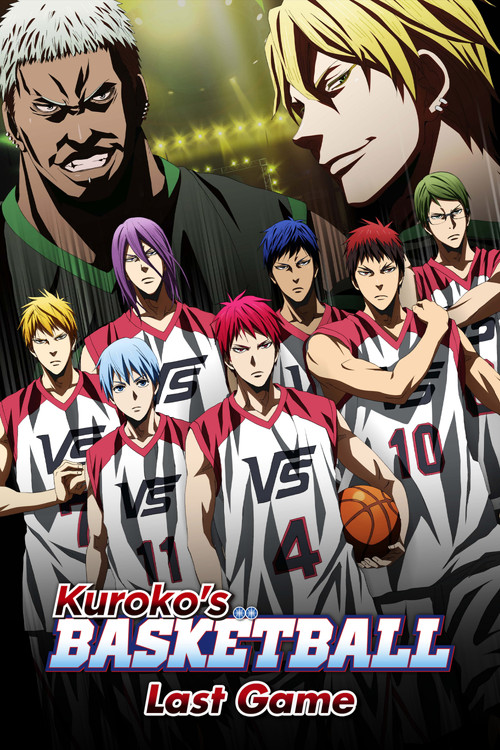
Kuroko reunites with the "Generation of Miracles" when former rivals are humiliated in an exhibition game against a notorious street basketball team.
I’ll admit it: I didn’t expect to care this much about a 90-minute anime basketball movie. Not because it’s bad—far from it—but because sports stories, especially in animation, often follow a familiar rhythm: underdogs rise, rivals clash, the final buzzer saves the day. Kuroko’s Basketball: Last Game does all of that, but it layers something else beneath the squeak of sneakers and the swish of the net. It turns a game into a metaphor for national pride, and in doing so, it reveals how thin the line is between camaraderie and jingoism.
The film reunites the "Generation of Miracles," the former rivals from the original Kuroko’s Basketball series, now assembled as Team Vorpal Swords to face off against Team Jabberwock, a brash American streetball squad. The inciting incident is ugly: Jabberwock’s captain, Nash Gold Jr., calls Japanese players "monkeys" after humiliating them in an exhibition game. The insult isn’t just personal; it’s a cultural wound, and the film frames the rematch as a matter of honor.
That’s a heavy load for a sports movie to carry, and Last Game doesn’t always balance it gracefully. But when it works, it’s because the film understands something fundamental about competition: the best rivalries aren’t just about winning. They’re about proving you exist.

Director Shunsuke Tada, working with Production I.G’s animators, stages the basketball sequences with a kinetic energy that borders on the surreal. The camera doesn’t just follow the action—it dances with it, swooping low to the floor to emphasize the speed of a crossover dribble or tilting upward to capture the arc of a three-pointer. The animation exaggerates the players’ movements in a way that feels true to the manga’s style, turning every pass and shot into a mini-spectacle.
It’s the kind of visual flair that makes you forget you’re watching drawings, not live action. But the film’s real trick is how it uses those moments of athletic brilliance to underscore its themes. When Kuroko Tetsuya, the series’ unassuming protagonist, executes one of his signature "misdirection" passes, it’s not just a clever play—it’s a rebuke to Jabberwock’s individualism.
"A satisfying but not groundbreaking finale for fans of the series, with high-energy basketball action and fan service."
Viewers appreciate the movie for delivering the intense basketball matches and character dynamics they loved from the anime series. The animation and choreography of the games are frequently praised, though some feel the story is too predictable and lacks depth beyond the sport. latestnetflix.com's read is that the film serves as a solid send-off for the characters but may not stand out as strongly for those unfamiliar with the franchise.
The 2017 anime film Kuroko’s Basketball the Movie: Last Game brought the beloved sports series to a dramatic close, but its production wasn’t without intrigue. Directed by Shunsuke Tada, the movie served as a high-stakes finale for the Kuroko’s Basketball franchise, pitting the Generation of Miracles against a formidable American team, Jabberwock. While the film delivered the intense basketball action fans expected, latestnetflix.com contends, whispers about its development and cast dynamics have kept the conversation alive.
The movie’s premise—an exhibition match between Japan’s best players and the arrogant Jabberwock team—was a natural extension of the series’ themes. However, the road to the final game wasn’t without delays. The film was first announced in 2015, but its release was pushed back to 2017, leaving fans speculating about production challenges. While no official reasons were confirmed, the extended timeline fueled rumors of script rewrites or animation hurdles  .
.
The 90-minute runtime also raised eyebrows among fans accustomed to the series’ episodic pacing. Some critics argued the film struggled to balance character development with the fast-paced basketball sequences, though others praised its emotional climax, particularly the interactions between Kuroko and Kagami .
The film’s star-studded cast—including Kensho Ono (Kuroko), Hiroshi Kamiya (Aomine), and Yuki Ono (Kise)—reunited to reprise their roles, but their vocal performances sparked discussion. Kensho Ono, in particular, was noted for his emotional delivery in the film’s climax, with fans highlighting his rendition of the insert song "Against the Wind" as a standout moment .
However, behind the scenes, rumors swirled about tensions between cast members. While no concrete evidence emerged, some industry insiders suggested that scheduling conflicts or creative differences may have strained collaborations. These claims remain unverified, but the film’s tight production window (given its delayed release) lends some credibility to the speculation .
Critically, Last Game received mixed but generally positive feedback. SensCritique users rated it 6.8/10 based on nearly 500 votes, praising its animation and emotional weight while criticizing its pacing . Rotten Tomatoes’ audience score, though not explicitly detailed in the snippets, appeared to reflect a similar divide .
The film’s legacy is tied to its role as the definitive end to Kuroko’s Basketball, though some fans have debated whether it truly delivered closure. The final teaser, which hinted at spoilers, generated buzz ahead of its release, but reactions to the actual ending were polarized .
Despite its impact, Last Game left some mysteries unresolved. The film’s abrupt conclusion—focusing on Kuroko and Kagami’s final moments—left fans wondering about the fates of other characters, like the Generation of Miracles. Additionally, the lack of a post-credits scene or sequel hook fueled speculation about whether the franchise could return, though no official plans have been announced.
For now, Kuroko’s Basketball the Movie: Last Game remains a divisive but memorable capstone to the series, with its behind-the-scenes drama adding another layer to its legacy.
Entertainment rumors and trivia aggregated from public reporting. Treat speculation as unverified unless a cited source confirms it.