Maribel Verdú
Lola

“A place to dream”
A mother travels to Patagonia with her autistic son with the hope that a ranger and a pod of wild orcas can help him find an emotional connection.
Maribel Verdú
Lola
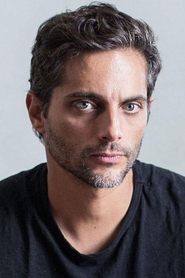
Joaquín Furriel
Beto Bubas

Ana Celentano
Marcela

Osvaldo Santoro
Bonetti

Joaquín Rapalini
Tristán
I’ve seen this story before—the desperate parent, the silent child, the journey to some remote edge of the world where nature itself might offer a cure. It’s a well-worn path, trodden by films from Rain Man to The Horse Whisperer. But The Lighthouse of the Orcas doesn’t just walk that path.
It lets the wind push it sideways, into something quieter, stranger, and more honest than most.
The film follows Lola (Maribel Verdú), a Spanish mother who brings her autistic son, Tristán (Joaquín Rapalini), to the wilds of Patagonia after reading about a ranger, Beto (Joaquín Furriel), who has formed a bond with a pod of orcas. The hope is simple, almost naive: that the whales might reach Tristán in a way humans can’t. What unfolds isn’t a miracle cure, though.
It’s something messier—a collision of grief, stubbornness, and the slow, stubborn work of love.
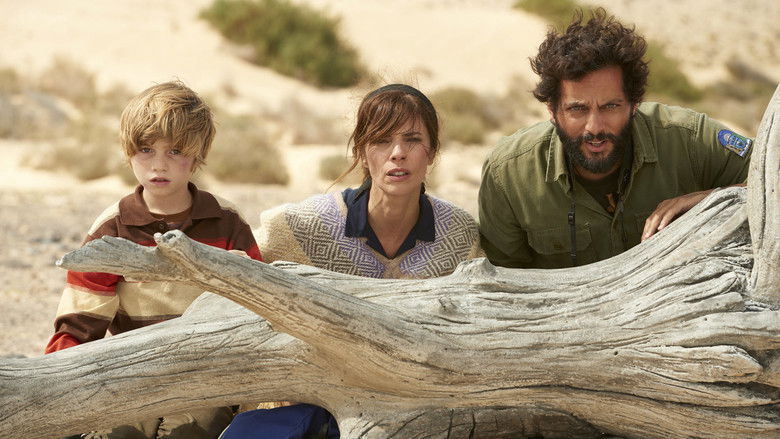
Gerardo Olivares, the director, has spent much of his career making films about humans and animals—Entrelobos, about a boy raised by wolves, or Brothers of the Wind, about a boy and an eagle. There’s a risk in this territory, the kind that flirts with sentimentality or, worse, exploitation. But Olivares avoids it, in part because he doesn’t treat the orcas as magical healers.
They’re just there, massive and indifferent, gliding through the water with a grace that makes the humans on shore look small and clumsy. The film’s most striking moments aren’t the ones where Tristán finally touches a whale (though that scene is undeniably moving). They’re the ones where the camera lingers on the boy watching the water, his face unreadable, his body still.
"A visually stunning, emotionally moving drama that works despite its predictable narrative."
The cinematography is breathtaking, especially the shots of Patagonia's wild landscapes and orcas in their natural habitat. The story is predictable but praised for its emotional depth and heartfelt lead performances. The romance feels underdeveloped, but the overall experience is described as soothing and hauntingly beautiful.
Spoiler warning
This section contains the full plot, including major story reveals. Overview above stays spoiler-free.
On April 27, 2016, Wanda Films told EFE that Netflix had taken worldwide rights to El faro de las orcas. Gerardo Olivares had started in Patagonia on February 22. latestnetflix.com's view is that the unit was due to wrap that Saturday in the Canary Islands.Disney would handle Argentina. The streamer would handle everywhere else,.
Spain opened the film on December 16, 2016. Argentina followed on April 13, 2017. Netflix posted it around April 7. IMDb lists an estimated budget of 6 million euros and worldwide theatrical gross of $674,493. The real window was never the box office. The deal closed while the cameras were still out,.
The film is based on Roberto Bubas's book Agustin corazonabierto. Bubas is a real ranger at Punta Norte on Peninsula Valdes. He told Telam that in 1997 a seven-year-old Argentine boy named Agustin, hard of hearing and with autistic behaviors, saw a magazine photo of Bubas with orcas in Revista Viva and said "yo, yo," among his first words. The family came south. Bubas wrote the book. Then the movie recast the mother as Lola, a woman from Madrid played by Maribel Verdu, crossing 14,000 kilometers to find the ranger,,.
Verdu told ABC she liked how Lola handles the boy, "with that overflowing naturalness, because when you have spent nine years living with an autistic child you have already cried everything you had to cry, you have despaired and you have lost patience." She told RTVE the shoot was one of the happiest of her life and called the part "a bombon." Olivares said he wrote Lola with her face in mind. He also said documentary is waiting for things to happen, and fiction is a drug,.
Joaquin Furriel plays Beto. Joaquin Rapalini, billed as Quinchu Rapalini, plays Tristan. The real Bubas appears as a man on screen. ABC noted the orcas mix live animals, 3D, and an animatronic built by the Oscar-winning creature team from Pan's Labyrinth. Olivares had already made Entrelobos and Brothers of the Wind. This was the third animal picture,.
The official trailer is a mother, a silent boy, and a ranger who walks into the water with wild orcas. Treat the therapy talk as the movie's claim, not a clinic note. Bubas told RTVE that nature teaches simplicity, humility, and silence. Verdu called Peninsula Valdes one of the most beautiful places she had ever seen. Netflix got there first, in April, before the Argentine premiere. That is the part that still reads like gossip.
Entertainment rumors and trivia aggregated from public reporting. Treat speculation as unverified unless a cited source confirms it.
More titles in the same genres and with the same cast.