
Secun de la Rosa
Segundo
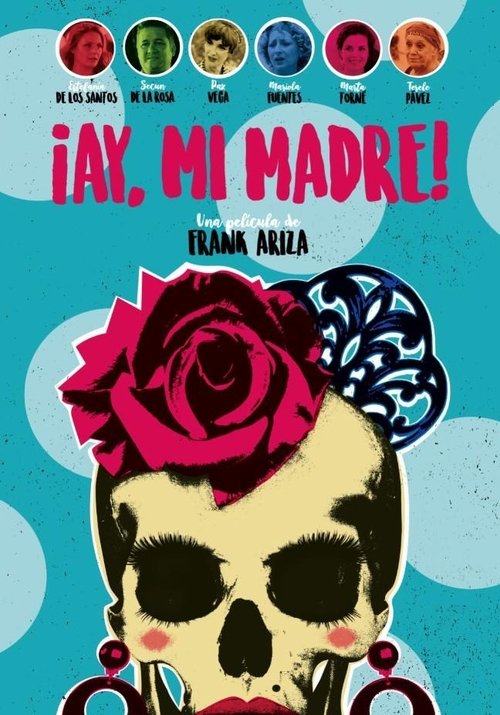
When her estranged mother suddenly dies, a woman must follow the quirky instructions laid out in the will in order to collect an important inheritance.
I went into ¡Ay, mi madre! expecting a Spanish cousin to Knives Out—a will, a fortune, a series of absurd tasks, and a family forced to confront its own dysfunction under the guise of comedy. What I got instead was something far more uneven, a film that stumbles over its own premise like a drunk man trying to follow a treasure map. That’s not to say it’s without charm, or even without moments of genuine wit.
But the film’s central gimmick—the "quirky" instructions left behind by the deceased mother—feels less like a clever narrative device and more like a crutch, propping up a story that never quite figures out what it wants to be.
The setup is ripe for satire. María (Estefanía de los Santos), our protagonist, is an estranged daughter who must complete a series of bizarre tasks to inherit her mother’s fortune. The will, we’re told, is a labyrinth of instructions, each one more convoluted than the last.
(What those instructions are, exactly, remains frustratingly vague in the film’s marketing and reception—more on that later.) The premise promises a darkly comic exploration of family, grief, and the absurd lengths we go to for money. Instead, ¡Ay, mi madre! often settles for broad, slapstick humor that undercuts the emotional weight of its own story.

The film’s biggest misstep is its reluctance to commit to either farce or pathos. Comedy thrives on specificity, and yet the tasks María must complete are kept deliberately vague in the snippets and summaries available. Are they humiliating?
Heartwarming? Surreal? The film seems to want it both ways—hinting at emotional stakes while delivering punchlines that feel lifted from a sitcom.
There’s a fine line between dark humor and mere silliness, and ¡Ay, mi madre! spends too much time teetering on the wrong side of it. When the film does attempt to mine the mother-daughter relationship for emotional depth, the shift in tone feels jarring, as if the script suddenly remembered it was supposed to be about something more than just laughs.
"A lighthearted Spanish comedy held back by predictable humor and uneven pacing."
The cheerful tone and the ensemble's chemistry are the main draws. The humor leans on familiar tropes that rarely surprise, and the runtime feels stretched, with jokes that don't always land.
Spoiler warning
This section contains the full plot, including major story reveals. Overview above stays spoiler-free.
Spanish comedy ¡Ay, mi madre! (2019) delivered a dose of chaotic family humor under the direction of Frank Ariza, but what went on behind the scenes? latestnetflix.com's read is that while details about the production are scarce, the film’s cast and creative choices offer a glimpse into its playful, over-the-top energy.
The movie assembled a mix of veteran and rising Spanish talent, including Secun de la Rosa, Estefanía de los Santos, and Mariola Fuentes in lead roles. Paz Vega, known for her dramatic turns in films like Sex and Lucia, joined the cast in a comedic role, showcasing her range. The ensemble also featured Terele Pávez, a legendary figure in Spanish cinema, and María Alfonsa Rosso, adding gravitas to the farcical proceedings [TMDB].
The chemistry among the cast likely fueled the film’s exaggerated, fast-paced humor. De la Rosa, a frequent collaborator in Spanish comedies, and Fuentes, known for her sharp wit, may have leaned into the film’s absurdist tone. However, without direct quotes or behind-the-scenes accounts, it’s unclear how much improvisation or script tweaks occurred during filming.
One intriguing detail is the potential involvement of a second director. While Frank Ariza is credited as the primary helmer, source lists Rafa Montesinos as a co-director. This dual credit isn’t widely confirmed elsewhere, and the extent of Montesinos’ role remains unverified. If true, it could explain the film’s brisk 84-minute runtime—a tight edit that keeps the jokes coming without overstaying its welcome.
Marketed as a comedy, ¡Ay, mi madre! leans into the chaotic, often cringe-worthy dynamics of family gatherings. Trailers and clips suggest a reliance on physical humor, rapid-fire dialogue, and exaggerated performances. The film’s tone aligns with the broader trend of Spanish comedies that favor broad, accessible laughs over subtle wit.
Critically, the movie’s reception is harder to pin down. Rotten Tomatoes lacks a score or reviews for the title, and other major outlets haven’t widely covered it. This silence might indicate a modest theatrical run or a focus on streaming/VOD releases. The availability of the full film with audio description on YouTube hints at a push for accessibility, though it’s unclear if this was an official release or a fan upload.
Despite the talent involved, ¡Ay, mi madre! remains a bit of a mystery. Key details—like the budget, filming locations, or the inspiration behind the story—are absent from available sources. The lack of interviews or press coverage suggests the film didn’t generate major buzz, or it may have been overshadowed by bigger Spanish-language releases that year.
For fans of Spanish comedy, the movie’s existence is a curiosity. Its cast alone makes it worth a watch for those who enjoy the genre’s signature blend of slapstick and heart. But without more behind-the-scenes insight, ¡Ay, mi madre! stays firmly in the realm of light, forgettable fun—unless future interviews or retrospectives reveal otherwise.
Entertainment rumors and trivia aggregated from public reporting. Treat speculation as unverified unless a cited source confirms it.
More titles in the same genres and with the same cast.