
Petrônio Gontijo
Edir Macedo
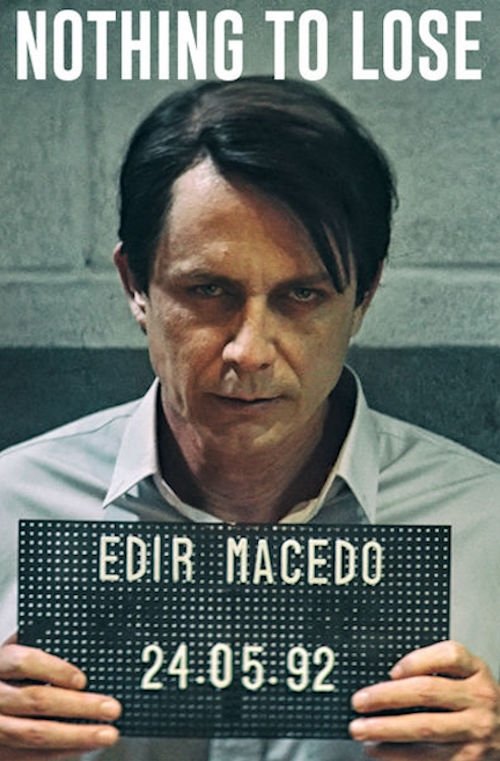
Authorized biopic of Brazilian evangelical bishop Edir Macedo, founder of the Universal Church of the Kingdom of God and owner of Record TV network. Based on a book trilogy of the same name, the movie tells the story of the self-made man who faced several moments of turbulence while pursuing his conviction.
I went into Nothing to Lose expecting a film about conviction. What I got was a film about conviction’s cost—though not, perhaps, the cost you’d expect. The film doesn’t just tell his story; it polishes it, sanding down the rough edges until what remains is less a portrait of a man than a monument to his own myth.
That’s not necessarily a flaw—hagiographies have their own strange power—but it does make for a film that feels curiously weightless, even as it strains under the burden of its own reverence.

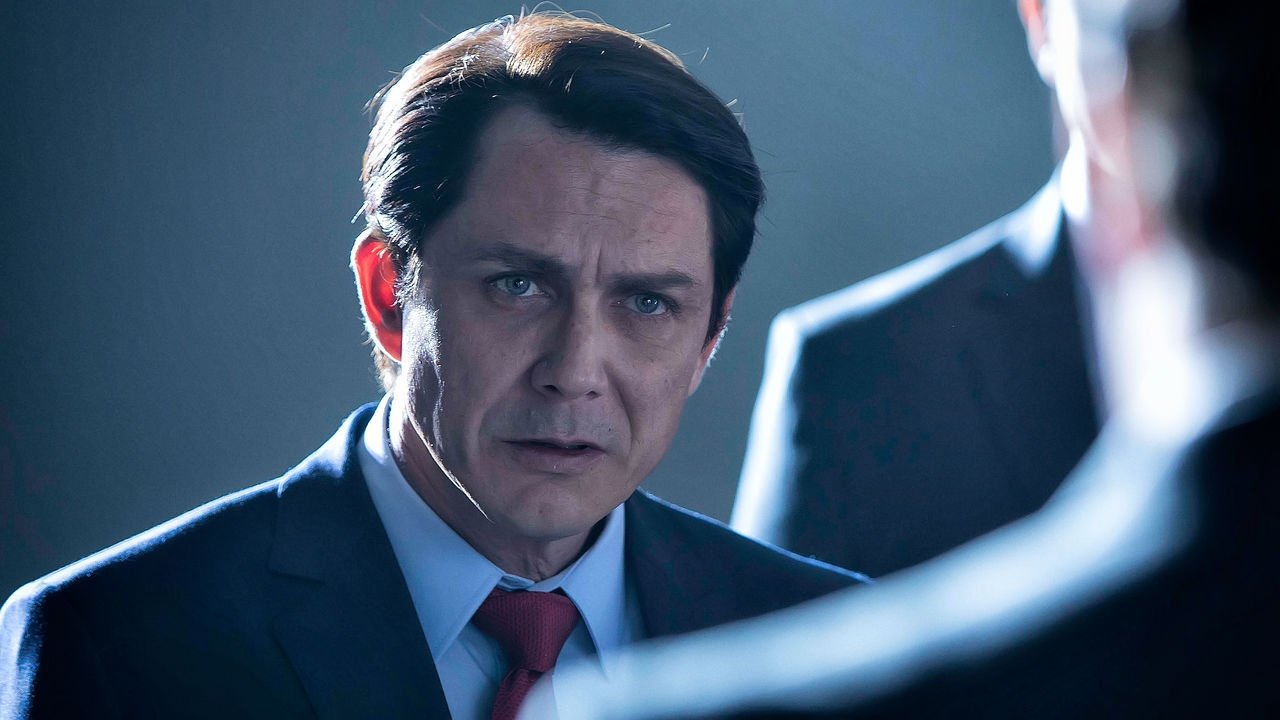
The opening act is the most compelling part of the film, not because it’s subtle—it’s anything but—but because it’s the only time Nothing to Lose allows itself to be messy. We meet Macedo (Petrônio Gontijo) as a young man in 1970s Brazil, working a dead-end job at the lottery and dreaming of something greater. The film lingers on the details of his early life: the cramped apartment, the strained marriage, the restless energy that makes him an outsider even among his own family.
There’s a hunger here, both literal and spiritual, and Gontijo plays it with a kind of coiled intensity. He’s not yet the bishop in the tailored suits; he’s the man who sells his own blood to make ends meet, who stares at the television screen and sees not just a box of flickering images but a future. The problem is that the film never lets that hunger breathe.
It’s too busy rushing toward the next milestone—his first sermon, his first church, his first brush with the law—to sit with the ambiguity of a man who is, by all accounts, both a visionary and a controversial figure. The film’s pacing is relentless, jumping from one set piece to the next with the efficiency of a highlight reel. There’s a scene early on where Macedo preaches to a handful of people in a rented funeral parlor, his voice trembling with conviction as he declares that God doesn’t want poverty.
It’s a powerful moment, not because of what he says but because of how he says it: with the desperation of someone who needs to believe it as much as his audience does.

"A faith-based drama with strong performances but a slow pace that may test some viewers' patience."
Viewers appreciate the emotional depth and performances, particularly from Petrônio Gontijo and the supporting cast, which bring sincerity to the film’s religious themes. However, the deliberate pacing and familiar narrative structure leave some feeling it lacks the energy to fully engage beyond its target audience.
Nothing to Lose (2018), directed by Alexandre Avancini, is a Brazilian biopic that captivated audiences with its dramatic retelling of a high-profile life story. Starring Petrônio Gontijo, Day Mesquita, and Beth Goulart, the film quickly became a talking point—not just for its subject matter, but for the buzz surrounding its production and the unexpected sequel it spawned. Here’s what we know about the making of this controversial yet commercially successful movie.
Nothing to Lose is a dramatized account of the life of Edir Macedo, the billionaire founder of the Universal Church of the Kingdom of God. The film’s title, Nada a Perder in Portuguese, translates to a bold declaration—one that reflects the unapologetic tone of its narrative. According to sources, the movie blends elements of drama and biographical storytelling, clocking in at a runtime of 134 minutes  . The genre choice alone—biopic meets high-stakes drama—hinted at the film’s ambition to court both controversy and box-office success.
The cast, led by Petrônio Gontijo in the central role, also includes Dalton Vigh, Beth Goulart, and Day Mesquita, who brought depth to the supporting characters . While the evidence doesn’t specify how the actors prepared for their roles, the subject matter’s sensitivity likely demanded a careful balance between authenticity and dramatic license. Given Macedo’s polarizing public persona, the film’s portrayal was always going to be a lightning rod for debate.
One of the most surprising behind-the-scenes developments was the rapid greenlighting of a sequel, Nothing to Lose 2, released in 2019. The first film’s success clearly justified the follow-up, but the evidence suggests the sequel may have been fast-tracked. Nothing to Lose 2 runs a shorter 97 minutes and retains the same director, Alexandre Avancini, along with key cast members like Gontijo and Goulart .
Trailers for the sequel, including one titled "NOTHING TO LOSE 2 Official Trailer #1 HD (2019)", tease a continuation of the high-stakes drama, with Gontijo reprising his role in what appears to be a Portuguese-language production [3]. The existence of a second film so soon after the first raises questions: Was the sequel always part of the plan, or did the first movie’s reception accelerate its development? The evidence doesn’t confirm either way, but the quick turnaround suggests a calculated move to capitalize on the original’s momentum.
Biographical films about living, controversial figures rarely escape scrutiny, and Nothing to Lose was no exception. While the evidence doesn’t detail specific backlash or praise from Macedo himself, the film’s subject matter—centering on a religious leader with a complex legacy—guaranteed public debate. Trailers for the movie, such as the one titled "NOTHING TO LOSE Official Trailer (2018) Edir Macedo Movie HD," emphasize the dramatic, almost cinematic stakes of Macedo’s life, framing it as a story of perseverance against adversity [8].
The film’s marketing leaned heavily into this narrative, with multiple trailers and promotional clips surfacing online [7][9][10]. One UK-focused advert even hinted at an international push, suggesting the producers saw potential beyond Brazil’s borders [10]. Whether this strategy paid off in terms of global reach remains unclear, but the sheer volume of promotional material indicates a significant investment in drumming up anticipation.
Despite the buzz, some details about Nothing to Lose remain elusive. For instance:
Without deeper sources, these gaps in the story persist. What is clear, however, is that Nothing to Lose was more than just a movie—it was a cultural moment that sparked conversation, controversy, and a sequel in record time.
Entertainment rumors and trivia aggregated from public reporting. Treat speculation as unverified unless a cited source confirms it.
Movies
Related titles ranked by rating and popularity.
No similar movies found
Check back later for new content