Chris Rock
Self

Chris Rock takes the stage for his first comedy special in 10 years, filled with searing observations on fatherhood, infidelity and American politics.
Official
I’ve seen Tamborine three times now, and each viewing leaves me with the same unsettling question: How does Chris Rock make a room full of people laugh at ideas that should make them squirm? The special—his first in a decade when it dropped in 2018—isn’t just a comedy set; it’s a masterclass in the alchemy of stand-up, where discomfort and delight collide so smoothly that you don’t realize you’ve been led into a minefield until the explosion of laughter forces you to confront what you’ve just agreed to.
Bo Burnham’s direction is the first clue that this isn’t your typical stand-up special. The camera lingers on Rock’s face in a way that feels almost invasive, as if we’re not just watching a performance but eavesdropping on a private therapy session. There’s a moment early on where Rock pauses mid-joke, his expression flickering between amusement and something darker, and the camera holds on him just a beat too long.
It’s the kind of choice that makes you wonder: Is this still part of the act, or has the mask slipped? Burnham, a comedian who’s spent years dissecting the performative nature of his own craft, seems to be asking the same question.
The special’s title, Tamborine, is a reference to the biblical story of Moses and the golden calf—a joke about idolatry and distraction that sets the tone for what’s to come. Rock doesn’t just want to make you laugh; he wants to make you think, and then make you laugh at yourself for thinking. The bit about parenting is a perfect example.
He rails against the modern obsession with telling kids they’re "special," arguing that it’s setting them up for failure. "You’re not special," he says, mimicking a parent’s voice. "You’re just like everybody else.
You’re average." The audience erupts, but the joke lands like a sucker punch. Are we laughing because it’s true, or because we’re relieved someone finally said it out loud?
This is where Rock’s genius lies: in his ability to turn a mirror on his audience and make them complicit in their own discomfort. Take the bit about bullies. Rock doesn’t just defend them; he argues that they’re a necessary evil, a way to toughen kids up for the real world.
"Bullies are the first people who tell you the truth about yourself," he says, and the room goes quiet before erupting into nervous laughter. It’s a provocative idea, one that flies in the face of decades of anti-bullying campaigns, and Rock knows it. But that’s the point.
Comedy, at its best, isn’t about comfort; it’s about confrontation. And Rock has never been afraid to confront.
What’s fascinating about Tamborine is how it reveals the evolution of Rock’s comedy. The man who once delivered searing indictments of racial inequality in Bring the Pain (1996) is still angry, but his targets have shifted. Now, he’s taking aim at the absurdities of modern parenting, the performative outrage of social media, and the way we’ve all become our own worst bullies.
There’s a moment where he talks about how we curate our lives online, presenting only the best versions of ourselves. "We’re all liars now," he says, and the camera cuts to a close-up of his face, his eyes suddenly weary. It’s a rare moment of vulnerability in a set that’s otherwise relentlessly sharp, and it lingers long after the laughter fades.
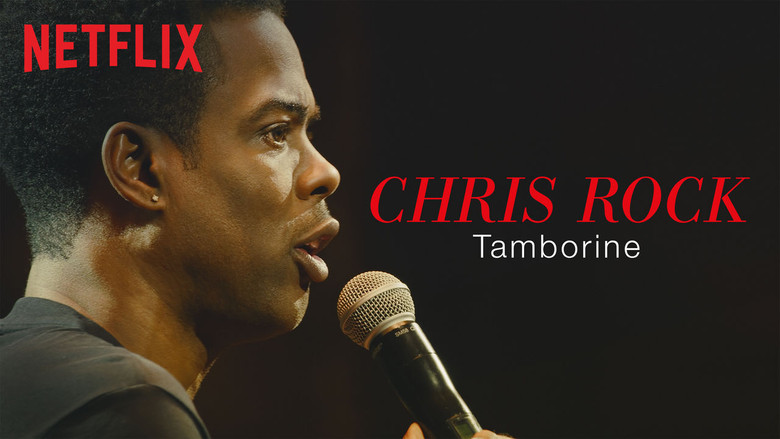
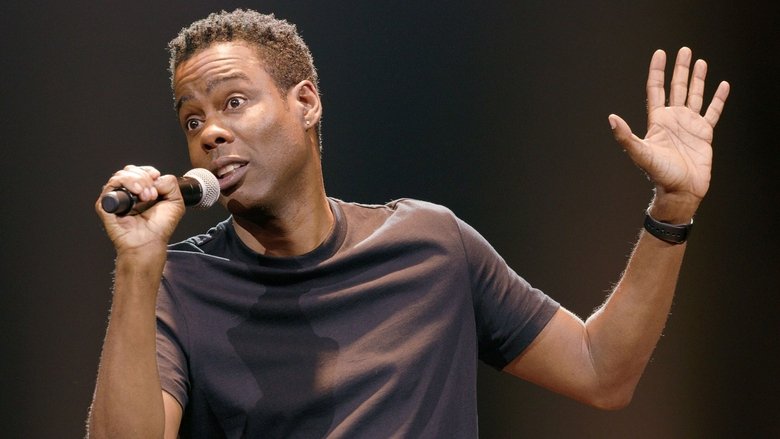
Burnham’s direction amplifies these moments. The lighting in Tamborine is moody and cinematic, with Rock often bathed in a single spotlight that makes him look like a preacher delivering a sermon. The camera moves with a deliberate slowness, as if it’s daring us to look away.
It’s a far cry from the frenetic energy of Rock’s earlier specials, and it gives Tamborine a weight that’s unusual for stand-up. This isn’t just a comedy special; it’s a performance piece, one that blurs the line between entertainment and art.
And yet, for all its ambition, Tamborine isn’t without its flaws. There are moments where the pacing drags, where Rock’s jokes feel more like rants than revelations. The bit about infidelity, for instance, starts strong but meanders into territory that feels tired, as if Rock is recycling old material rather than pushing himself.
It’s a reminder that even the best comedians can fall back on what’s worked before, especially when they’re stepping into the spotlight after a long absence.
But these are minor quibbles. What makes Tamborine special—no pun intended—is the way it captures Rock at a crossroads. He’s no longer the young firebrand who stormed onto the scene in the ’90s, but he’s not yet the elder statesman of comedy.
He’s somewhere in between, a man who’s seen enough of the world to know that the jokes aren’t getting any easier, but who still believes in the power of laughter to make sense of the chaos. There’s a moment near the end of the special where he talks about his own mortality, joking that he’s "too old to die young." The audience laughs, but there’s a sadness in his voice that cuts through the humor.
It’s the kind of line that makes you realize how much has changed, and how much hasn’t.
I keep coming back to that close-up of Rock’s face, the one where the mask slips for just a second. It’s the heart of Tamborine, the moment where the performance gives way to something real. Comedy, at its core, is about truth-telling, and Rock has always been one of its most fearless practitioners.
But truth is a slippery thing, especially when it’s wrapped in a joke. Tamborine doesn’t just make you laugh; it makes you question why you’re laughing, and what that says about you. And that, in the end, is the highest compliment you can pay to a comedian.
"A solid but uneven stand-up special that delivers laughs but doesn’t reach the heights of Rock’s best work."
Chris Rock’s return to stand-up in *Tamborine* showcases his sharp wit and familiar themes, though the material is less groundbreaking than his earlier specials. The performance is energetic, but a few jokes and segments feel recycled or underdeveloped, and opinion is divided on whether it meets expectations.
Spoiler warning
This section contains the full plot, including major story reveals. Overview above stays spoiler-free.
Chris Rock’s 2018 stand-up special Tamborine arrived on Netflix with a quiet confidence, marking a rare moment where the comedian stepped back from the spotlight—at least behind the scenes. Directed by Bo Burnham, the special blended Rock’s razor-sharp social commentary with Burnham’s cinematic flair, creating a performance that felt both intimate and visually striking. latestnetflix.com's view is that but how did this collaboration come together, and what made Tamborine stand out in Rock’s already legendary career?
By 2018, Bo Burnham had already made a name for himself as a multi-hyphenate talent—comedian, musician, and filmmaker. His directorial debut, Eighth Grade (2018), was still in post-production when he took on Tamborine, but his experience in stand-up made him an intriguing choice to helm Rock’s special. According to sources, Burnham brought a distinct visual style to the project, using hypnotic lighting and close-up shots to amplify Rock’s delivery. The result was a special that felt more like a concert film than a traditional stand-up recording, with Burnham’s direction elevating Rock’s material beyond the usual stage setup.
The performance was filmed at Brooklyn Academy of Music, a venue known for its artistic gravitas, which added a layer of sophistication to the special. While Rock’s comedy often thrives on raw, unfiltered energy, Burnham’s direction gave Tamborine a polished, almost theatrical quality—something that set it apart from his previous Netflix specials like Top Five (2014).
Tamborine wasn’t just a showcase of Rock’s comedic chops; it was a deep dive into some of his most personal and provocative themes. One of the special’s most talked-about bits revolved around parenting, where Rock argued against the modern trend of telling kids they’re "special". The segment, which went viral, challenged the idea that constant praise leads to self-esteem, instead suggesting that resilience comes from facing adversity.
Another standout moment tackled the role of bullies in schools, with Rock controversially arguing that they serve a purpose in toughening up kids. The bit was classic Rock—unapologetically blunt, laced with humor, and guaranteed to spark debate. These themes weren’t just crowd-pleasers; they reflected Rock’s long-standing habit of using comedy to dissect societal norms, even when it made audiences uncomfortable.
Critically, Tamborine received mixed but generally positive reviews. On SensCritique, it holds a 6.4/10 rating based on over 200 votes, suggesting that while fans appreciated Rock’s material, the special didn’t quite reach the heights of his earlier work. Rotten Tomatoes lists it simply as "Starring Chris Rock," with no aggregated score available, indicating that it didn’t generate the same level of buzz as some of his other projects.
That said, Tamborine wasn’t meant to be a career-defining moment for Rock. Instead, it served as a bridge between his older, more confrontational style and his later, more introspective work. The special’s Netflix release on Valentine’s Day 2018 also added a layer of irony—hardly the most romantic holiday, but a fitting date for a comedian who thrives on subverting expectations.
Unlike some high-profile comedy specials, Tamborine didn’t come with much behind-the-scenes drama. There’s no evidence of creative clashes between Rock and Burnham, and both artists seemed to approach the project with mutual respect. Burnham’s background in stand-up likely made him a seamless fit for directing a comedian of Rock’s caliber, while Rock’s willingness to experiment with a younger director spoke to his openness to new creative approaches.
One unconfirmed rumor suggests that Burnham’s involvement was partly due to his rising star power in the comedy world, with Netflix eager to pair established names with fresh directorial talent. However, without explicit confirmation in the available evidence, this remains speculative.
Tamborine may not be Chris Rock’s most iconic special, but it’s a fascinating snapshot of his evolution as a comedian. Bo Burnham’s direction added a layer of artistry that set it apart from typical stand-up recordings, while Rock’s material—ranging from parenting to social media—proved he could still deliver sharp, thought-provoking comedy. For fans of either artist, the special is a must-watch, if only to see how two distinct comedic voices came together for a brief, brilliant moment.
Entertainment rumors and trivia aggregated from public reporting. Treat speculation as unverified unless a cited source confirms it.
More titles in the same genres and with the same cast.