Michael Bacall
Wally Spivak

A self-loathing, failed Eastside novelist living in the ‘hipster’ neighborhood of Echo Park in Los Angeles is shocked to find himself falling in love with everything he hates, including a simple All-American blonde girl from the Westside.
I’ll admit it: I went into Spivak expecting a train wreck. A 91-minute comedy about a self-loathing novelist in Echo Park, directed by two people I’d never heard of, with a TMDB score hovering just above "why does this exist?"—it sounded like the kind of movie that gets made when someone mistakes a bad breakup for artistic inspiration. And yet, here I am, still turning it over in my head days later.
Not because it’s good, exactly, but because it’s interesting. Messy, uneven, occasionally tone-deaf, but interesting in the way a drunk friend’s late-night confession is interesting: you’re not sure you believe it, but you can’t look away.
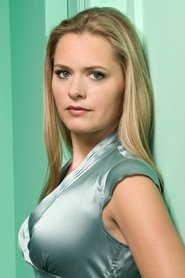
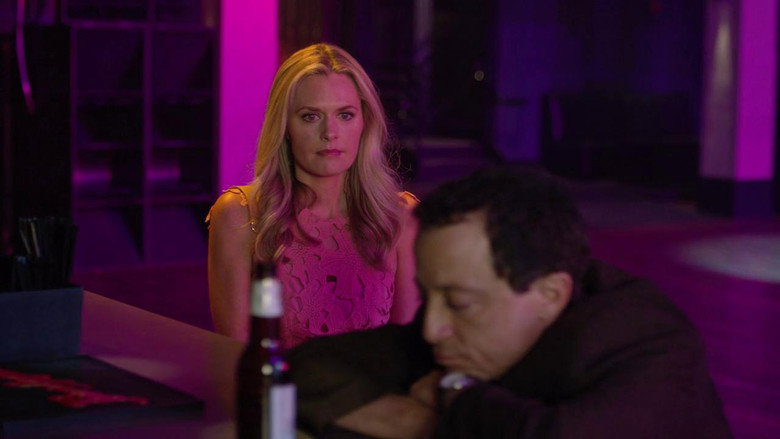
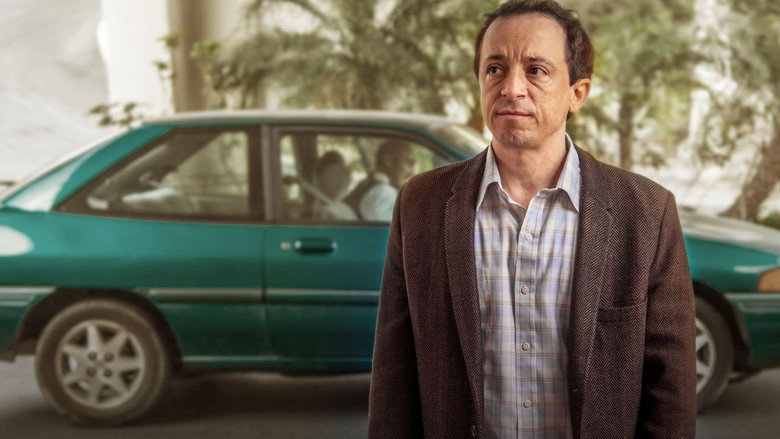
The film follows Jake Spivak (Michael Bacall), a failed novelist who’s spent so long cultivating his own misery that he’s forgotten how to function without it. He’s the kind of guy who wears his cynicism like a badge of honor, sneering at the "basic" Westside of Los Angeles while nursing a quiet terror that he might actually be the basic one. His life is a carefully curated performance of disillusionment—until he meets Sarah (Maggie Lawson), a sunny, all-American blonde who works in marketing and, horrifyingly, seems to like him.
The premise is simple: what happens when the guy who’s built his identity on hating everything suddenly finds himself falling for the very thing he claims to despise?
It’s a question that should resonate, especially in a city like Los Angeles, where irony is a second language and authenticity is a currency. But Spivak struggles to find the right tone for its own material. Is it a sharp satire of hipster culture, or is it a love letter to the very pretensions it mocks?
The film can’t quite decide, and that indecision seeps into every frame. One minute, it’s skewering Jake’s performative nihilism with the precision of a scalpel; the next, it’s indulging in the same kind of self-satisfied navel-gazing it claims to critique. The result is a movie that feels like it’s constantly winking at the audience, unsure whether it wants to be the smartest person in the room or the one laughing at the smartest person in the room.
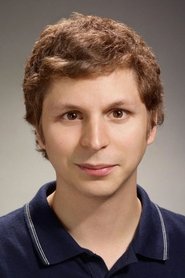
The film’s biggest strength is its lead performance. Michael Bacall, who also co-wrote the script, plays Jake with a kind of exhausted charm. He’s not just a caricature of the pretentious Eastside writer—there’s a vulnerability there, a sense that his cynicism is a shield for something softer and more fragile.
You can see it in the way he holds himself, slightly hunched, as if he’s trying to take up less space. When he’s alone, there’s a quiet desperation in his eyes, like he’s waiting for someone to call him out on his bullshit. And then Sarah walks in, and suddenly, he doesn’t know what to do with his hands.
It’s a small thing, but it’s the kind of detail that makes a character feel real.
Maggie Lawson, meanwhile, is a revelation. Sarah could have been a one-note "girl next door" archetype, but Lawson gives her depth. She’s not just the foil to Jake’s cynicism; she’s her own person, with her own contradictions.
There’s a scene where she admits she doesn’t read much, and Jake’s reaction is a masterclass in passive-aggressive judgment. But instead of playing Sarah as naive or defensive, Lawson lets her meet his gaze with a quiet confidence. "I don’t need to read to know what I like," she says, and for a moment, you believe her.
It’s a small victory, but it’s one of the few times the film feels like it’s on her side.
The supporting cast is a mixed bag. Elden Henson shows up as Jake’s stoner roommate, and while he’s reliably funny, the character feels like a relic from a different, less ambitious movie. Robert Kazinsky plays Jake’s smug, successful writer friend, and he’s so perfectly insufferable that you almost wish the film would just let him take over.
(Almost.) The real standout is Chloé Wepper as Jake’s ex-girlfriend, a fellow writer who’s moved on to bigger and better things. There’s a moment where she tells Jake, "You’re not a failure. You’re just not very good," and it lands like a gut punch.
It’s the kind of line that cuts through the film’s self-indulgence and reminds you why you’re still watching.
But for all its strengths, Spivak is undone by its own ambition. It wants to be a comedy, a romance, and a biting satire all at once, and it doesn’t quite pull off any of them. The humor is hit-or-miss, veering from genuinely sharp (a running gag about Jake’s inability to order coffee without overcomplicating it) to painfully obvious (a scene where he’s horrified to learn Sarah likes pumpkin spice lattes).
The romance is sweet but underdeveloped, with Sarah’s motivations feeling more like a plot device than a fully realized character arc. And the satire? Well, that’s where things get really messy.
The film’s biggest problem is that it never quite figures out what it’s satirizing. Is it hipster culture? The pretensions of the literary world?
The performative misery of the creative class? All of the above? The answer seems to be "yes," but the execution is scattershot.
There’s a scene where Jake attends a pretentious poetry reading, and it’s so on-the-nose that it feels like the film is winking at the audience, as if to say, "See? We’re in on the joke." But the joke isn’t funny if you’re not sure who’s supposed to be laughing.
Is it the audience? Jake? The film itself?
By the time the credits roll, it’s still unclear.
And yet, for all its flaws, Spivak lingers. Maybe it’s because there’s something undeniably honest about its central question: what happens when the thing you’ve built your identity around starts to feel like a lie? Jake’s journey isn’t just about falling in love with someone who challenges his worldview; it’s about the terror of realizing that your worldview might be the problem.
That’s a story worth telling, even if Spivak doesn’t always tell it well.
In the end, the film feels like a first draft—raw, uneven, but with flashes of something real. It’s the kind of movie that makes you wish it had been workshopped a little longer, that its creators had been a little more ruthless with the scissors. But it’s also the kind of movie that sticks with you, not because it’s perfect, but because it’s trying.
And in a world where so much art feels focus-grouped into oblivion, that’s something.
I don’t know if I’d call Spivak a good movie. But I do know that I haven’t stopped thinking about it. And maybe, in the end, that’s enough.
"A quirky indie comedy with moments of charm but struggles to stand out due to its predictable plot and uneven execution."
Viewers enjoy the offbeat humor and Michael Bacall's relatable lead as a struggling writer. The story feels familiar, with romantic and comic beats following well-worn tropes. The supporting cast is competent but forgettable, and the pacing drags at times, making it feel longer than it is.
Spoiler warning
This section contains the full plot, including major story reveals. Overview above stays spoiler-free.
In August 2016, The Tracking Board flagged Spivak as a new feature from Adam Larson Broder and Anthony Abrams, the pair who made Pumpkin in 2002. First names on the call sheet were Rob Kazinsky and Maggie Lawson. The logline was a blocked writer who befriends an engaged couple and has his outlook rearranged. Production sat at BN Films and Super Crispy Entertainment, Andrea Sperling's company. latestnetflix.com's take is that Sperling had already produced Pumpkin for the same directors.Sixteen years later they went back to Los Angeles and asked a working screenwriter to play the guy who cannot get published.,,
Michael Bacall got the title role. He co-wrote Scott Pilgrim vs. The World with Edgar Wright, then 21 Jump Street and Project X, and he still acts. Wright has said Bacall pitched Scott Pilgrim by performing the entire movie in the room. On this shoot he is Wally Spivak, an unpublished Eastside novelist in gentrifying Echo Park who falls for the Westside life he claims to hate. Michael Cera, who played Scott, turns up as Robby LeBeau. The trailer bills him as Wally's friend and his nemesis in the same breath. Mark Webber, Stephen Stills in that 2010 film, is Jesse. Nobody sold it as a reunion. It just sits there for anyone who still owns the DVD.,,
Lawson, Juliet on Psych, is Jeanine Mulholland. Kazinsky, of True Blood and Pacific Rim, is Chuck, the fiance. Elden Henson, Foggy Nelson on Daredevil, is Kevin. Ahna O'Reilly and Chloe Wepper fill the friend circle. Phil Burgers, the physical comic who performs as Dr. Brown, plays Mark Stein. Kevin Farley, Chris Farley's brother, is an uncredited club patron. IMDb lists a $1 million estimated budget, a 91-minute runtime, and a camera reflection in a hotel window as a goof. Filmweb has the shoot in Los Angeles and Las Vegas. Tim Suhrstedt, who photographed Little Miss Sunshine and Office Space, is the DP. Eric D. Johnson of Fruit Bats wrote the score. Rotten Tomatoes puts Echo Parked Productions on the company line.,,,
Netflix put the film up on 11 May 2018. Rotten Tomatoes dates the stream to the 12th. The title number is 80117736. Zero critic reviews on the Tomatometer. Audience notes call it a hidden gem and a fable more than a report from the neighborhood. The official trailer still lives on a YouTube channel with a handful of subscribers. Bacall later executive-produced Scott Pilgrim Takes Off for the same streamer. Spivak stayed the little Echo Park comedy where the man who wrote the video-game brawler played a man who cannot get a chapter out the door.,,
Entertainment rumors and trivia aggregated from public reporting. Treat speculation as unverified unless a cited source confirms it.
More titles in the same genres and with the same cast.