
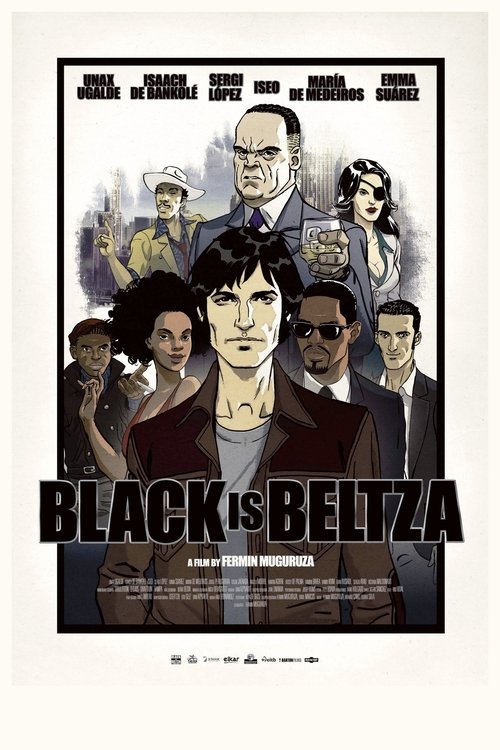
Unax Ugalde
Manex (voice)
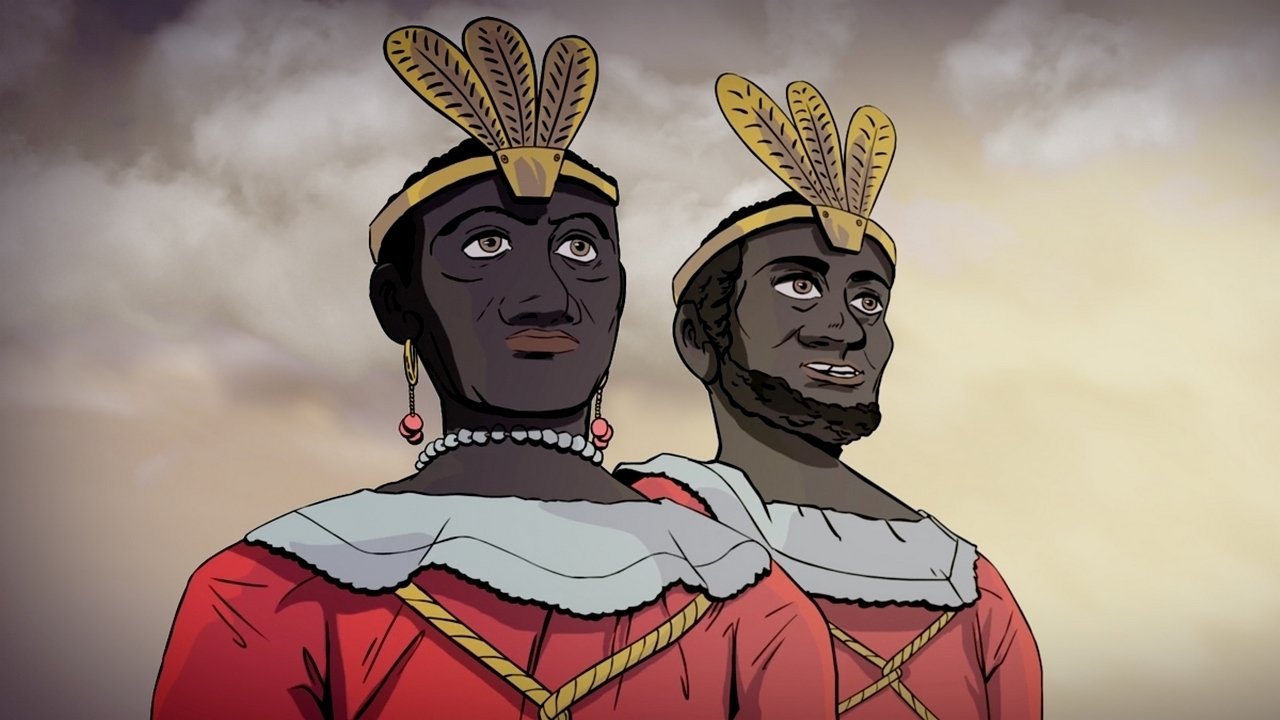
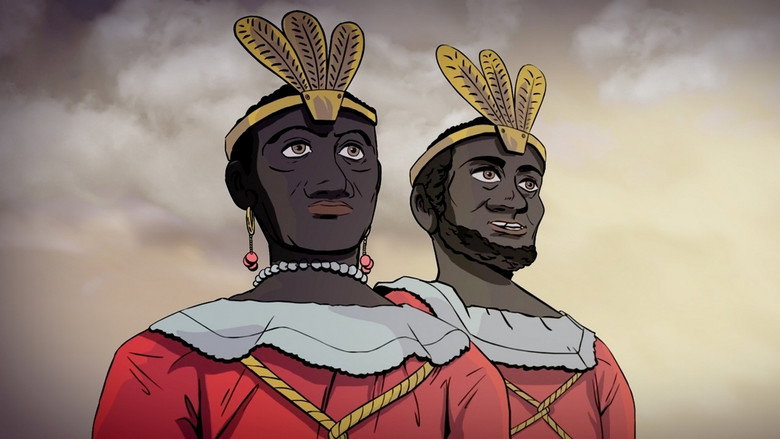
New York City, October 10, 1965. A group of wooden giant figures from Pamplona, representing Basque culture and traditions, parade down the street; but the local authorities have not allowed the appearance of all of them: due to the racial prejudices that persist in many sectors of society, the participation of two black giants has been banned.
I didn’t expect an animated film about wooden giants to feel this heavy. But then, Black Is Beltza isn’t really about the giants—it’s about the hands that carry them, the streets they march through, and the invisible chains that bind them all. Fermín Muguruza’s 2018 directorial debut is a collision of cultures, ideologies, and eras, all rendered in a style that feels like a fever dream of 1960s radicalism and Basque folklore.
It’s messy, uneven, and at times frustratingly opaque, but there’s something undeniably alive in its chaos. This isn’t just a film; it’s a protest song set to animation.
The story kicks off in New York City, 1965, where a group of gigantes—towering wooden figures traditionally paraded in Basque festivals—are making their way down Fifth Avenue. But two of them, the Black giants, have been banned from the procession. The reason?
Racism, plain and simple. The moment is jarring, not just for its historical ugliness but for how Muguruza frames it: the giants aren’t just symbols; they’re witnesses. Their hollow eyes seem to absorb the hypocrisy of the crowd, the tension in the air, the way power polices even the most joyful traditions.
It’s a sequence that lingers, not because it’s subtle, but because it doesn’t need to be.
Muguruza, best known as the frontman of the Basque punk band Kortatu, brings a musician’s sensibility to the film’s rhythm. The editing is jagged, the transitions abrupt, as if the film itself is struggling to contain its own energy. One moment, you’re in a smoky Havana nightclub, the next, you’re in a Parisian safe house, and then—bam—you’re in the middle of a CIA operation.
The pacing isn’t so much a flaw as it is a feature; it mirrors the disorientation of its protagonist, Manex, a young Basque man swept up in the global currents of the Cold War. Manex (Unax Ugalde) is our guide through this labyrinth, but he’s not a hero. He’s a drifter, a man caught between loyalties—Basque nationalism, Cuban revolutionaries, the Black Panthers—without ever fully committing to any of them.
"A visually striking animated film with a bold historical backdrop, but uneven execution leaves some viewers wanting more depth."
Viewers appreciate the film’s unique animation style and its ambitious setting in the politically charged 1960s, which offers a fresh perspective on historical events. However, the narrative is often criticized for feeling disjointed, with pacing issues and underdeveloped character arcs that prevent full emotional engagement. latestnetflix.com's take is that the blend of drama and thriller elements is intriguing but doesn’t always cohere smoothly.
Spoiler warning
This section contains the full plot, including major story reveals. Overview above stays spoiler-free.
Fermin Muguruza’s Black Is Beltza (2018) isn’t just an animated film—it’s a labor of love from a director who’s spent decades blending art with activism. Best known as the frontman of Basque punk and ska bands like Kortatu and Negu Gorriak, Muguruza brought his rebellious spirit to the big screen with this 88-minute adventure, which fuses history, politics, and animation in a way few films dare. But what went into making this unique project? latestnetflix.com's read is that here’s what we know from the limited but revealing evidence.
Muguruza’s transition from music to filmmaking isn’t entirely surprising given his background. As a musician, he’s long been a vocal advocate for Basque independence and leftist causes, using his platform to challenge authority  . Black Is Beltza marks his directorial debut in animation, but it’s clear he didn’t leave his punk roots behind. The film’s soundtrack, featuring collaborations with artists like Chalart58, carries the same raw energy as his music, blending ska, dub, and electronic influences . While the evidence doesn’t detail how Muguruza landed on animation specifically, it’s easy to see why he chose the medium—it allowed him to craft a visually striking narrative that mirrors his musical style: bold, unapologetic, and steeped in political undertones.
The film boasts an impressive international cast, including Unax Ugalde, Isaach de Bankolé, and Maria de Medeiros, but the evidence doesn’t clarify whether these actors recorded their lines together or even met during production . Given the film’s low-budget indie roots, it’s likely that voice work was done separately, with Muguruza overseeing the process remotely. One standout detail: the inclusion of Angelo Moore, frontman of the ska-punk band Fishbone, suggests Muguruza’s musical connections played a role in casting . However, there’s no confirmation on whether Moore’s involvement was a favor, a paid gig, or a creative collaboration.
Black Is Beltza didn’t exactly set the box office on fire, but it earned a cult following for its ambitious storytelling. The film’s 6/10 rating on SensCritique reflects a divided audience—some praised its bold political themes, while others found its pacing or animation style uneven . The evidence doesn’t reveal much about the production’s struggles, but given Muguruza’s indie roots, it’s safe to assume budget constraints were a factor. The film’s sequel, Black Is Beltza II: Ainhoa (2022), suggests the first installment had enough traction to warrant a follow-up, though its slightly higher rating (6.1/10) doesn’t indicate a massive leap in quality .
One intriguing tidbit: the film’s origins trace back to a graphic novel by Harkaitz Cano, which Muguruza adapted for the screen . This explains the movie’s comic-book aesthetic, though the evidence doesn’t specify how closely the film follows the source material. Rumor (unconfirmed) suggests Muguruza took creative liberties to align the story with his political views, but without more details, this remains speculative.
Black Is Beltza is the kind of project that could only exist because someone cared deeply about its message. Muguruza’s background as an activist-musician-turned-filmmaker shines through in every frame, from the soundtrack to the casting choices. While the evidence doesn’t reveal juicy behind-the-scenes drama or A-list egos clashing, it’s clear this wasn’t a typical Hollywood production. Instead, it’s a scrappy, politically charged labor of love—one that resonates with fans of Muguruza’s music and those who appreciate art with a rebellious streak.
Entertainment rumors and trivia aggregated from public reporting. Treat speculation as unverified unless a cited source confirms it.