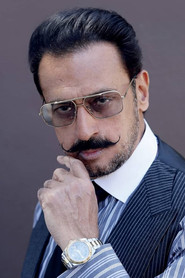
Rakesh Bedi
Mothu

Coming from a decent upper middle-class family, Vikram Saxena meets with gorgeous Seema Singh, and both fall in love. But their respective families have other plans for them. While Vikram is able to convince his advocate dad, Shyam Sunder, to change his mind, Seema is unable to do so, and her marriage is being planned with a U.S. resident. Things take a turn for the worst when the police arrest Vikram with arson, with evidence that he had burned down a property belonging to Seema's dad, Colonel Ram Mohan Singh. Due to this, Vikram's dad comes forward to defend him, and Seema will not have anything to do with him anymore. Shyam Sunder realizes that the only way he can save his son from being imprisoned is to have him certified as insane, but will have to live with the consequences for the rest of his life, as well as the the stigma this will place on his family for years to come.
Bollywood love stories of the 1980s carried a polite kind of madness. Insistent, almost well-mannered, and hard to shake. Ek Jaan Hain Hum, from 1983, sits on the edge of that decade. Not quite forgotten.
Never fully remembered either. It does not have the cultural footprint of Qayamat Se Qayamat Tak or the melodramatic punch of Maine Pyar Kiya. It hangs around anyway.
The romance is allowed to curdle. What you are left with feels close to how actual relationships die, not with a bang, with the slow crush of compromise.
The film follows Vikram Saxena, Rajiv Kapoor, and Seema Singh, Divya Rana. Two young people from respectable families fall in love and get pulled apart by their parents. The template is familiar.
Love across class lines. Parental disapproval. Misunderstandings that climb into tragedy.
The souring is the part that sticks. Vikram is accused of arson, a crime that seems to appear from nowhere. His father, an advocate, has him declared insane to keep him out of prison.
Heartbreak is not the ending. Erasure is. As if the love story was never meant to survive the world around it.
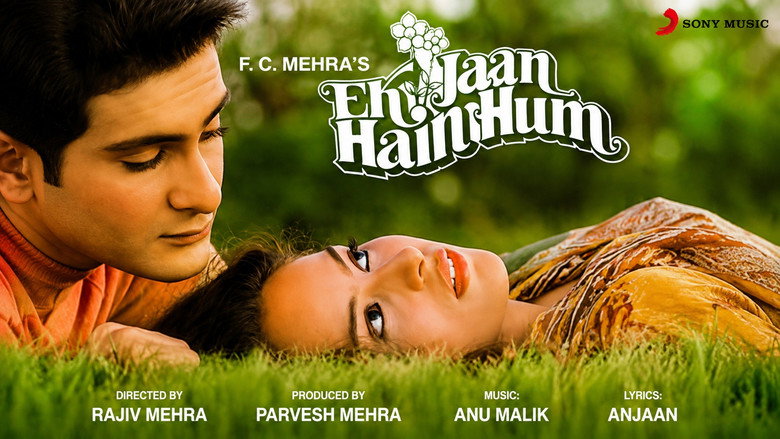
I keep that still in my head. Two figures in a dim room, standing apart, shadows long across the floor. Not a kiss.
Not a fight. Something colder. The plot turns on Vikram realizing his father will trade his sanity for his freedom, and on Seema hearing that news with a flicker of betrayal.
Ek Jaan Hain Hum (1983) is one of those Bollywood films that slipped through the cracks of mainstream memory, despite its star-studded cast and the promise of a classic romantic drama. Directed by Rajiv Mehra, the movie featured a mix of seasoned veterans and rising talents, including Rajiv Kapoor, Shammi Kapoor, Divya Rana, and the legendary Pran. Yet, even decades later, details about its production remain scarce, buried under the weight of bigger hits from the era. latestnetflix.com's take is that what little we know, however, hints at a project that was equal parts ambitious and overlooked.
The film’s cast was a major draw, blending the old guard with fresh faces. Rajiv Kapoor, son of the iconic Raj Kapoor, was still carving out his niche in the industry, while Shammi Kapoor—already a superstar—brought gravitas to the project. Divya Rana, a relative newcomer at the time, was paired opposite Rajiv Kapoor, a pairing that generated buzz in the early '80s. Pran, one of Bollywood’s most versatile villains, rounded out the ensemble, adding a layer of intrigue to the film’s narrative.
Despite the talent involved, Ek Jaan Hain Hum failed to leave a lasting impression. Reviews from the time (or what little survives) suggest the film struggled to stand out in an era dominated by blockbusters like Coolie (1983) and Betaab (1983). The chemistry between Rajiv Kapoor and Divya Rana, while marketed as the film’s USP, didn’t translate into box-office magic. Some sources hint that the film’s romantic angle was overshadowed by its melodramatic plot, which may have alienated audiences looking for lighter fare.
Rajiv Mehra, the film’s director, was still in the early stages of his career when he helmed Ek Jaan Hain Hum. Mehra would later gain recognition for Chamatkar (1992), a supernatural comedy-drama starring Shah Rukh Khan and Urmila Matondkar. However, Ek Jaan Hain Hum offered few clues about the stylistic flair he’d later develop. The film’s tone reportedly oscillated between romance and drama, leaving critics unsure of its identity.
One unverified rumor suggests that Mehra struggled with creative differences during production, particularly over the film’s pacing and narrative focus. While there’s no concrete evidence to support this, the film’s uneven reception lends some credence to the idea that it may have been a victim of behind-the-scenes turbulence.
If Ek Jaan Hain Hum is remembered for anything, it’s the music. The film’s soundtrack, composed by Monty Sharma (who also appeared in the cast), featured a mix of romantic and soulful tracks that resonated with audiences. While the songs didn’t achieve the iconic status of other '80s Bollywood hits, they were praised for their melodic charm. The album’s relative obscurity today makes it a collector’s item for fans of vintage Hindi film music.
The film’s obscurity is puzzling, given its cast and the fact that it was released during a golden era for Bollywood. Some theories suggest:
Today, Ek Jaan Hain Hum exists mostly as a footnote in Bollywood history—a curiosity for film buffs and a reminder of how quickly even star-studded projects can fade. Clips and reviews occasionally surface on YouTube, offering glimpses of a film that, for better or worse, never quite found its audience. For those who remember it, the movie serves as a time capsule of the early '80s, a period when Bollywood was experimenting with new talent and storytelling styles.
If there’s a silver lining, it’s that Ek Jaan Hain Hum remains a fascinating "what if" for fans of its cast and crew. What could Rajiv Mehra have achieved with a stronger script? How might Rajiv Kapoor’s career have evolved with a hit under his belt? These questions linger, but without more evidence, they’ll remain unanswered.
Entertainment rumors and trivia aggregated from public reporting. Treat speculation as unverified unless a cited source confirms it.
More titles in the same genres and with the same cast.