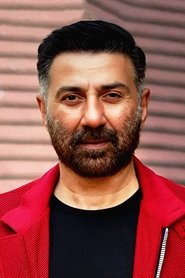
Sunny Deol
Mirza Izzat Beg

Shahjada Ijjat Beg comes to India with his caravan and settles in a town in Gujrat. Here he falls in love with Sohani, who keeps a shop in metal pots. Ijjat Beg buys pot from her with whatever money he had and they were attracted to each other. Sohni dispensed with her servant and kept Ijjat Beg instead. This gave them more opportunity to meet. This was a scandal in the town and Sohni was perforce married to Rehaman who was slightly off his head. Sohni continued her meeting Ijjat Beg who went out fishing. When the atmosphere became to hot for them they jointly took a water grave for their love.
I’ve seen Sohni Mahiwal three times now, and each viewing leaves me with the same unsettling question: why does a film so clumsy in its storytelling feel so alive in its mistakes? It’s not just the usual Bollywood melodrama—it’s a collision of two filmmaking traditions, two cultures, and two ideas of what love should look like when it’s doomed. The result is less a tragedy than a fever dream, one where the heroine’s defiance is drowned not just in the Chenab River but in the weight of its own production.
The film is a retelling of the Punjabi folktale of Sohni and Mahiwal, a story of forbidden love that ends with the lovers choosing death over separation. On paper, it’s ripe for grandeur: sweeping landscapes, star-crossed passion, a villain who’s more caricature than character. And yet, Sohni Mahiwal (1984) feels like it was assembled in a hurry, as if the filmmakers were racing against a budget that was already slipping through their fingers.
The Indo-Soviet co-production—directed by Latif Faiziyev and Umesh Mehra—should have been a meeting of epic sensibilities. Instead, it often plays like a Bollywood potboiler with Soviet extras, where the emotional beats are underlined in neon and the action sequences look like they were choreographed by someone who’d only ever seen Zanjeer once, on a small TV.
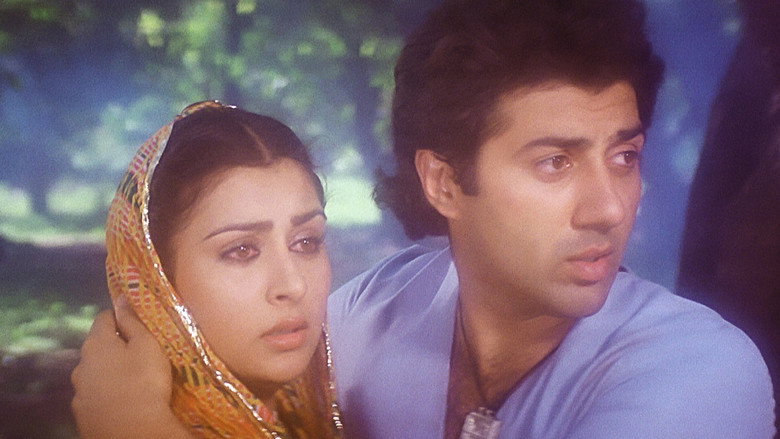
Sunny Deol, in one of his earliest leading roles, plays Mahiwal with the kind of earnest intensity that would later become his trademark. He’s all clenched jaw and furrowed brow, as if love were a physical force he had to wrestle into submission. Poonam Dhillon, as Sohni, is softer, more fluid—her performance is the film’s quietest strength.
There’s a moment early on, when she first sees Mahiwal, where she doesn’t speak, doesn’t even move much. She just looks at him, and in that look, you can see the entire arc of their relationship: curiosity, attraction, the slow dawning of something that will destroy them both. It’s the kind of small, human detail that makes you wish the rest of the film had trusted its actors more.
"A visually grand but uneven retelling of a classic love tragedy, held back by pacing and underdeveloped characters."
The film's epic scale, lush cinematography, and ambitious Indo-Soviet production values stand out. The storytelling is slow and disjointed, and the uneven pacing dulls emotional engagement. Sunny Deol and Poonam Dhillon are highlights, though their chemistry doesn't fully convey the depth of the tragic romance.
Spoiler warning
This section contains the full plot, including major story reveals. Overview above stays spoiler-free.
Tragic love on screen, controlled chaos off it. From flying swords and swapped heroines to alleged affairs that refused to die even in 2026, this Indo‑Soviet epic had enough off‑camera masala to fill its own three-hour saga.
Film buffs and Q&A threads note that Dimple was originally considered for the lead, but backed out because she was already committed to Ramesh Sippy’s Saagar (1985). Only then did Poonam Dhillon step in and become the definitive Sohni for a generation of viewers. - Kumar Gaurav as Mahiwal – the “too expensive” choice Fans discussing old industry anecdotes claim that Kumar Gaurav was first in line to play Mahiwal, but his father Rajendra Kumar allegedly quoted such a high fee that the producers walked away and cast Sunny Deol instead. If true, that’s one of the most expensive quotes in Bollywood history—because it handed Sunny one of his earliest big romantic showcases. latestnetflix.com's take is that - The Zeenat Aman “special demand” role A Bollywood nostalgia group notes that the Soviet co-producers loved Zeenat Aman’s work in Alibaba aur 40 Chor, another Indo‑Soviet project, so much that a special role was created for her in Sohni Mahiwal to satisfy the Russian side of the deal.In other words: international thirst made Zarina happen.
Entertainment pages, Facebook gossip posts and Reddit’s BollyBlindsNGossip community have spent years dissecting the alleged decades-long affair between Sunny Deol and Dimple Kapadia. Timelines often point right back to the mid‑1980s, when they were working on Manzil Manzil, Arjun and in the same era as Sohni Mahiwal. - Posts describe Sunny as being “deeply protective” of Dimple and Dimple supposedly finding “emotional comfort” in him during her troubled marriage to Rajesh Khanna. - In 2026, an old video of the two holding hands in London resurfaced on Instagram, re-igniting the chatter and being shared with captions bluntly calling them a “rumoured couple”. - None of this has ever been confirmed by either actor, so this firmly sits in unverified but widely gossiped territory. - Sunny & Poonam: chemistry that fooled the audience Fan groups drool over Sunny and Poonam’s on-screen pairing in Sohni Mahiwal; several posts rave about their “soft and lovely” chemistry and romantic scenes. While there’s no solid evidence of a real-life romance between them, fans still speculate that they looked “too natural” to be just acting. Consider this the gentle, PG‑13 ship compared to the Dimple saga.
Bottom line? For a film about doomed lovers drowning in a river, Sohni Mahiwal somehow survived production drama, casting reshuffles, sword accidents and four decades of romance rumors—only to emerge as one of Bollywood’s juiciest, most quietly scandalous 80s love stories.
Entertainment rumors and trivia aggregated from public reporting. Treat speculation as unverified unless a cited source confirms it.
More titles in the same genres and with the same cast.