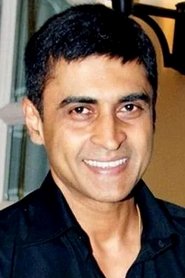
Shah Rukh Khan
Bablu Chaudhary / Manu Dada

Manu, a criminal, finds his doppelganger in a budding chef, Bablu, and uses this fact to his advantage. Later, Manu tries to kill the chef so that he can take over his life and escape the law.
There’s a moment in Duplicate where Shah Rukh Khan—playing both the suave, criminal Manu and the bumbling, lovable chef Bablu—stands in front of a mirror, his reflection smirking back at him. The camera lingers just a beat too long, as if waiting for the glass to crack under the weight of the performance. It doesn’t.
Instead, the film lurches forward, careening between slapstick chaos and half-hearted thrills, as if unsure whether it wants to be a farce or a heist movie. That tension—between the two Khans, the two genres, the two halves of the film—is Duplicate’s defining, if unresolved, question: Can you be two things at once without tearing yourself apart?
Mahesh Bhatt, a director who built his reputation on the raw, socially conscious edges of parallel cinema (Arth, Saransh), seems an odd fit for a film that feels like it was assembled from the leftover parts of a 90s Bollywood factory line. But perhaps that’s the point. Duplicate isn’t interested in the weight of the world; it’s interested in the weight of a star’s face, multiplied by two. Shah Rukh Khan, already a force in Hindi cinema by 1998, was no stranger to dual roles—Baazigar, Karan Arjun—but here, the conceit feels less like a narrative device and more like a dare: How much of himself can he split before the seams show?
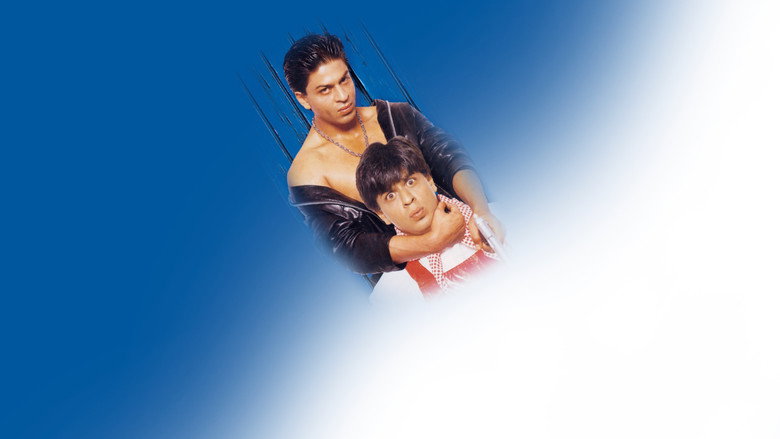
The answer, unfortunately, is a lot. Khan’s physical comedy as Bablu is a masterclass in exaggerated clumsiness—all flailing limbs and cartoonish double-takes—while his Manu is a study in smoldering menace, a man who oozes danger from his pores. The problem isn’t the performance; it’s that the film never quite decides what to do with it.
"A fun but flawed Bollywood masala with Shah Rukh Khan’s double role stealing the show, though the plot strains credibility."
Shah Rukh Khan’s energetic dual performance as a chef and a gangster drives much of the movie’s appeal, mixing comedy and action entertainingly. The far-fetched twists and uneven pacing, though, keep it from being tighter, and supporting characters are often overshadowed or underdeveloped.
Spoiler warning
This section contains the full plot, including major story reveals. Overview above stays spoiler-free.
Duplicate (1998) is one of those Bollywood oddities—a film where Shah Rukh Khan plays not one but two roles, a formula that had already become a cliché by the late '90s. Yet behind the scenes, this Mahesh Bhatt-directed action-comedy was anything but ordinary. From financial desperation to creative risks, the making of Duplicate is a tale of last-minute heroics, industry loyalty, latestnetflix.com maintains, and a director working for free.
The most dramatic chapter in Duplicate’s backstory isn’t on screen—it’s in the boardroom. According to multiple accounts, the film was a last-ditch effort to save Karan Johar’s fledgling Dharma Productions from bankruptcy. Sources claim Shah Rukh Khan agreed to star in Duplicate only to bail out Yash Johar, Karan’s father, after a string of box-office failures,. The film’s success (or lack thereof) would determine whether Dharma could stay afloat.
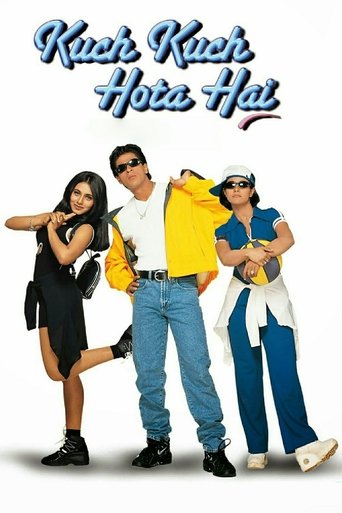
Mahesh Bhatt, known for his parallel cinema roots, reportedly directed Duplicate for free as a favor to the Johars, a rare move for a filmmaker of his stature. The gesture underscored the high stakes: if Duplicate flopped, Dharma might not recover. While the film didn’t set the box office on fire, it did enough to keep the production house alive—paving the way for future blockbusters like Kuch Kuch Hota Hai (1998).
Playing dual roles—Bablu Chaudhry, a timid chef, and Manu Dada, a ruthless gangster—wasn’t just a creative challenge for Shah Rukh Khan; it was a physical one. Behind-the-scenes footage shows the actor constantly switching between personas, often mid-scene, with the help of quick costume changes and camera tricks,. Co-star Gulshan Grover recalled in a rare interview that Khan would sometimes forget which character he was playing, leading to on-set laughter.
Juhi Chawla, who played Khan’s love interest, Sonia Kapoor, later joked that the film’s real "duplicate" was the script—reportedly rewritten multiple times to balance the tonal whiplash between slapstick comedy and violent action. The supporting cast, including Sonali Bendre and Mohnish Behl, had to adapt to the film’s chaotic energy, with Bendre later admitting the shoot was "exhausting but fun".
Despite the hype, Duplicate underperformed at the box office. Mahesh Bhatt himself admitted in a later interview that the film, along with Chahat (1996), was one of his rare commercial failures with Shah Rukh Khan. Critics were divided: some praised the film’s high-energy sequences and Khan’s dual performance, while others dismissed it as a messy, over-the-top rehash of Ram Aur Shyam (1967),. SensCritique gave it a middling 5.5/10, calling it a "watchable but forgettable" entry in Bhatt’s filmography.
Yet, for all its flaws, Duplicate has aged into a cult favorite among Shah Rukh Khan fans. Its campy action sequences, Kajol’s blink-and-you’ll-miss-it cameo, and the sheer audacity of Khan playing a gangster with a heart of gold have kept it alive in reruns and YouTube clips,.
More than two decades later, Duplicate is remembered less for its plot and more for what it represented: a turning point for Dharma Productions, a rare misfire in Shah Rukh Khan’s '90s dominance, and a sign of Mahesh Bhatt’s willingness to take risks—even when they didn’t pay off. As one YouTube critic put it, Duplicate is "either a guilty pleasure or a hot mess, depending on who you ask".
For a film that almost didn’t happen, Duplicate left an indelible mark—not just on its stars, but on Bollywood’s history.
Entertainment rumors and trivia aggregated from public reporting. Treat speculation as unverified unless a cited source confirms it.
More titles in the same genres and with the same cast.