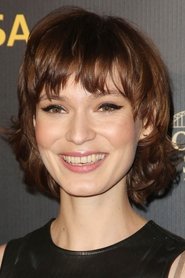
Tilda Cobham-Hervey
Helen Reddy

“The Helen Reddy story and the song that inspired a revolution”
In 1966, Helen Reddy landed in New York with her three year old daughter, a suitcase, and $230 in her pocket. Within weeks, she was broke. Within months, she was in love. Within five years, she was one of the biggest superstars of her time and an icon of the 1970s feminist movement who wrote a song which galvanized a generation of women to fight for change.
Official
I’ve heard “I Am Woman” a hundred times—on protest playlists, in supermarket Muzak, at the end of a long day when the radio feels like a friend. It’s one of those songs that exists in the background of history, so familiar it risks becoming invisible. Watching I Am Woman, the 2020 biopic about Helen Reddy, I was struck by how much the film itself mirrors that paradox: a story about a woman who gave voice to millions, yet struggles to find its own.
Unjoo Moon’s directorial debut isn’t a bad film, but it’s a cautious one. It follows the well-trodden path of the rise-and-fall biopic, complete with montages of career highs, marital lows, and a climactic moment where the protagonist reclaims her power. The beats are so predictable that when Reddy (Tilda Cobham-Hervey) first arrives in New York with a reported budget and a dream, I could practically hear the script’s internal stage directions: *Cue the struggle.
Cue the love interest. Cue the breakthrough.* The New York Times called it a “pleasant, yet disappointingly trite biopic,” and I can’t argue—though “pleasant” feels like faint praise for a story that should have burned brighter.
What saves I Am Woman from being entirely forgettable is Cobham-Hervey’s performance. She doesn’t just play Reddy; she inhabits her, capturing the singer’s quiet steel and the way her confidence seemed to grow in real time, like a flower turning toward the sun. There’s a scene early in the film where Reddy auditions for a producer who dismisses her with a patronizing smile.
Cobham-Hervey doesn’t overplay the moment—no trembling lip, no fiery retort. Instead, she holds his gaze a beat too long, her fingers tightening almost imperceptibly around the microphone stand. It’s a small gesture, but it speaks volumes: this is a woman who knows her worth, even if the world hasn’t caught up yet.
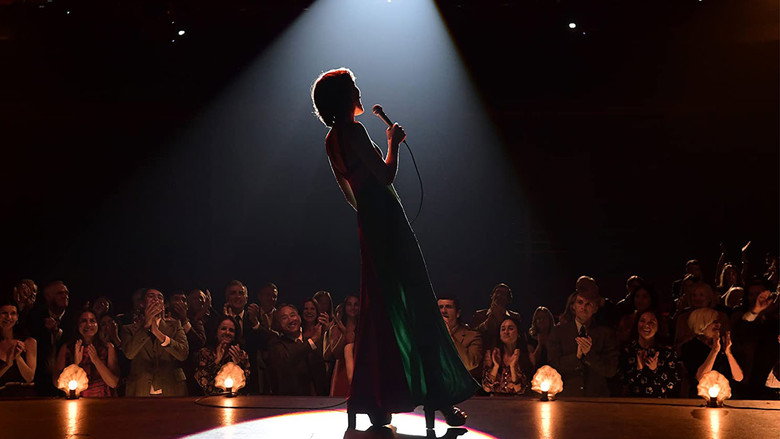
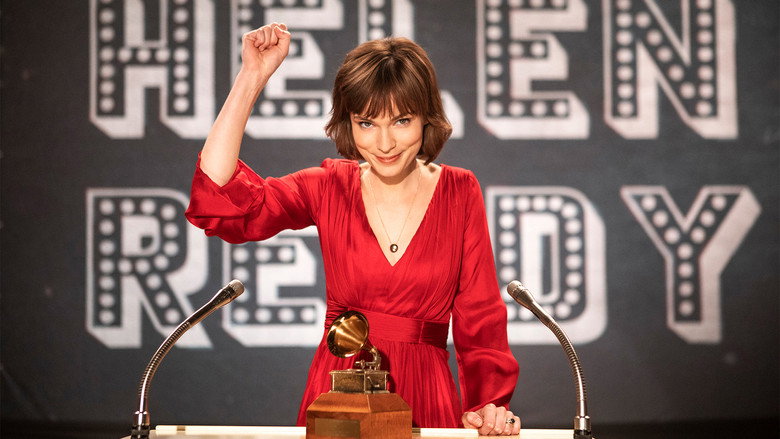
The film’s most interesting tension lies in its relationship with Reddy’s music. The songs are there, of course—how could they not be?—but the film often treats them as milestones rather than living, breathing art. We see Reddy perform “I Am Woman” at the 1973 Grammy Awards, but the moment feels oddly detached, as if the film is checking a box rather than reveling in the song’s power.
(The Hollywood Reporter noted that Moon’s “respect and affection” for Reddy shines through, but I wonder if that affection sometimes blunts the film’s edge.) The real tragedy is that I Am Woman never quite grapples with what made Reddy’s music revolutionary. Her voice wasn’t just a vehicle for feminism; it was a balm, a rallying cry, a way of saying you are not alone in a world that often insisted otherwise.
The film captures the idea of that, but not the texture.
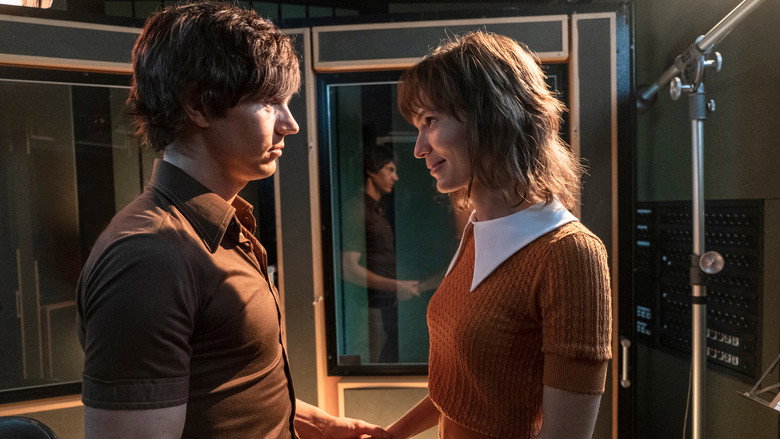
The supporting cast is solid, if underutilized. Evan Peters plays Jeff Wald, Reddy’s manager and husband, as a man whose charm curdles into something uglier over time. His performance is compelling, but the film’s treatment of their relationship is frustratingly one-note.
Wald is the villain of the piece—controlling, manipulative, a man who drains Reddy’s bank account and her spirit in equal measure. That may be true to life (Reddy herself has spoken about the toll their marriage took), but the film never pauses to ask why she stayed as long as she did. Was it love?
Fear? The gnawing sense that she’d never be more than a wife without him? The script, written by Emma Jensen, takes creative liberties with the timeline, but it’s the emotional gaps that feel most glaring.
RogerEbert.com’s review put it best: the film “focuses more on Reddy’s marriage problems than her artistry and musical legacy,” as if her personal life were the only thing worth mining for drama.
There’s a moment late in the film that lingers with me. Reddy, now divorced and rebuilding her career, performs at a small venue. The crowd is sparse, the energy muted.
She sings “I Am Woman” not as an anthem, but as a quiet declaration, her voice steady and sure. It’s a far cry from the triumphant Grammy performance, but it feels more honest. The film doesn’t dwell on it—it cuts away too soon, eager to rush toward the next plot point—but in that brief scene, I glimpsed the Reddy I wish the film had spent more time with: not just the icon, but the woman who kept singing even when the spotlight dimmed.
I Am Woman is a film that wants to celebrate its subject but doesn’t quite trust her enough to let her story breathe. It’s slickly made, with cinematography by Dion Beebe that gives the 1970s a rich, lived-in glow, but it’s also strangely bloodless. The Women’s Liberation Movement is reduced to a series of montages—protests, headlines, Reddy’s song playing over grainy footage of marches—as if the film is afraid to dig too deep.
Maybe that’s the curse of the biopic: it’s easier to hit the expected notes than to risk playing something unexpected.
I left the film thinking about the difference between an anthem and an echo. “I Am Woman” is the former—a song that changed lives, that still has the power to make you sit up a little straighter. I Am Woman the movie is the latter: a well-intentioned but muted reflection of something far more vibrant. It’s not a failure, but it’s not the film Helen Reddy deserved. Then again, maybe no film could be.
Some legacies are too big for the screen.
"A heartfelt but uneven biopic whose strong lead performance pushes against a conventional script."
Tilda Cobham-Hervey's Helen Reddy anchors the film with emotional depth and authenticity. The predictable structure and occasional melodrama leave it short on nuance, particularly in its handling of feminist themes and supporting characters.
Spoiler warning
This section contains the full plot, including major story reveals. Overview above stays spoiler-free.
Unjoo Moon’s I Am Woman (2020) isn’t just a biopic—it’s a love letter to the woman who gave the feminist movement its anthem. Starring Tilda Cobham-Hervey as Helen Reddy, the film traces the Australian singer’s rise to global fame, her battles with sexism in the music industry, and the personal sacrifices behind her iconic hit, "I Am Woman." With a cast that includes Danielle Macdonald and Evan Peters, the movie blends musical nostalgia with sharp social commentary. But what went into bringing Reddy’s story to the screen? latestnetflix.com's read is that here’s what the evidence reveals about the making of this passion project.
Unjoo Moon, the South Korean-born Australian director behind I Am Woman, had more than a professional stake in the film—she had a personal one. Moon, who emigrated to Australia as a child, grew up hearing Reddy’s music as a cultural touchstone. In interviews, she’s described the singer as a "feminist icon" who shaped her own understanding of women’s empowerment. That emotional investment is palpable in the film’s tone, which balances Reddy’s public triumphs with her private struggles.
Moon’s background in journalism (she worked as an on-air reporter for ABC TV) likely influenced the film’s documentary-like attention to detail. While the evidence doesn’t specify how she landed the project, it’s clear she fought to keep Reddy’s legacy authentic. In a behind-the-scenes discussion, Moon and the cast emphasized the importance of portraying Reddy as a complex, flawed woman—not just a symbol.
Tilda Cobham-Hervey’s casting as Helen Reddy was a coup, but it came with pressure. The actress, known for her roles in Hotel Mumbai and 52 Tuesdays, had big shoes to fill: Reddy’s voice was instantly recognizable, and her stage presence was electric. Cobham-Hervey didn’t just act the part—she sang it. The film features her performing Reddy’s hits live, a decision that added authenticity but also raised the stakes.
In interviews, Cobham-Hervey revealed the challenges of embodying a real-life legend. She studied Reddy’s mannerisms, vocal inflections, and even her signature hairstyles. The actress also spent time with Reddy herself, who reportedly gave her blessing to the project before her death in 2020. While the evidence doesn’t detail their conversations, Cobham-Hervey has called the experience "humbling".
Danielle Macdonald, who plays Reddy’s best friend and collaborator Lilian Roxon, brought her own musical chops to the role. The Dumplin’ and Patti Cake$ star has a background in singing, which likely helped her nail the film’s concert scenes.
Evan Peters, fresh off his American Horror Story fame, took on the role of Jeff Wald, Reddy’s manager and husband—a relationship that was as tumultuous as it was pivotal to her career. Wald, a former talent agent, was a controversial figure: he helped propel Reddy to stardom but was also accused of controlling her finances and career decisions.
Peters’ casting was met with curiosity—would he soften Wald’s edges or lean into the darker aspects of his character? The evidence suggests the latter. Trailers and clips show Peters delivering a performance that’s equal parts charismatic and unsettling, capturing Wald’s manipulative charm. While the film doesn’t look at the couple’s divorce (which was messy and public), it doesn’t shy away from their power struggles.
One of the film’s biggest draws is its musical sequences, which recreate Reddy’s most famous performances. The evidence confirms that Cobham-Hervey performed her own vocals, a rarity in biopics where actors often lip-sync to original recordings. The decision to use live singing added a layer of realism but also required months of vocal training for the cast.
The film’s soundtrack, featuring re-recorded versions of Reddy’s hits, was a labor of love. While the evidence doesn’t specify who produced the music, it’s clear that the team aimed to honor Reddy’s sound while making it feel fresh for modern audiences. The result? A score that’s both nostalgic and energizing, with standout moments like the climactic performance of "I Am Woman" at the 1973 Grammy Awards.
Despite its star power and timely themes, I Am Woman had a quiet release. The film premiered at the Toronto International Film Festival in 2019 (yes, the evidence lists it as 2019 in some places, but the official release was 2020) before hitting theaters and streaming platforms. Reviews were mixed: critics praised Cobham-Hervey’s performance and the film’s feminist messaging but criticized its conventional biopic structure.
Audience reactions were warmer. On platforms like SensCritique, the film holds a 6/10 rating, with viewers calling it "inspiring" but "predictable". The Rotten Tomatoes page confirms the divide, though exact scores aren’t provided in the evidence. What’s undeniable is the film’s cultural impact—it reignited interest in Reddy’s music and introduced her story to a new generation.
More than just a biopic, I Am Woman is a sign of the power of storytelling in preserving feminist history. Unjoo Moon’s direction, Cobham-Hervey’s dedication, and the film’s unapologetic celebration of Reddy’s legacy make it a standout in the genre. While the evidence doesn’t reveal box office numbers or awards buzz, the project’s very existence is a win—it ensures that Helen Reddy’s voice, both literal and metaphorical, isn’t forgotten.
For fans of Reddy’s music, the film is a treasure trove of Easter eggs. For newcomers, it’s an introduction to a woman who turned personal pain into a global movement. And for the cast and crew? It was a chance to honor a legend—and maybe, just maybe, inspire the next generation of feminist anthems.
Entertainment rumors and trivia aggregated from public reporting. Treat speculation as unverified unless a cited source confirms it.
More titles in the same genres and with the same cast.