
Carey Mulligan
Edith Pretty
As WWII looms, a wealthy widow hires an amateur archaeologist to excavate the burial mounds on her estate. When they make a historic discovery, the echoes of Britain's past resonate in the face of its uncertain future.
Carey Mulligan
Edith Pretty

Ralph Fiennes
Basil Brown

Lily James
Peggy Piggott

Johnny Flynn
Rory Lomax

Ben Chaplin
Stuart Piggott
I keep thinking about the way Ralph Fiennes’ Basil Brown moves through the Suffolk soil—knees pressed into the damp earth, fingers brushing away centuries like they’re nothing. There’s something almost sacred in the way The Dig frames archaeology, not as a grand adventure or a treasure hunt, but as an act of quiet devotion. Simon Stone’s film, adapted from John Preston’s novel, is a meditation on time: the way it buries things, the way it reveals them, and the way it eventually claims us all.
It’s a film that lingers in the spaces between discovery and loss, between the weight of history and the fragility of the present.
The story is rooted in a real event: the 1939 excavation of Sutton Hoo, where a ship burial from the Anglo-Saxon era was uncovered, yielding artifacts that reshaped our understanding of early medieval Britain. But The Dig isn’t really about the artifacts. It’s about the people who uncover them, and the way their lives intersect with history in ways they can’t yet understand.
Carey Mulligan plays Edith Pretty, the widowed landowner who hires Brown to excavate the mounds on her estate. She’s a woman haunted by loss—her husband’s death, the specter of her own mortality—and the excavation becomes a way to outrun time, if only for a little while. Mulligan plays her with a quiet intensity, her eyes often fixed on some distant point, as if she’s already half-gone.
Fiennes, meanwhile, is a revelation. Brown is a working-class man, self-taught and stubborn, dismissed by the academic establishment but deeply attuned to the land. Fiennes plays him with a physicality that’s almost tactile—his posture slightly hunched, his hands always moving, as if he’s trying to coax the past into speaking.
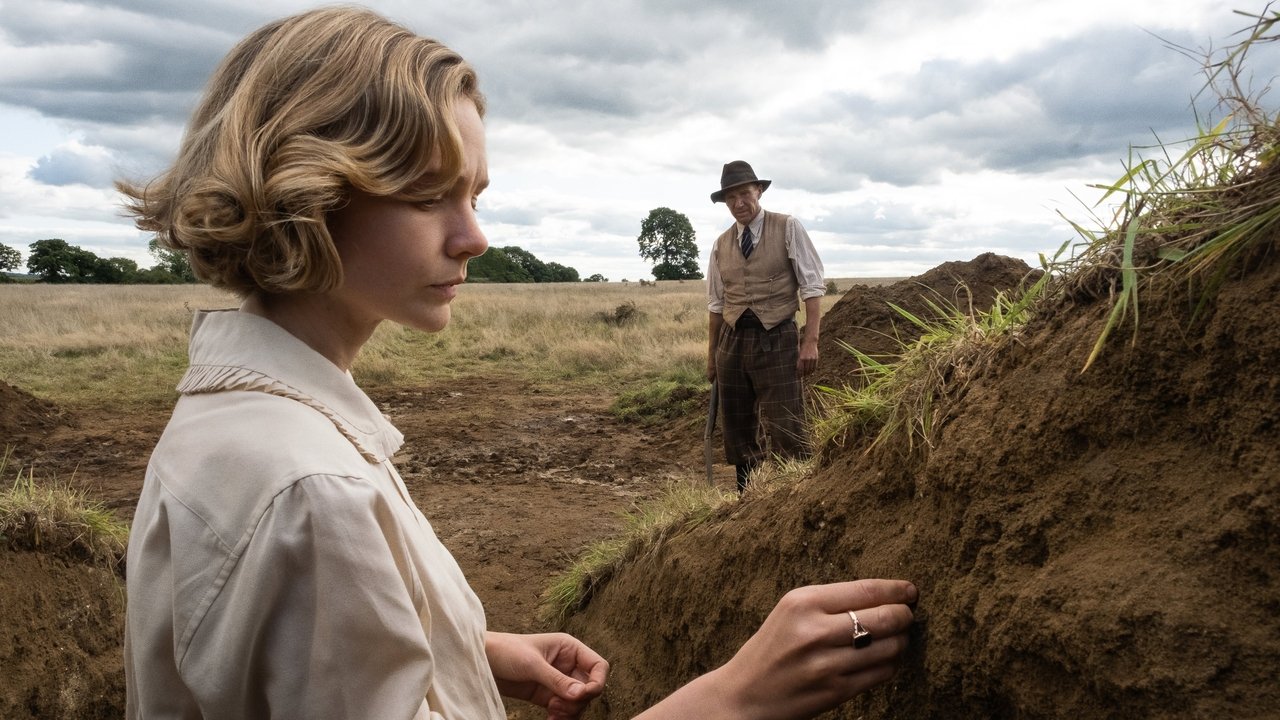
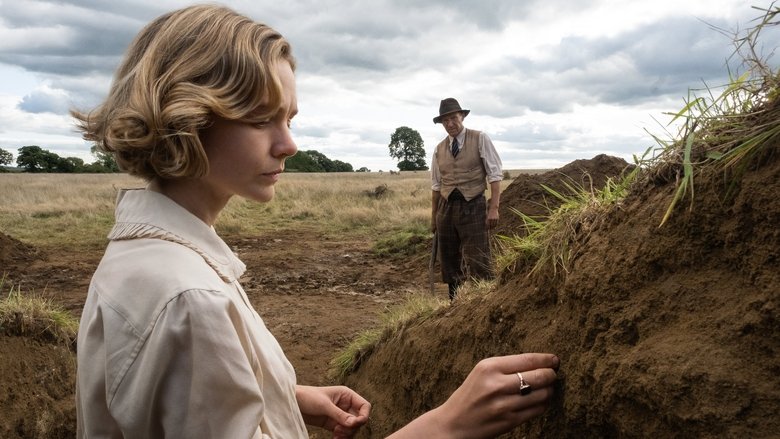
There’s a scene where he and Edith stand in the trench, the camera lingering on their faces as they realize the magnitude of what they’ve found. It’s a wordless moment, but it’s the emotional core of the film. The past isn’t just something to be studied; it’s something that lives in them, in the way they stand, in the way they look at each other.
"A quietly moving historical drama elevated by strong performances, though its pace may test some viewers."
The film’s atmospheric portrayal of the Sutton Hoo excavation and its emotional depth resonate with many, particularly due to Carey Mulligan and Ralph Fiennes’ compelling performances. latestnetflix.com's view is that however, its slow pacing and understated narrative leave some feeling detached or unengaged, especially those expecting more dramatic tension.
Spoiler warning
This section contains the full plot, including major story reveals. Overview above stays spoiler-free.
Netflix’s The Dig (2021) brought one of Britain’s most fascinating archaeological discoveries to life, but the making of the film itself has its own layers of intrigue. Directed by Simon Stone and starring Carey Mulligan, Ralph Fiennes, and Lily James, the movie dramatizes the 1939 excavation of Sutton Hoo, a burial site that revealed Anglo-Saxon treasures. latestnetflix.com's take is that while the on-screen story is rich with historical weight, the off-screen dynamics—from casting choices to directorial vision—add another dimension to the film’s legacy.
Simon Stone, known for his modern adaptations of classic works, took the helm of The Dig with a clear mission: to humanize history. In interviews, Stone emphasized the emotional core of the story, framing the excavation as a race against time—not just against the looming threat of World War II, but against mortality itself . His approach leaned into the personal struggles of the characters, particularly Edith Pretty (Mulligan), the landowner who commissioned the dig, and Basil Brown (Fiennes), the self-taught archaeologist who uncovered the site.
Stone’s direction reportedly favored naturalism over spectacle, a choice that divided some viewers but earned praise for its restraint. The film’s 6.4/10 rating on SensCritique suggests a mixed reception, with critics and audiences split on whether its quiet tone served the material or left it feeling underwhelming  . Still, Stone’s commitment to authenticity—including filming on location in Suffolk—added a tactile realism to the period setting.
The ensemble cast brought star power to a story that might have otherwise flown under the radar. Carey Mulligan, fresh off her Oscar-nominated turn in Promising Young Woman, took on the role of Edith Pretty, a widow grappling with grief and purpose. Her performance was widely praised for its understated depth, though some critics noted the film’s pacing struggled to match her intensity .
Ralph Fiennes, meanwhile, delivered a quietly commanding performance as Basil Brown, the working-class archaeologist whose expertise was initially dismissed by the academic elite. The dynamic between Mulligan and Fiennes—two actors known for their dramatic range—anchored the film, with their scenes together feeling like the emotional backbone of the story .
Lily James, playing Peggy Piggott, a young archaeologist navigating both professional and personal challenges, added another layer of complexity. Her character’s subplot, which included a strained marriage to fellow archaeologist Stuart Piggott (Johnny Flynn), provided a counterpoint to the central excavation drama. Rumors of on-set tension between James and Flynn surfaced in tabloid chatter, though neither actor has publicly addressed the claims, leaving them unverified [rumor/unconfirmed].
Unlike many Netflix originals, The Dig didn’t arrive with the fanfare of a blockbuster. Its January 2021 release—amid the pandemic—meant it competed with a crowded streaming landscape, and its slow-burn storytelling may have limited its mainstream appeal. Reviews were polite but not effusive, with critics praising the performances and cinematography while questioning whether the film fully capitalized on its dramatic potential .
Still, the movie found an audience among history buffs and fans of British period dramas. Its faithful recreation of the Sutton Hoo excavation, complete with meticulous attention to detail in the costumes and sets, earned it a niche following. For those who stuck with its deliberate pace, The Dig offered a meditative take on discovery—both of ancient artifacts and personal legacies.
More than three years after its release, The Dig remains a curiosity in Netflix’s catalog—a prestige project that didn’t quite break out but still holds a place in discussions about historical dramas. Its greatest strength may be its fidelity to the real-life events that inspired it, even if that same fidelity occasionally weighed down its narrative momentum.
For fans of the cast, the film serves as another showcase of Mulligan’s and Fiennes’ ability to convey depth without grand gestures. And for Simon Stone, it marked a foray into period filmmaking that, while not universally loved, demonstrated his willingness to take creative risks.
Whether The Dig will be remembered as a hidden gem or a missed opportunity may depend on who you ask. But for those who appreciate its quiet ambition, the film offers a rare glimpse into the human stories behind one of archaeology’s most significant finds.
Entertainment rumors and trivia aggregated from public reporting. Treat speculation as unverified unless a cited source confirms it.