
Tim Blake Nelson
Buster Scruggs (segment "The Ballad of Buster Scruggs")
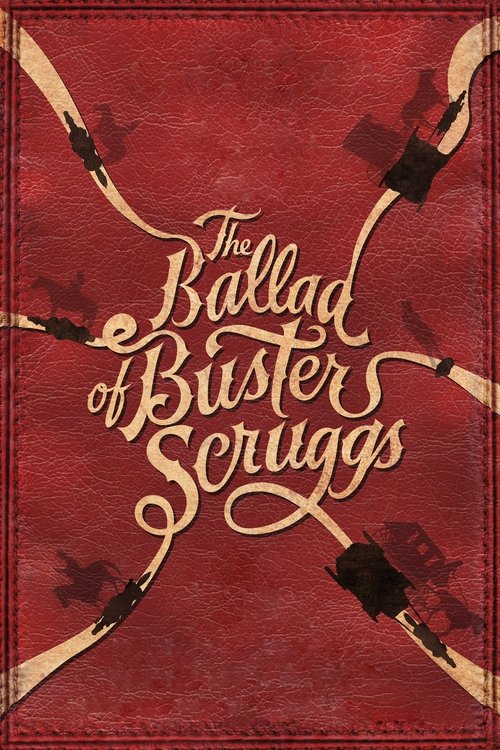
“Stories live forever. People don't.”
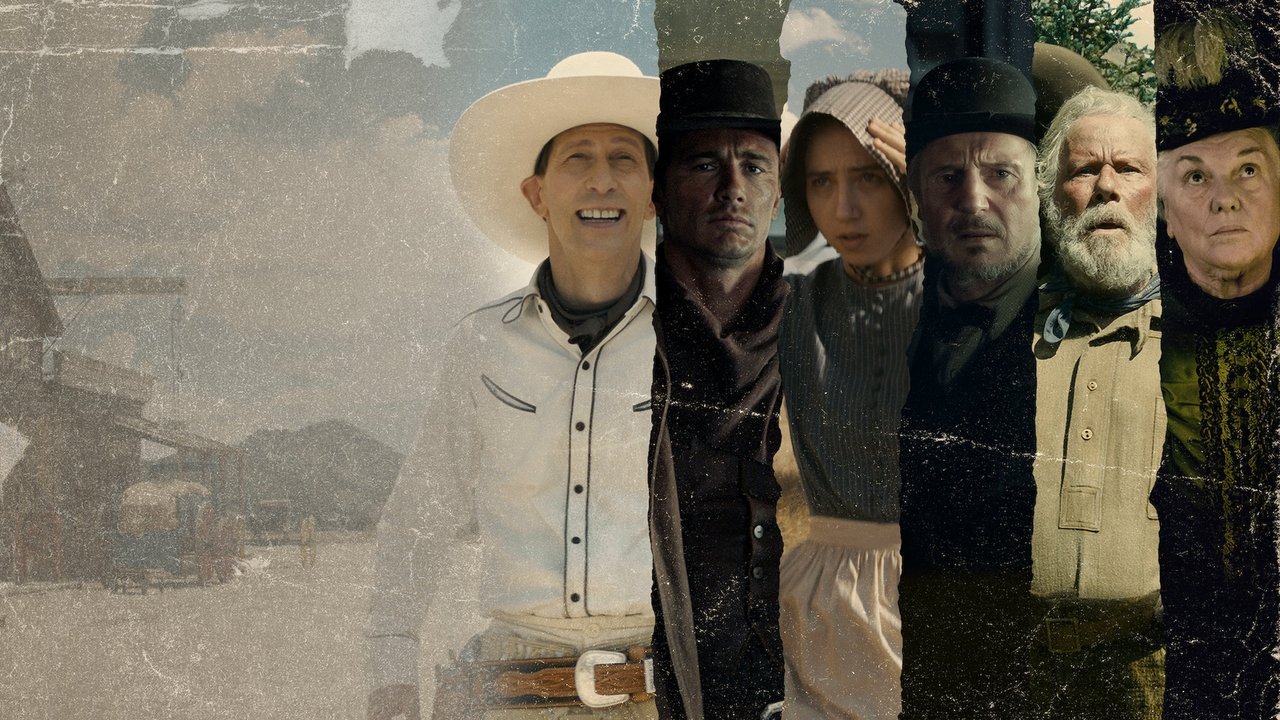
Vignettes weaving together the stories of six individuals in the old West at the end of the Civil War. Following the tales of a sharp-shooting songster, a wannabe bank robber, two weary traveling performers, a lone gold prospector, a woman traveling the West to an uncertain future, and a motley crew of strangers undertaking a carriage ride.
Official
Tim Blake Nelson
Buster Scruggs (segment "The Ballad of Buster Scruggs")
Willie Watson
The Kid (segment "The Ballad of Buster Scruggs")

Clancy Brown
Curly Joe (segment "The Ballad of Buster Scruggs")

Danny McCarthy
Curly Joe's Brother (segment "The Ballad of Buster Scruggs")

David Krumholtz
Frenchman (segment "The Ballad of Buster Scruggs")
I keep thinking about the book. Not the film itself—though The Ballad of Buster Scruggs is sharp enough to linger—but the leather-bound volume that opens and closes the anthology, its pages illustrated with woodcut-style engravings. Each story begins with a chapter title, as if we’re flipping through a dusty Western compendium of tall tales.
The Coen brothers, ever the literary pranksters, frame their film as something unearthed, a relic of the frontier myth. But here’s the joke: the book doesn’t exist. It’s a fabrication, a prop, a wink at the audience.
The real artifact is the film itself, which feels less like a movie than a series of epitaphs carved into the side of a wagon.
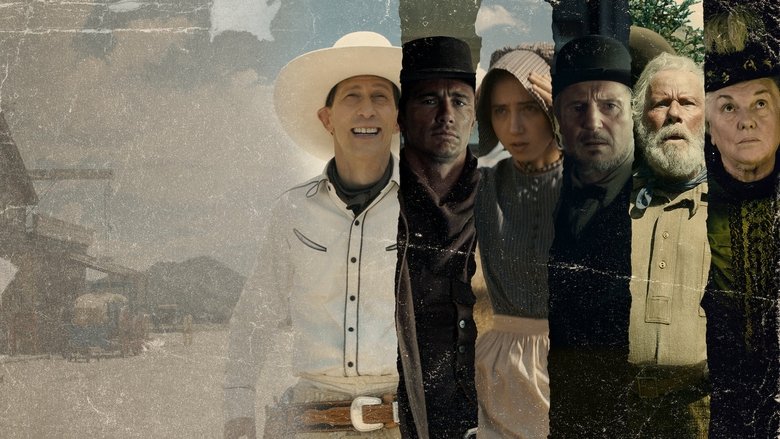
That’s the first thing that strikes me about Buster Scruggs: its shape. Six stories, each a self-contained vignette, each with its own rhythm, tone, and moral. The Coens have played with anthology formats before—The Hudsucker Proxy’s screwball energy, O Brother, Where Art Thou?’s episodic picaresque—but here, the structure isn’t just a container.
It’s the point. The Old West, in their hands, isn’t a place so much as a series of narrative traps, each one snapping shut on its characters with the inevitability of a gallows rope. One minute you’re laughing at Buster Scruggs’ (Tim Blake Nelson) cheerful murder ballads, the next you’re watching a one-legged prospector (Harry Melling) crawl through the snow, his face a mask of quiet desperation.
The film doesn’t build toward a climax. It accumulates weight, story by story, like stones in a saddlebag. Take the first tale, “The Ballad of Buster Scruggs” itself.
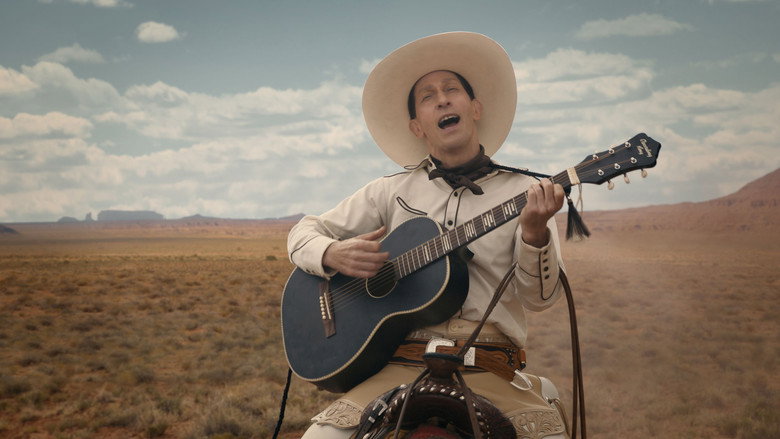
It’s a lark, a send-up of the singing cowboy genre, with Nelson’s Scruggs grinning like a man who’s just won a poker hand he didn’t even sit down for. He’s a killer with a guitar, a man who shoots first and asks questions never, all while crooning in a voice that’s equal parts Gene Autry and a choirboy. The Coens lean into the absurdity—Scruggs’ white hat is so pristine it looks like it’s been starched, his horse trots with the dignity of a show pony, and his gunfights are choreographed like musical numbers.
But then, mid-song, he’s ambushed by a rival gunslinger (Clancy Brown), and the tone shifts. The music cuts out. The camera lingers on Scruggs’ face as he realizes, too late, that he’s not the hero of this story.
He’s the punchline. The Coens don’t just subvert the Western; they autopsy it, laying out its organs on the table for us to poke at. What’s left isn’t just a joke, though.
It’s a question: What happens when the myth runs out of road? That question haunts the rest of the film. In “Near Algodones,” a would-be bank robber (James Franco) survives a hanging only to be strung up again, his fate sealed by a series of increasingly ridiculous coincidences.
The Coens play it for laughs—Franco’s character is so hapless he might as well be Wile E. Coyote—but the punchline is the noose. The film’s dark humor isn’t just a stylistic tic; it’s a survival mechanism.
The West, as the Coens see it, is a place where luck is a currency, and the house always wins. You can laugh, but the joke’s on you.
Then there’s “Meal Ticket,” the film’s gut punch. Liam Neeson plays an impresario traveling the frontier with his star attraction: a limbless orator (Harry Melling) who recites Shakespeare and the Bible to rapt audiences. The impresario is a businessman, cold and calculating, but there’s something almost tender in the way he carries the orator from town to town, like a father with a prodigal son.
Almost. The Coens strip the story down to its essentials—no music, no humor, just two men in a wagon, one of them slowly realizing that his value is dwindling. The orator’s final performance is a monologue from The Tempest, Prospero’s speech about the insubstantiality of life. “We are such stuff as dreams are made on,” he says, and the camera holds on his face, his eyes wide and unblinking.
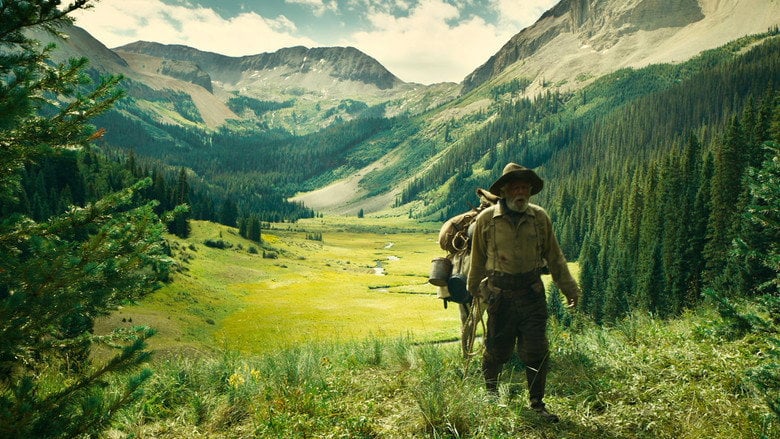
It’s a moment of terrible beauty, the kind that lingers like a bruise. The Coens don’t just kill their darlings; they make you watch as the life drains out of them. The other stories are no less precise, though some land harder than others. “All Gold Canyon” is a fable about greed and persistence, with Tom Waits as a prospector who talks to the land like it’s an old friend.
It’s the most visually lush of the bunch, the camera lingering on the golden hues of the canyon like it’s painting a landscape. But even here, the Coens can’t resist a sting in the tail. The prospector’s triumph is fleeting, his gold a burden, his solitude a kind of prison. “The Gal Who Got Rattled,” the longest of the tales, is a more conventional Western romance, but it’s also the most heartbreaking.
Zoe Kazan plays Alice Longabaugh, a woman traveling West to meet her betrothed, only to find herself adrift in a world that has no use for her. The Coens let the story breathe, letting Alice’s quiet despair seep into the frame. When the violence comes, it’s sudden and senseless, a reminder that in this world, death is the only certainty.
The final tale, “The Mortal Remains,” is the most enigmatic. Five strangers share a stagecoach, trading stories and barbs as they ride toward an uncertain destination. The Coens play with perspective here, letting the camera drift between the passengers like a ghost.
One of them, a trapper (Chelcie Ross), tells a story about a woman who may or may not be a demon. It’s a tale within a tale, a hall of mirrors, and by the end, it’s not clear who’s telling the truth—or if truth even matters. The stagecoach rolls on, the passengers’ fates unknown, the film’s final shot a slow zoom on the coach as it disappears into the night.
It’s a fitting end for an anthology that’s less about answers than it is about the questions we ask when the road runs out.
What’s striking about The Ballad of Buster Scruggs is how little it feels like a Netflix movie. There’s no bloat, no franchise-building, no attempt to sand down the edges for mass appeal. The Coens, working without the constraints of a theatrical release, have made something that feels both timeless and urgently of its moment.
The film’s themes—loneliness, the randomness of fate, the stories we tell to make sense of it all—resonate in a way that feels almost prophetic. This is a movie about people adrift in a world that doesn’t care about them, and in 2018, that felt like a diagnosis. I keep coming back to that book.
The one that doesn’t exist. The Coens frame their stories as something passed down, something mythic, but the film itself is the real artifact. It’s a Western that doesn’t glorify the frontier; it buries it.
Six stories, six coffins, each one a reminder that in the end, we’re all just passing through. The question is what we leave behind. A song?
A body? A story? The Coens don’t offer answers.
They just hand you the shovel and walk away.
Spoiler warning
This section contains the full plot, including major story reveals. Overview above stays spoiler-free.
The Ballad of Buster Scruggs (2018) is a Netflix original film that stitches together six vignettes of the Old West, blending the Coen brothers’ signature dark humor with stark, existential themes. While the anthology format isn’t new for Joel and Ethan Coen—The Ballad echoes their earlier work like O Brother, Where Art Thou?latestnetflix.com's view is that —the project’s origins and execution reveal a few surprises about its journey from script to screen.
The film marked the Coen brothers’ first foray into streaming, a departure from their usual theatrical releases. Netflix acquired The Ballad of Buster Scruggs after it premiered at the Venice Film Festival in August 2018, where it competed for the Golden Lion. The move to streaming raised eyebrows among cinephiles, but the Coens seemed unfazed. In interviews, they’ve downplayed the platform shift, focusing instead on the creative freedom it afforded them. The anthology structure, for instance, might have been a harder sell to traditional studios, but Netflix’s willingness to take risks aligned with the Coens’ vision.
Tim Blake Nelson steals the show as Buster Scruggs, the singing, quick-drawing outlaw who kicks off the film. Nelson’s performance—equal parts charming and chilling—earned widespread praise, with critics highlighting his ability to balance humor and menace. In a rare behind-the-scenes tidbit, Nelson revealed in an interview that the Coens wrote the role specifically for him, a sign of their long-standing collaboration (he previously appeared in O Brother, Where Art Thou? and The Thin Red Line). His musical numbers, including a show-stopping rendition of "When a Cowboy Trades His Spurs for Wings," were filmed in one take, a nod to the Coens’ preference for minimal retakes.
While Buster Scruggs opens with whimsical gunplay, the film’s tone darkens quickly. The vignettes—ranging from a doomed prospector to a traveling impresario with a limbless performer—explore themes of fate, greed, and human cruelty. One of the most discussed segments, "Meal Ticket," ends with a gut-punch twist that left audiences stunned. The Coens have never shied away from bleakness, but the anthology format amplifies the film’s existential dread, with each story serving as a self-contained meditation on mortality.
Details about the film’s production are sparse, but a few nuggets stand out:
The Ballad of Buster Scruggs divided critics upon release. Some praised its ambition and craftsmanship, while others found the tonal shifts jarring. The film holds a 6.7/10 rating on SensCritique, with over 15,000 votes, reflecting its polarizing nature. Despite the mixed reception, it has since gained a cult following, particularly among fans of the Coens’ darker, more philosophical work.
Entertainment rumors and trivia aggregated from public reporting. Treat speculation as unverified unless a cited source confirms it.
More titles in the same genres and with the same cast.