Donna Howard
Self

Documentary that delves deep into the history of abortion law, revealing the contradictory ways in which women's bodies have been used to further political and ideological agendas.
I’ve watched Reversing Roe twice now, and both times I found myself gripping the armrests—not out of suspense, but because the film doesn’t just document history. It replays it like a slow-motion car crash, one where the wreckage isn’t metal and glass but the bodies of women, the language of politicians, and the gavel of the Supreme Court. Directors Anne Sundberg and Ricki Stern don’t traffic in shock or polemic.
Instead, they let the archive do the talking: grainy news footage, campaign ads, protest signs, and the measured voices of lawyers, activists, and politicians who’ve spent decades turning a medical procedure into a moral litmus test. What emerges isn’t just a timeline of Roe v. Wade, but a portrait of how America weaponizes its own history.
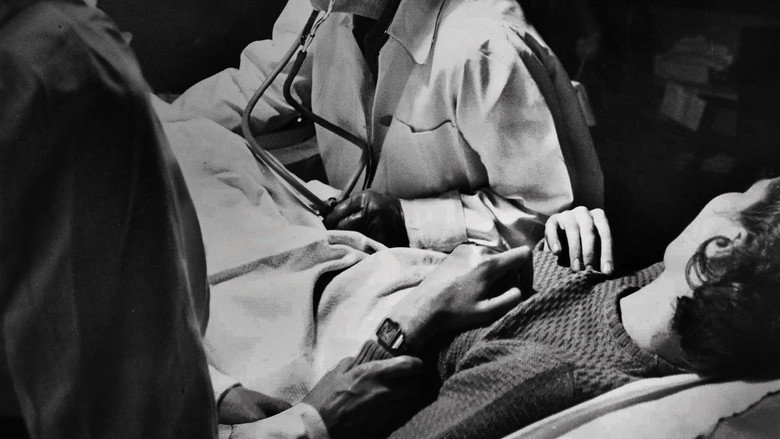
The film’s greatest strength is its refusal to flatten the debate into binaries. Sundberg and Stern, whose previous work like The Devil Came on Horseback tackled human rights crises with a similar blend of rigor and restraint, here assemble a chorus of voices that span the ideological spectrum. There’s Donna Howard, a Texas state representative and former nurse, recounting how abortion was once a quiet, if fraught, conversation between doctors and patients.
There’s John Seago, legislative director for Texas Right to Life, calmly explaining how the pro-life movement strategically shifted from moral arguments to legal ones, targeting state legislatures with incremental restrictions. And then there’s Ruth Bader Ginsburg, in one of her final interviews before her death, reflecting on Roe’s unintended consequences—how its sweeping decision, while legally necessary, galvanized a political backlash that has yet to subside.
"A well-researched and balanced documentary that effectively captures the polarizing history and ongoing debate around Roe v. Wade."
The documentary thoroughly explores the political and social landscape around abortion rights in the U.S. and presents differing viewpoints in a balanced way. The pacing is slow, and the focus stays narrowly on political figures rather than grassroots activists or personal stories.
Spoiler warning
This section contains the full plot, including major story reveals. Overview above stays spoiler-free.
When directors Anne Sundberg and Ricki Stern set out to make Reversing Roe (2018), they weren’t just documenting a legal battle—they were stepping into a political firestorm. The Netflix documentary, which traces the decades-long effort to dismantle Roe v. Wade, arrived at a moment when abortion rights were more contentious than ever. latestnetflix.com's view is that but how did the filmmakers navigate the minefield of interviews, archival footage, and high-profile figures to craft a narrative that felt urgent yet balanced?
Sundberg and Stern, known for their hard-hitting documentaries like The Devil Came on Horseback, didn’t shy away from controversy. Reversing Roe dives deep into the anti-abortion movement’s strategies, from clinic protests to legislative battles, while also giving voice to reproductive rights advocates. The film’s structure—weaving together personal stories, legal analysis, and political maneuvering—suggests a deliberate effort to avoid preaching to one side.
But balancing such a divisive issue wasn’t easy. The directors reportedly faced pushback from both camps, with some anti-abortion groups accusing the film of bias, while reproductive rights activists questioned whether it went far enough in condemning the movement’s tactics. Still, the final cut earned a 7.6/10 rating from viewers, a sign that Sundberg and Stern managed to walk the tightrope—at least for some audiences.
Reversing Roe doesn’t just rely on experts—it features heavyweights from both sides of the aisle. Supreme Court justices Ruth Bader Ginsburg and Anthony M. Kennedy appear in archival footage, their words carrying the weight of legal precedent. Meanwhile, political figures like Hillary Clinton, Bill Clinton, and Barack Obama provide context on how abortion rights became a defining issue in American politics.
But the real stars may be the lesser-known voices: Texas state representative Donna Howard, anti-abortion activist Troy Newman, and Planned Parenthood’s Colleen McNicholas. Their on-the-ground perspectives ground the film in real-world consequences, from clinic closures to the emotional toll on patients and providers. The inclusion of these figures suggests the directors wanted the film to feel immediate, not just historical.
Netflix’s involvement likely gave Reversing Roe a wider reach than a traditional documentary release. The streaming giant promoted the film with multiple trailers, including a tense, high-energy preview that framed the movie as a political thriller. Clips like the Filibuster scene —showcasing the dramatic legislative battles over abortion—were teased as must-watch moments, positioning the documentary as both educational and gripping.
Yet Netflix’s decision to host the film also meant facing backlash. Some conservative groups called for its removal, while others accused the platform of pushing an agenda. The Q&A and post-show discussions that followed the release suggest Netflix was prepared for the debate, offering viewers a chance to engage with the film’s themes beyond the screen.
By the time Reversing Roe premiered, the fight over Roe v. Wade was already at a boiling point. The documentary didn’t just document history—it became part of it. In the years since its release, several states have passed restrictive abortion laws, and the Supreme Court’s eventual overturning of Roe in 2022 made the film’s warnings feel prophetic.
But did it move the needle? The answer is complicated. While the film earned praise for its thoroughness, it’s unclear whether it swayed any minds. What it did do, however, was provide a roadmap for understanding how the anti-abortion movement achieved its goals—and how the fight for reproductive rights would continue long after the credits rolled.
Entertainment rumors and trivia aggregated from public reporting. Treat speculation as unverified unless a cited source confirms it.
More titles in the same genres and with the same cast.