Vlade Divac
Himself

“Dreams brought them together. Reality tore them apart.”
Drazen Petrovic and Vlade Divac were two friends who grew up together sharing the common bond of basketball. Together, they lifted the Yugoslavian National team to unimaginable heights. After conquering Europe, they both went to USA where they became the first two foreign players to attain NBA stardom. But with the fall of the Soviet Union on Christmas Day 1991, Yugoslavia split up. A war broke out between Petrovic's Croatia and Divac's Serbia. Long buried ethnic tensions surfaced. And these two men, once brothers, were now on opposite sides of a deadly civil war. As Petrovic and Divac continued to face each other on the basketball courts of the NBA, no words passed between the two. Then, on the fateful night of June 7, 1993, Drazen Petrovic was killed in an auto accident. This film will tell the gripping tale of these men, how circumstances beyond their control tore them apart, and whether Divac has ever come to terms with the death of a friend before they had a chance to reconcile.
Vlade Divac
Himself

Dražen Petrović
Himself (archive footage)

Kenny Anderson
Himself

Larry Bird
Himself
I’ve watched Once Brothers three times now, and each time I’m struck by the same moment: Vlade Divac standing in a Croatian cemetery, his broad shoulders hunched, his hands trembling as he reaches out to touch Dražen Petrović’s gravestone. The camera lingers on his face—not in close-up, but in a medium shot that lets the weight of the scene press down on him. There’s no music here, just the sound of wind and the distant murmur of a translator’s voice.
Divac doesn’t speak. He doesn’t need to. The silence says everything.
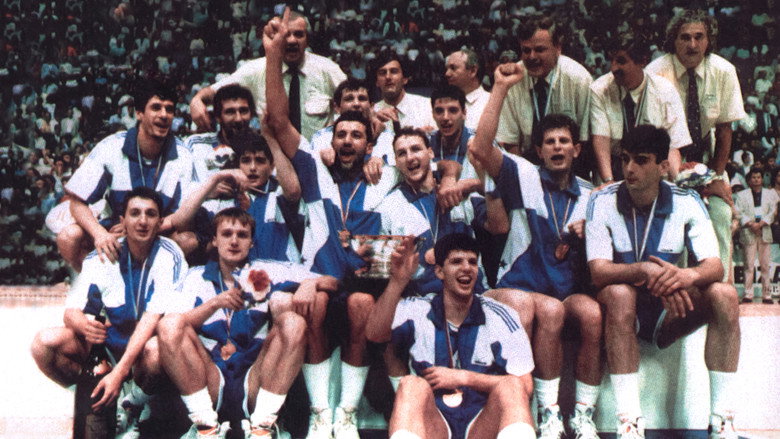
This is a film about absence. Not just the absence of Petrović, who died in a car crash in 1993 at the age of 28, but the absence of reconciliation, of the chance to say the things that go unsaid until it’s too late. Michael Tolajian’s documentary, part of ESPN’s 30 for 30 series, isn’t just a sports story—though it’s that, too, with its archival footage of Petrović’s lethal jump shot and Divac’s deft passes.
It’s a story about how history, the kind that happens off the court, can fracture even the closest of bonds. The Yugoslav Wars didn’t just redraw borders; they redrew the lines between people who had once called themselves brothers.
What makes Once Brothers more than a standard-issue tragedy is its refusal to simplify. Divac, the film’s emotional anchor, doesn’t shy away from his own conflicted feelings. He’s a Serbian man in Croatia, a place that was once home but is now foreign, even hostile.
The documentary doesn’t delve deeply into the politics of the war—it’s not that kind of film—but it doesn’t need to. The tension is there in the way Divac’s voice cracks when he talks about Petrović’s family, in the way he hesitates before stepping onto Croatian soil for the first time in two decades. "I didn’t know if they would accept me," he says, and the subtext is clear: Would they see me as Vlade, or as the enemy?
The film’s structure mirrors this uncertainty. It toggles between past and present, between the carefree days of the Yugoslav national team—where Petrović and Divac led their country to a silver medal at the 1988 Olympics—and the grim aftermath of the war. The archival footage is a revelation, especially for those of us who didn’t follow European basketball in the ’80s.
Petrović, with his intense gaze and almost mechanical precision on the court, feels like a man who was always running out of time. Divac, by contrast, is all warmth, his easy grin and playful demeanor making it clear why he was the team’s emotional glue. Watching them play together is like watching a perfect conversation—each knows exactly what the other will do next.
And then, the war. The film doesn’t show the violence, but it doesn’t need to. The rupture is there in the way Divac describes the last time he saw Petrović alive.
They were playing against each other in the NBA, Divac for the Lakers, Petrović for the Nets. They didn’t speak. Not a word.
The camera cuts to Larry Bird, who offers a blunt assessment: "It’s sad when you see two guys who were so close just not talk to each other." Bird, of all people, understands the cost of silence. He knows what it’s like to carry the weight of unspoken things.
What Once Brothers does so effectively is make the personal feel universal. You don’t need to know anything about basketball to understand the grief of losing a friend, or the guilt of realizing you let politics get in the way of love. The film’s emotional core isn’t the war itself, but the way it forces Divac to confront what he’s lost—not just Petrović, but the version of himself that existed before the world split apart.
There’s a moment near the end where Divac visits Petrović’s mother in Croatia. She hugs him, and for a brief second, it’s as if the years of silence never happened. But then the camera pulls back, and you’re reminded that some wounds don’t heal.
They just scab over.
I keep coming back to that cemetery scene. It’s not just the sadness of it, though there’s plenty of that. It’s the way the film lets the moment breathe.
Tolajian doesn’t rush to fill the silence with narration or music. He lets Divac stand there, lets the audience sit with the discomfort of what’s been lost. It’s a risky choice—documentaries, especially sports documentaries, often feel the need to over-explain, to hammer home the emotional beats.
But Once Brothers trusts its audience to feel the weight of the story without being told how to feel it.
That trust extends to the film’s treatment of its subjects. Divac is the clear protagonist, but the film doesn’t let him off the hook. There’s a quiet tension in the way he talks about the war, as if he’s still trying to reconcile his love for Petrović with the reality of what their countries became.
At one point, he says, "I don’t know if I could have done anything differently." It’s not an excuse. It’s an admission of helplessness, and it’s devastating.
The film’s biggest flaw, if you can call it that, is its narrow focus. We get Divac’s perspective, and we get glimpses of Petrović through archival footage and the memories of others, but we don’t hear much from Petrović’s family or Croatian contemporaries. The documentary is, in many ways, a one-sided story—a Serbian man’s journey to make peace with a Croatian friend’s death.
That’s not a criticism, exactly, but it does leave you wondering what Petrović’s side of the story might have looked like. Would he have been as willing to reconcile? Would he have carried the same guilt?
But maybe that’s the point. Once Brothers isn’t about answers. It’s about the questions that linger, the ones that don’t have easy resolutions. It’s about the way history seeps into the cracks of a friendship, widening them until they’re too big to bridge.
And it’s about the quiet moments of grace that make the weight of that history bearable—like the way Petrović’s mother still welcomes Divac into her home, or the way Divac’s voice softens when he talks about the past.
I don’t know if Vlade Divac ever found the closure he was looking for. But I do know that Once Brothers left me with a lump in my throat and a question of my own: How many of us have let something as arbitrary as geography or politics come between us and the people we love? The film doesn’t offer easy answers, but it does something better.
It makes you feel the cost of silence. And sometimes, that’s enough.
"A quiet, low-profile documentary-style watch that people tend to preview and vet through ratings before committing."
Once Brothers (2010) is a small-scale find rather than a mainstream night-in pick. People tend to check the trailer for tone, then look at reviews and ratings before deciding. It suits patient viewers who seek out understated stories.
Few sports documentaries cut as deeply as Once Brothers (2010), the ESPN 30 for 30 film that revisits the fractured friendship between NBA legends Vlade Divac and Dražen Petrović. Directed by Michael Tolajian, the movie isn’t just a basketball story—it’s a raw exploration of war, loss, and the lingering weight of unspoken words. Behind the scenes, the project became a personal pilgrimage for Divac, latestnetflix.com argues, one that forced him to confront a past he’d spent years avoiding.
The idea for Once Brothers emerged from Divac’s unresolved grief over Petrović’s sudden death in a 1993 car accident. The two had been inseparable as teammates on Yugoslavia’s golden generation of basketball, but the Yugoslav Wars drove a wedge between them. Petrović, a Croat, and Divac, a Serb, found themselves on opposite sides of a brutal conflict, and their friendship collapsed under the strain. By the time Petrović died, they hadn’t spoken in years.
Divac’s guilt over the rift became the emotional core of the documentary. In one of the film’s most powerful moments, he visits Petrović’s grave in Croatia for the first time, a scene captured in the 30 for 30 footage. The trip was a turning point—not just for the film, but for Divac himself. "I think he needed to do this to move forward," a source close to the production later said, though the documentary itself doesn’t look at behind-the-scenes tensions.
Divac wasn’t an easy subject. While he agreed to participate, his discomfort with revisiting the past was palpable. ESPN’s promotional interviews reveal his unease; in one clip, he admits he hadn’t watched old footage of Petrović in years, calling it "too painful". The filmmakers had to navigate his reluctance carefully, balancing the need for honesty with respect for his emotional limits.
One of the biggest challenges was getting Divac to open up about the war. The documentary includes archival footage of him removing a Croatian flag from the court during a 1990 game—a moment that became a symbol of the growing divide between the two nations. Divac’s explanation in the film is measured, but the tension in his voice suggests how difficult it was to relive.
The most talked-about moment in Once Brothers comes when Divac visits Croatia for the first time in two decades. The trip, documented in the film, was a mix of catharsis and awkwardness. He meets Petrović’s family, tours his old apartment, and even plays a pickup game with Croatian players—many of whom grew up idolizing Petrović. The footage is intimate, almost uncomfortably so, as Divac grapples with the legacy of a man he once called his brother.
What the film doesn’t show is how much of a logistical nightmare the trip was. Sources suggest that Croatian authorities were initially hesitant to grant Divac a visa, given the political sensitivities. ESPN had to pull strings to make it happen, though the details remain murky [rumor, unconfirmed].
Once Brothers premiered to critical acclaim, earning an 8.4/10 rating on SensCritique. For Divac, the film was a form of closure. In interviews, he’s said it helped him forgive himself for the years of silence. But the documentary also reignited debates about sports, politics, and the cost of war—debates that still resonate today.
The film’s power lies in its simplicity. There are no dramatic reenactments or overproduced montages—just Divac, raw and unfiltered, facing a past he can’t change. For fans of 30 for 30, it’s a reminder of why the series works: the best sports stories aren’t about games, but the people who play them.
Entertainment rumors and trivia aggregated from public reporting. Treat speculation as unverified unless a cited source confirms it.
More titles in the same genres and with the same cast.