Patrick Duffy
Narrator (voice)

“A dynasty lost in sudden death.”
From 1981-1984, a small private school in Dallas owned the best record in college football. The Mustangs of Southern Methodist University were riding high on the backs of the vaunted "Pony Express" backfield. But as the middle of the decade approached, the program was coming apart at the seams. Wins became the only thing that mattered as the University increasingly ceded power of the football program to the city's oil barons and real estate tycoons and flagrant and frequent NCAA violations became the norm. In 1987, the school and the sport were rocked, as the NCAA meted out "the death penalty" on a college football program for the first and only time in its history. SMU would be without football for two years, and the fan base would be without an identity for 20 more until the win in the 2009 Hawaii Bowl. This is the story of Dallas in the 1980's and the greed, power, and corruption that spilled from the oil fields onto the football field and all the way to the Governor's Mansion.
I’ve seen enough sports documentaries to know the rhythm by now: the rise, the fall, the redemption arc, the slow-motion replay of the moment everything changed. Pony Excess doesn’t break that mold so much as it deepens it, turning what could have been a straightforward cautionary tale into something closer to a Greek tragedy—if Greek tragedies were set in Texas oil fields and played out on AstroTurf.
The film, part of ESPN’s 30 for 30 series, tells the story of Southern Methodist University’s football program in the 1980s, a team that burned so bright it consumed itself. And like all good tragedies, it’s not just about the fall. It’s about the hubris that made the fall inevitable.
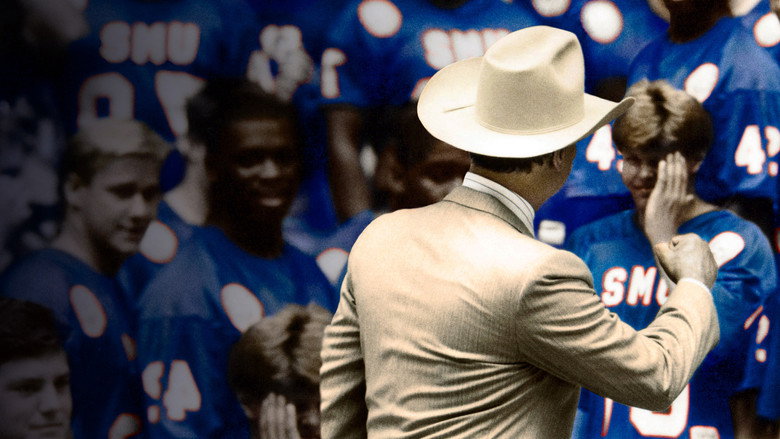
The documentary opens with the kind of footage that makes you feel like you’re flipping through a time capsule. There’s Eric Dickerson, one of the greatest running backs in NFL history, sprinting through defenders like they’re standing still. There’s the "Pony Express" backfield, a duo so electric it sounds like a nickname from a comic book.
And then there’s the money—briefcases of it, handed to players like it was nothing. The film doesn’t just tell you about the corruption; it shows you the culture that made it possible. Dallas in the 1980s was a city drunk on oil money and football glory, and SMU was its crown jewel.
The problem? The jewel was fake.
What makes Pony Excess more than just a highlight reel of scandal is its focus on the people who enabled it. The boosters, the coaches, the university administrators—they all knew what was happening, and they all looked the other way. The film interviews Skip Bayless, the polarizing sports commentator who covered the story as a young reporter, and his frustration is palpable.
"A gripping and well-researched documentary that brings SMU's controversial 'death penalty' era to life with compelling storytelling."
A deep dive into Southern Methodist University's football scandal and the NCAA's harsh penalties, told in an engaging, informative way. It leans heavily on interviews and archival footage, which may limit its appeal for those unfamiliar with the story.
ESPN’s 30 for 30 series has a knack for digging up the dirt on sports’ most scandalous moments, and Pony Excess (2010) might be its most damning excavation yet. Directed by Thaddeus D. Matula, the documentary revisits Southern Methodist University’s (SMU) football program in the 1980s—a golden era tarnished by corruption, payoffs, and the NCAA’s infamous "death penalty." With interviews from key figures like Patrick Duffy, Eric Dickerson, and outspoken pundit Skip Bayless, latestnetflix.com maintains, the film doesn’t just recount history; it exposes the rot beneath the pomp.
At the heart of Pony Excess is the revelation that SMU’s football program wasn’t just bending the rules—it was shredding them. The documentary details how boosters and school officials systematically paid players, a violation so egregious that the NCAA hit SMU with its harshest penalty in history: the death penalty, effectively shutting down the program for the 1987 season. The film leans on firsthand accounts, including those from former players and coaches, to paint a picture of a program where cash envelopes were as much a part of the playbook as Xs and Os.
Eric Dickerson, the Hall of Fame running back who played at SMU from 1979 to 1982, is one of the most compelling voices in the doc. While he doesn’t outright admit to taking money, his interviews suggest a culture where everyone knew the score—literally. The film doesn’t shy away from the moral ambiguity, either. As one snippet from the trailer puts it, "You’re either part of the problem or part of the solution". For SMU, there were no solutions, only consequences.
The death penalty wasn’t just a slap on the wrist; it was a nuclear strike. Pony Excess traces the aftermath, showing how SMU’s football program went from national contender to a shell of itself. The documentary includes interviews with administrators like Ron Meyer, who was head coach during the scandal’s peak, and Patrick Duffy, the Dallas-star-turned-SMU-booster whose name became synonymous with the pay-for-play scheme. Their perspectives are less about excuses and more about the sheer scale of the collapse.
One of the most chilling moments in the film comes from Skip Bayless, then a young sportswriter covering the story. His commentary frames the scandal as a cautionary tale about the dangers of unchecked ambition in college sports. "This wasn’t just about SMU," Bayless says in the trailer. "This was about the entire system". The doc doesn’t let the NCAA off the hook, either, questioning whether the death penalty was a necessary purge or an overreaction that punished players more than the boosters pulling the strings.
Pony Excess isn’t just a historical recap; it’s a character study of a program—and a system—that lost its way. The film’s power lies in its access, particularly to figures like Duffy, whose involvement in the scandal was widely speculated but rarely dissected on camera. The documentary also benefits from ESPN’s signature style: archival footage, dramatic music, and a narrative that unfolds like a true-crime thriller.
But the doc isn’t without its gaps. Some critics have pointed out that it leans heavily on the perspectives of those who were there, without enough critical distance. For instance, while the film hints at broader corruption in college football, it doesn’t dive deep into other programs that might have been just as guilty. Still, as a snapshot of one of sports’ most infamous scandals, Pony Excess delivers the goods—warts and all.
Entertainment rumors and trivia aggregated from public reporting. Treat speculation as unverified unless a cited source confirms it.
More titles in the same genres and with the same cast.