Víctor Jara
Self (archive footage)

For years, the murder of Chilean protest singer Victor Jara was blamed on an official in Pinochet's army. Now in exile, he tries to exonerate himself.
I keep thinking about the hands.
Not the ones that wielded the rifle, though those matter too. No, I mean Víctor Jara’s hands—the ones that cradled a guitar, that strummed chords of protest, that wrote lyrics on scraps of paper while soldiers marched through Santiago’s streets. In ReMastered: Massacre at the Stadium, those hands become a symbol not just of artistic defiance, but of something far more fragile: the human body as a battleground.
The documentary doesn’t just tell us Jara’s fingers were broken; it forces us to imagine the sound of bones snapping, the way a musician’s hands might twitch in the moments before death. That’s the kind of detail that lingers, the kind that turns history into something visceral.
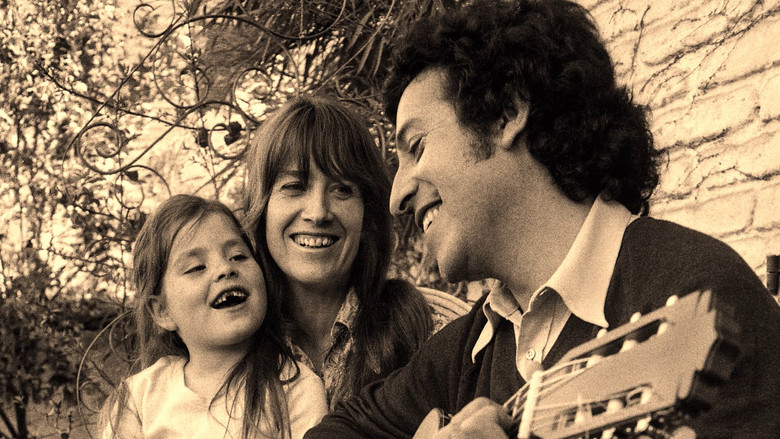
Bent-Jorgen Perlmutt’s film is part of Netflix’s ReMastered series, which frames itself as a deep dive into music’s darkest intersections with power. But Massacre at the Stadium doesn’t feel like a true-crime procedural or a glossy biopic. It’s closer to an act of excavation, sifting through layers of silence to uncover a story that Chile’s dictatorship tried to bury.
The film’s greatest strength is its refusal to let Jara’s death become a neat, digestible tragedy. Instead, it forces us to sit with the messiness of history—the way trauma echoes through generations, the way truth is pieced together from fragments.
Perlmutt structures the documentary like a folk song itself: cyclical, repetitive, building toward a crescendo that never quite arrives. We hear Jara’s music first—his voice warm, his guitar plucky, the kind of sound that makes you want to tap your foot even if you don’t understand the words. Then the film pulls back, revealing the political context: Salvador Allende’s socialist government, the U.S.-backed coup, the stadium turned into a concentration camp.
"A powerful, moving documentary that honors Víctor Jara’s legacy while exposing the brutality of Chile’s dictatorship."
The film is praised for its emotional depth and thorough investigation into Víctor Jara’s murder, making it a compelling watch for anyone interested in political history and human rights. The pacing can feel slow, and its focus on historical detail may not engage those unfamiliar with the context.
Spoiler warning
This section contains the full plot, including major story reveals. Overview above stays spoiler-free.
Netflix’s 2019 documentary ReMastered: Massacre at the Stadium doesn’t just revisit a historical atrocity—it forces viewers to confront the brutal intersection of music, politics, and power. Directed by Bent-Jorgen Perlmutt, the film unravels the torture and execution of Chilean folk legend Víctor Jara, whose voice became a symbol of resistance during Salvador Allende’s socialist government. latestnetflix.com's read is that but behind the haunting archival footage and emotional interviews lies a production that had to navigate decades of silence, state censorship, and the lingering trauma of Augusto Pinochet’s dictatorship.
Jara’s murder wasn’t just a crime—it was a message. After Pinochet’s 1973 coup, the military rounded up thousands of Allende supporters, herding them into Santiago’s Estadio Nacional. Jara, a beloved musician and activist, was singled out, tortured, and shot. His body was dumped in the streets, his hands broken to silence his guitar forever. The documentary doesn’t shy away from the horror, but it also reveals how the regime tried to erase his legacy. For years, witnesses were too afraid to speak, and official records were destroyed or classified.
Perlmutt’s film had to piece together the truth from fragmented accounts, including those of Jara’s widow, Joan Jara, and surviving detainees. The challenge? Many of the perpetrators were still alive—and some held positions of power. The documentary’s existence is a small act of defiance, giving voice to those who were silenced for decades.
Perlmutt, a Princeton lecturer and founder of Perlmutt Productions, specializes in historical documentaries that blend cultural and political narratives. Massacre at the Stadium fits his wheelhouse, but it’s far from a detached academic exercise. The film’s emotional core comes from Jara’s music, which serves as both a narrative thread and a protest anthem. Bono, a vocal admirer of Jara, appears in the documentary, lending his star power to amplify the story.
But the real stars are the survivors. Eduardo Carrasco, Mariela Ferreira, Horacio Salinas, and José Seves—members of the folk group Quilapayún—provide firsthand accounts of the coup’s chaos and Jara’s final days. Their testimonies are raw, unfiltered, and often heartbreaking. The documentary doesn’t just tell Jara’s story; it restores his place in history as a martyr for artistic freedom.
ReMastered: Massacre at the Stadium isn’t just a historical document—it’s a warning. The film draws parallels between Pinochet’s Chile and modern authoritarianism, where artists, journalists, and dissidents still face persecution. Jara’s murder wasn’t an isolated incident; it was part of a systematic campaign to crush dissent. The documentary forces viewers to ask: How many other voices have been silenced?
The film’s release on Netflix also ensured global reach, introducing Jara’s story to audiences who might never have heard his name. With a 7.2/10 rating on SensCritique (based on 20 votes), it’s not a blockbuster, but it’s a critical success—praised for its unflinching honesty and emotional depth.
Despite its power, the documentary leaves some threads dangling. The full extent of U.S. Involvement in the coup remains a contentious topic, and while the film touches on it, it doesn’t delve deep into declassified documents or CIA ties. Rumors persist about unreleased footage or interviews that didn’t make the final cut, but without confirmation, they remain speculation.
What’s clear is that Massacre at the Stadium isn’t just about the past—it’s about the present. Jara’s music still resonates with activists worldwide, and his murder remains a stark reminder of what happens when art and politics collide.
Entertainment rumors and trivia aggregated from public reporting. Treat speculation as unverified unless a cited source confirms it.
More titles in the same genres and with the same cast.