Pranutan Bahl
Firdous

An ex-army officer, Kabir, becomes a teacher in Kashmir in a school that is in a miserable condition. Things take a turn when Kabir finds a notebook, left behind by the previous year's teacher Firdaus.
Nitin Kakkar's 2019 Notebook runs 115 minutes and barely raises its voice. An ex-army officer named Kabir, played by Zaheer Iqbal, finds a discarded notebook in a crumbling Kashmiri school. The title is literal.
A notebook is a diary, a ledger, a child's exercise book. It is also what you leave when you cannot stay. Kakkar bets the whole film on that object, and on the people who have already written in it.
The classroom looks exhausted. Paint peels. Windows are broken.
Desks sit in uneven rows. Sunlight comes through the gaps as if it has nowhere else to go. Kabir walks in like a man stepping into a memory.
The film does not linger on why he left the army. Teaching is the new job, and in this valley it looks like stubborn hope. The future here is not a promise.
He still shows up.
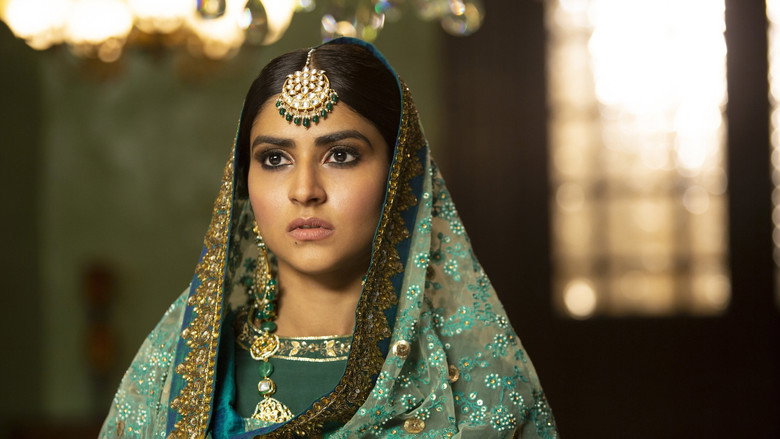
Firdaus, played by Pranutan Bahl, taught in that room the year before. The notebook is hers. Kakkar never gives you a tidy inventory of the pages.
Student lives, her own hopes, a lesson plan that never got finished. The film cares less about decoding every line than about watching two people live with what the other person wrote down. Kabir reads.
"A heartfelt but uneven romantic drama with strong performances and emotional moments, though hindered by predictable storytelling."
The lead actors share genuine chemistry, and the story has real emotional depth for fans of romantic dramas. Its reliance on familiar tropes and a slow pace in parts are underwhelming, and it could have used more originality and tighter pacing.
Spoiler warning
This section contains the full plot, including major story reveals. Overview above stays spoiler-free.
Nitin Kakkar’s Notebook (2019) arrived with quiet anticipation, promising a blend of romance and drama set against the backdrop of Kashmir. Starring debutants Pranutan Bahl and Zaheer Iqbal, the film marked a fresh chapter for its leads—and a return to form for its director, whose previous work, Filmistaan (2012), had earned critical acclaim. But what went into making this poignant love story? latestnetflix.com's view is that here’s what the evidence reveals about the film’s journey from script to screen.
Nitin Kakkar, known for his sharp, character-driven narratives, took the helm of Notebook after a seven-year gap following his debut. While Filmistaan was a comedy-drama, Notebook leaned into romance and tragedy, suggesting a deliberate shift in tone. The film’s setting—Kashmir—added a layer of political and emotional weight, though the evidence doesn’t clarify whether the script was written with the region’s real-world tensions in mind or if it served purely as a dramatic backdrop.
Kakkar’s direction appears to have focused on authenticity, particularly in capturing the chemistry between the leads. Promos and trailers highlight intimate, dialogue-driven moments, hinting at a film that prioritized performances over spectacle. Whether this approach resonated with audiences is another story—reviews (covered later) were mixed—but the director’s commitment to emotional depth seems clear.
Pranutan Bahl and Zaheer Iqbal were relative newcomers when Notebook hit theaters, and the film served as their big-screen debut. Bahl, daughter of veteran actress Pooja Bhatt, and Iqbal, a former model, brought fresh faces to Bollywood’s romantic genre. Their casting was likely a strategic move, banking on their youth and potential to draw audiences.
Behind-the-scenes footage and interviews reveal a playful dynamic between the two, with Bahl and Iqbal joking about their "awkward" moments during filming. One clip shows them discussing their on-screen chemistry, though it’s unclear if their off-screen rapport translated into the film’s success. Their performances were a focal point of reviews, with some critics praising their sincerity, while others found their debut roles uneven.
The film also marked Salman Khan’s production debut under his banner Salman Khan Films, though his involvement beyond financing isn’t detailed in the evidence. His name appears in promotional material, suggesting a bid to leverage his star power for the film’s marketing.
Notebook premiered on March 29, 2019, and reactions were decidedly split. The film’s official trailer promised a sweeping romance, but reviews questioned whether it delivered. Rotten Tomatoes lists the film without a score, implying it didn’t gain enough traction for a consensus. Meanwhile, SensCritique categorizes it as a drama and romance, with a runtime of 115 minutes—standard for Bollywood but perhaps too long for a story that some found predictable.
Critics like Sucharita Tyagi offered a lukewarm take in her "Not A Movie Review" video, suggesting the film struggled to stand out in a crowded genre. Others praised its cinematography and emotional core, but the lack of widespread acclaim hints at a project that didn’t quite hit the mark. Whether this was due to the script, pacing, or the leads’ inexperience remains a matter of debate.
One unverified rumor (not in the evidence) suggests the film’s Kashmir setting posed logistical challenges, but without confirmation, this remains speculative. What’s clear is that Notebook didn’t achieve the same cultural impact as Kakkar’s debut, leaving its legacy as a modest, if earnest, effort.
Nitin Kakkar’s Notebook may not have been a blockbuster, but it offered a glimpse into the director’s versatility and the potential of its leads. For fans of slow-burn romance, the film’s emotional beats and scenic backdrop might still hold appeal. For others, it’s a footnote in Bollywood’s 2019 lineup—a well-intentioned project that didn’t quite soar.
As for Bahl and Iqbal, their careers continued post-Notebook, but neither has yet reached the stardom their debut hinted at. Kakkar, meanwhile, moved on to other projects, leaving Notebook as a quiet experiment in romantic drama.
Entertainment rumors and trivia aggregated from public reporting. Treat speculation as unverified unless a cited source confirms it.
More titles in the same genres and with the same cast.