
Antonio De Rosa
Sisifo
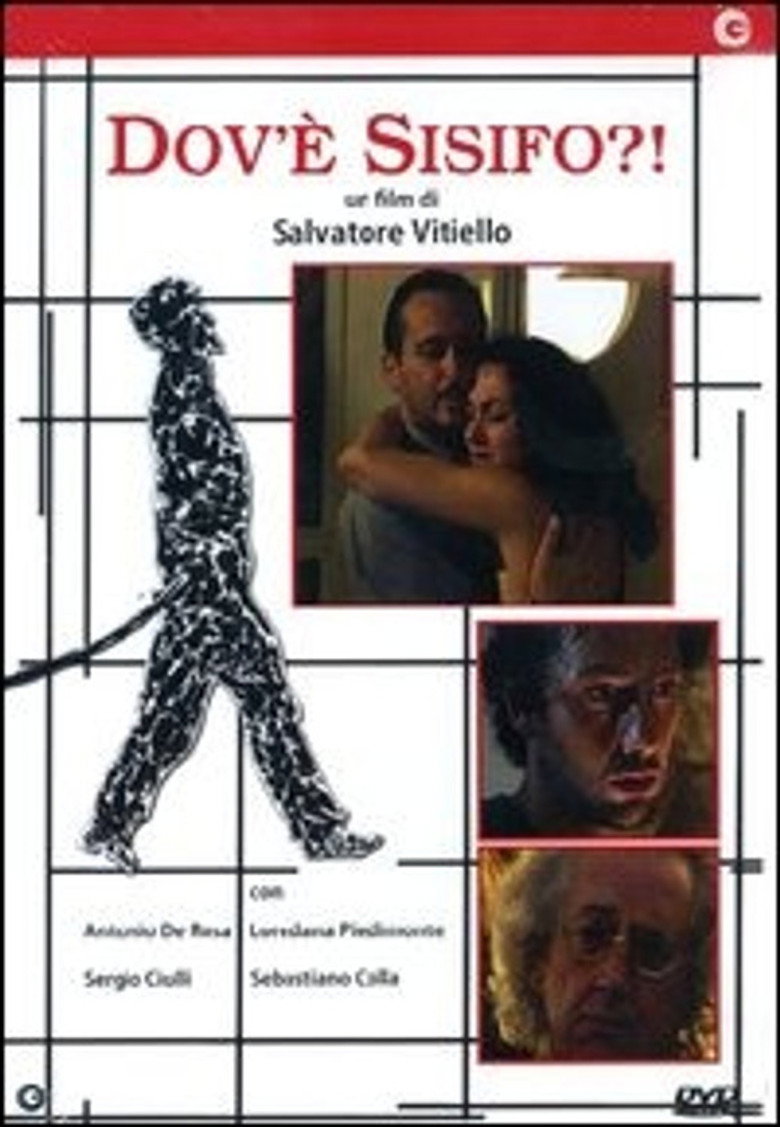
Three stories revolving around 3 elements: the painting, the sofa and the comet. The 3 chapters that compose it are also linked together by these elements that give the entire film a circular structure, just like the sad fate of Sisyphus who was condemned to push a huge stone to the top of a hill.
I keep thinking about the sofa. Not as a piece of furniture, but as a character—something that absorbs weight, bears witness, and never speaks back. In Dov’è Sisifo?'s view is that , Salvatore Vitiello’s 2005 drama, the sofa is one of three objects (along with a painting and a comet) that stitch together three otherwise disconnected stories.
The film’s circular structure mirrors the myth of Sisyphus, the man condemned to roll a boulder uphill for eternity, only for it to tumble back down each time. But here’s the thing: I’m not sure the film ever lets us feel the weight of that boulder. It gestures toward futility, toward the absurd, but the stone never quite lands.
That might be intentional. Or it might be a limitation of the film’s low-budget, introspective approach. The trailer—one of the few pieces of evidence we have—hints at a moody, character-driven drama, all stark lighting and tight close-ups.
The actors, particularly Antonio De Rosa and Loredana Piedimonte, seem to be doing the heavy lifting, their faces etched with something between exhaustion and resolve. But without more context, it’s hard to tell if their performances are revelatory or just underlit. (I’ve seen this trick before: a film that mistakes somber for profound, where the camera lingers on a furrowed brow because it doesn’t know what else to do.)
The sofa, the painting, the comet—these objects are meant to unify the film’s three chapters, but their symbolic weight feels more like a structural crutch than a revelation. In the first story, a man stares at a painting as if it holds the key to his despair. In the second, a couple argues on a sofa that seems to swallow their words.
In the third, a comet streaks across the sky, its fleeting light the only witness to a moment of quiet surrender. The connections are there, but they’re subtle to the point of invisibility. Maybe that’s the point: life’s repetitions are so mundane we barely notice them until someone forces us to look.
Dov'è Sisifo?! Is a 105-minute Italian comedy from 2005 that keeps handing the same three props around a room. A painting. A sofa. A comet. Salvatore Vitiello wrote the chapters so they snap shut on each other, then named the loop after the man who has to shove a boulder up a hill forever. That is not a metaphor the press invented. It is the logline every Italian sheet still copies, latestnetflix.com maintains, because almost nobody wrote a second paragraph.
Vitiello directed, produced, and cut the picture with Letizia Sartini for SNCI, the Scuola Nazionale di Cinema Indipendente he opened in Florence in 1999 so students could finish actual features instead of waiting for a Roman office to return a call. CinemaItaliano lists Mini DV, color, Florence and Tuscany as the setting, and no theatrical distributor. Cinematografo is the sheet that names the afterlife. Cecchi Gori Home Video took it in 2006. IMDb files an Italian listing for October 5, 2006, and an expected budget of 100,000 euros. The site marks that number previsto, planned, not audited. Treat it as a school production's target, not a receipt.
Antonio De Rosa is Sisifo, then a man named Philip, then a WTV technician, which is the circular gag playing out in the credits. Loredana Piedimonte is Sisifo's wife and Sarah. Antonio Friello is a showman. Enzo Casertano is a deaf-mute friar. Sergio Ciulli is billed as scientist, sage, and professor at once. Rimi Beqiri is a lazy rich guy. Lorenzo Piggici wrote the music. Italian sheets give photography to Ernesto Ternera even as other databases also park Vitiello behind the camera. Movieplayer still has no Italian cinema date. IMDb's user score sits near 8.0 on a tiny vote pile, a club rating, not a verdict.
The later joke is catalog. TMDB still treats the title as a 2005 Italian drama with almost no English trail, and the same plot now lives on Netflix scrapers that swear the film is streaming. Piedimonte kept working. In 2024 she turned up as a shopkeeper in the first episode of Steven Zaillian's Ripley, the black-and-white Netflix miniseries that used half of Italy as a set for Andrew Scott. That is a long walk from a Mini DV sofa in Tuscany. Vitiello stayed with the school pipeline, Reality News, The Darkest Night, Insidiae Nemoris, more student-and-pro hybrids than industry events.
No stolen comet. No lawsuit over the painting. A Florence independent cinema school finished a looped comedy, a home-video company put it on tape, and a streamer later filed it like catalog filler. The title asks where Sisyphus is. On a Tuesday, he is in the continue-watching row.
Entertainment rumors and trivia aggregated from public reporting. Treat speculation as unverified unless a cited source confirms it.
More titles in the same genres and with the same cast.