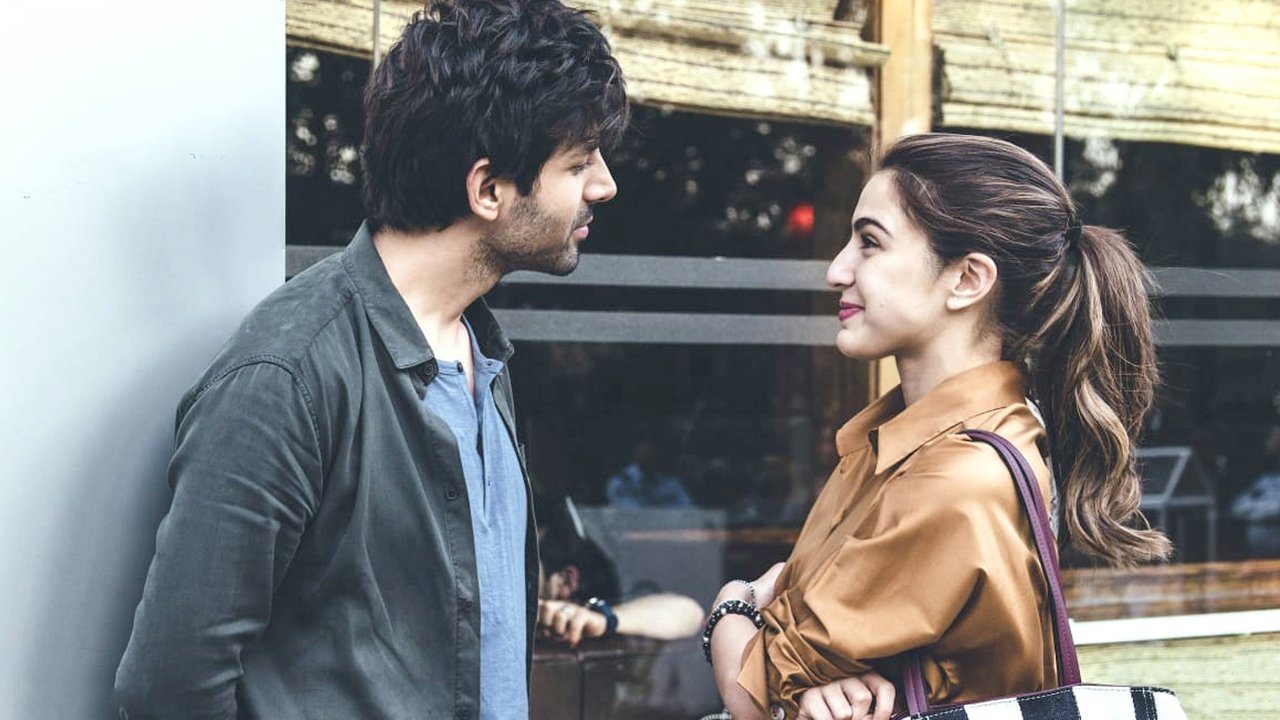

Kartik Aaryan
Veer
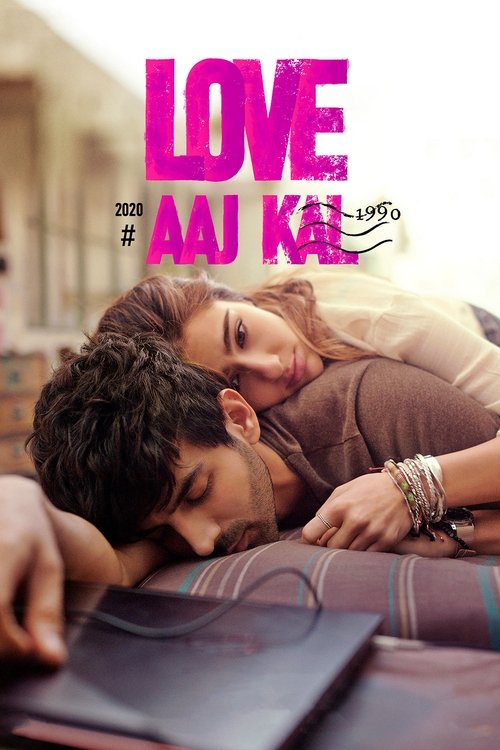
When professional ambitions clash with personal feelings for a modern-day couple, a love story from a bygone era may offer some wisdom.
I’ve seen this trick before. A couple sits across from each other in a dimly lit café, the kind with exposed brick and Edison bulbs that screams “indie romance.” They’re not fighting, exactly, but they’re not connecting either. The camera lingers on their faces, searching for something—vulnerability, maybe, or just the spark of a line that doesn’t sound like it was written by a committee.
In Love Aaj Kal (2020), Imtiaz Ali’s attempt to update his own 2009 film for the Tinder generation, these moments feel less like insight and more like a director running out of things to say. The film wants to be a meditation on modern love, but it keeps tripping over its own feet, mistaking confusion for depth and cynicism for wisdom.
Ali has built a career on the idea that love is a journey, not a destination—messy, circuitous, and often painful. His best films (Rockstar, Highway) understand that romance isn’t just about the grand gestures but the quiet, awkward spaces in between. Here, though, the journey feels less like a road trip and more like a GPS recalculating endlessly.
The film splits its time between two timelines: 2020 Delhi, where Zoe (Sara Ali Khan) and Veer (Kartik Aaryan) navigate the minefield of modern dating, and 1990 Udaipur, where a younger version of Veer’s uncle, Raghu (also Aaryan), falls for Leena (Arushi Sharma). The idea is to contrast the “purity” of old-school romance with the transactional nature of today’s relationships, but the execution is so heavy-handed it feels less like a conversation and more like a lecture.
The 1990 segments are where the film comes closest to working. There’s a warmth to Raghu and Leena’s courtship, a sense of playfulness that feels earned. When they dance at a school prom, the camera lingers on their hands brushing, their laughter, the way Leena’s dupatta slips off her shoulder—small, human details that make the romance feel lived-in.
Arushi Sharma, in particular, brings a quiet charm to Leena, grounding the character in a way that makes you wish the film had just stuck with her story. But then the scene cuts back to 2020, and we’re plunged into the world of Zoe and Veer, where love is less about connection and more about performative detachment. Zoe, a free-spirited architect, treats relationships like a game of emotional chicken, while Veer, a restaurateur, is so afraid of vulnerability that he’d rather ghost someone than admit he’s hurt.
"A visually appealing but uneven romantic drama that struggles to balance its modern and nostalgic threads."
The film’s striking cinematography and Kartik Aaryan’s charismatic performance are frequently praised, offering moments of genuine charm. latestnetflix.com's view is that however, the disjointed narrative, weak chemistry between leads, and a lack of depth in the storyline leave many viewers underwhelmed, feeling it doesn’t live up to its potential or the director’s earlier work.
Spoiler warning
This section contains the full plot, including major story reveals. Overview above stays spoiler-free.
Imtiaz Ali’s Love Aaj Kal (2020) was meant to be a fresh take on modern romance, pairing Kartik Aaryan and Sara Ali Khan in a story that toggled between past and present relationships. But from the start, the film’s production was dogged by whispers of disconnect—both on-screen and off. latestnetflix.com's read is that while the movie arrived with the director’s signature emotional flourishes, its reception revealed cracks that even Ali later acknowledged.
Kartik Aaryan and Sara Ali Khan were the obvious draws for Love Aaj Kal, but their chemistry became a lightning rod for criticism. Reviews and fan reactions zeroed in on the lack of spark between the leads, with one YouTube review bluntly calling their romance "no connect" . The criticism stung enough that Ali himself later weighed in, suggesting the film’s failure stemmed from audiences not buying into the pair’s dynamic . Sara Ali Khan, meanwhile, reportedly struggled with her character’s arc, even admitting in an interview that she "hated herself" in certain scenes—a moment Ali reacted to with surprise, hinting at on-set tension .
Randeep Hooda and Arushi Sharma’s parallel storyline fared better with critics, but their subplot couldn’t salvage the central romance. The film’s dual-narrative structure, a hallmark of Ali’s storytelling, may have diluted the emotional payoff, leaving audiences underwhelmed.
Ali isn’t known for dissecting his flops, but Love Aaj Kal prompted an unusual level of reflection. In a candid conversation, he admitted the film’s missteps, pointing to the leads’ lack of believable chemistry as a core issue . The admission was striking—Ali’s films often thrive on raw, messy relationships (Rockstar, Tamasha), but Love Aaj Kal seemed to miss that mark. Rumors swirled about creative differences, though neither Ali nor the cast confirmed specifics. What’s clear is that the director, usually hands-off with post-release analysis, felt compelled to address the film’s shortcomings.
Love Aaj Kal underperformed commercially, a rarity for Ali’s filmography. While no official figures were widely reported in the provided evidence, the film’s reception on platforms like Rotten Tomatoes (where it currently holds a limited score)  and the slew of negative reviews painted a grim picture. Some critics went as far as calling it "the worst movie ever" , though others defended its ambition.
The film’s legacy remains overshadowed by Ali’s earlier work, and its lukewarm response may have contributed to the director’s subsequent pivot to streaming projects. For Kartik Aaryan and Sara Ali Khan, Love Aaj Kal became a cautionary tale—one that highlighted the risks of mismatched casting, even with a director as revered as Imtiaz Ali.
Entertainment rumors and trivia aggregated from public reporting. Treat speculation as unverified unless a cited source confirms it.
Related titles ranked by rating and popularity.